The Long Council
Who was selected, and why
Which poses a greater threat to democracy: economic inequality or political polarization?
The central tension
Does democracy break because the economy fails most people, or because people stop agreeing on basic facts and enemies?
Where they stand
Inequality as root cause
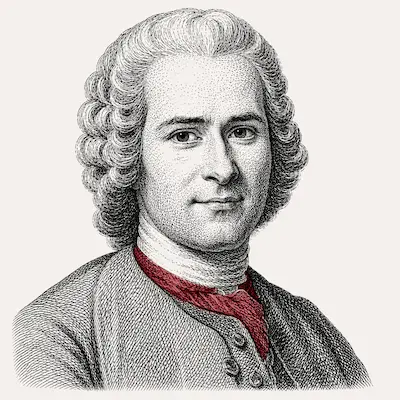 Jean-Jacques Rousseau
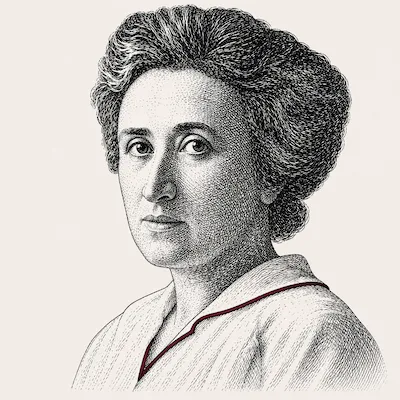 Rosa Luxemburg
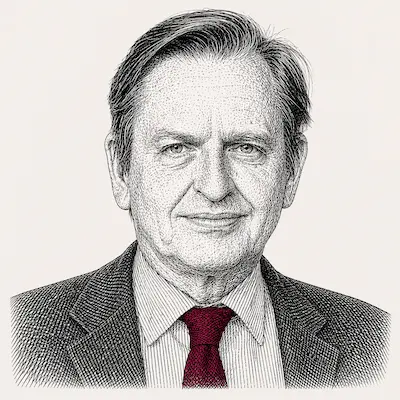 Olof Palme
Polarization as root cause (or primary autonomous threat)
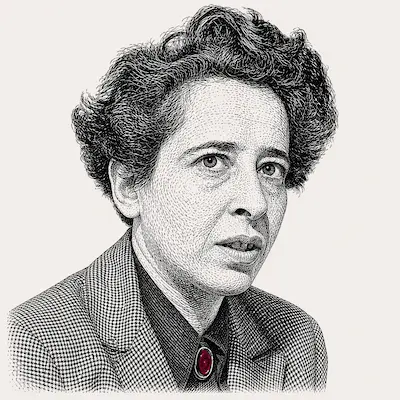 Hannah Arendt
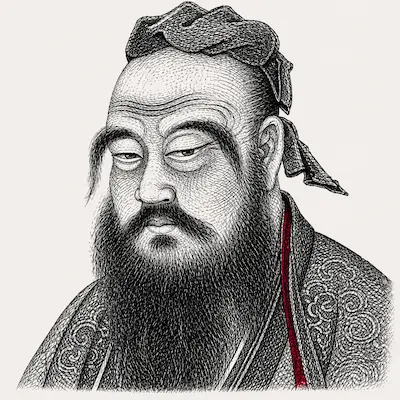 Confucius
Bridges / Synthesizers (each anchors a distinct third line of argument)
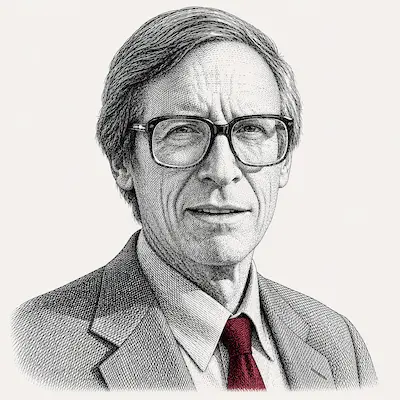 John Rawls
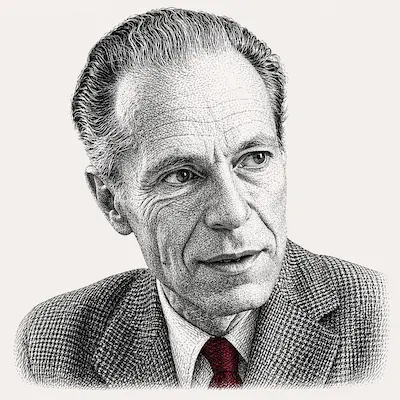 Albert O. Hirschman
Selected members
Jean-Jacques Rousseau
Will argue: Extreme economic inequality makes a genuine general will structurally impossible because citizens with radically different material stakes cannot form common political purposes.
His foundational argument that economic inequality destroys the civic equality democracy requires is precisely the thesis under examination.
Hannah Arendt
Will argue: Polarization is not reducible to inequality; the destruction of a shared public world, through propaganda, identity collapse, and the loss of common facts, is a distinct and self-reinforcing path to democratic breakdown.
Her documented analysis of how political atomization, the erosion of the public realm, and the collapse of shared reality precede authoritarian capture directly addresses polarization as an autonomous political threat.
John Rawls
Will argue: The two threats are connected through the basic structure: extreme inequality corrodes the public reason on which political liberalism depends, but the collapse of public reason also makes redistribution politically impossible, creating a mutual reinforcing spiral that cannot be cleanly separated.
His documented argument that political legitimacy requires justification to all citizens regardless of position, and that economic inequalities must benefit the least advantaged, directly frames the question of whether democracy can survive material injustice.
Rosa Luxemburg
Will argue: Political polarization is a symptom, not a cause; when concentrated wealth captures parties, media, and legislative processes, the apparent cultural war between citizens obscures the structural class conflict beneath it.
Her documented analysis of capitalism's structural tendencies, class polarization, democratic erosion, and the capture of formal political institutions by economic elites, provides the sharpest systematic case that inequality is causally prior.
Olof Palme
Will argue: The Nordic evidence is not that inequality and polarization are unrelated but that sustained redistribution and universal social insurance reduce the material grievances from which polarization feeds, making the inequality diagnosis primary and actionable.
As the practitioner who governed the most successful documented implementation of the argument that equality and democracy are mutually reinforcing, he is the empirical counter-case to both the Thatcher thesis and the polarization thesis.
Albert O. Hirschman
Will argue: The two threats operate through different mechanisms that are nonetheless causally linked: inequality suppresses the voice of those most harmed while enabling the exit of elites from shared institutions, and the resulting institutional decay creates the conditions in which polarizing rhetoric fills the vacuum.
His documented frameworks, exit vs. voice, the rhetoric of reaction, and the irreversibility threshold, provide tools for diagnosing how both inequality and polarization interact with democratic institutions without collapsing one into the other.
Considered but not selected
Confucius: Relevant for his documented argument that trust in rulers is the foundation of political stability and that governance failure destroys legitimacy. Not selected because his framework treats polarization and inequality as both downstream of moral and institutional failure by rulers, without providing tools to distinguish between the two as competing causal claims, he would collapse the question rather than illuminate its tension.
Amartya Sen: Highly relevant for his documented capability approach and his argument that democracy and development are mutually reinforcing. Not selected because Palme occupies the same pole with stronger empirical grounding in actual governance outcomes, and Sen's primary contribution (famine, entitlement, the instrumental value of democracy) would largely parallel Rawls's normative framing without adding a distinct line of argument.
Ibn Khaldun: His asabiyya framework is genuinely relevant to the question of what erodes civic solidarity. Not selected because his unit of analysis is group cohesion across dynastic cycles, which cannot be mapped cleanly onto the inequality-vs-polarization distinction in modern democratic theory; applying it here would require flagging throughout and would add less than Arendt's more directly applicable framework.