The Long Council
Who was selected, and why
Can a movement without clear leaders bring lasting change?
The central tension
Does leaderless organising produce real accountable power, or does someone always end up running things and pretending otherwise?
The two poles
Leaderless legitimacy works
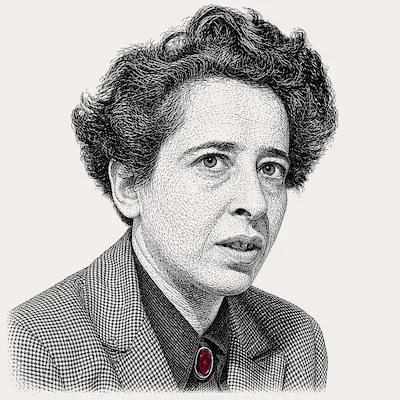 Hannah Arendt
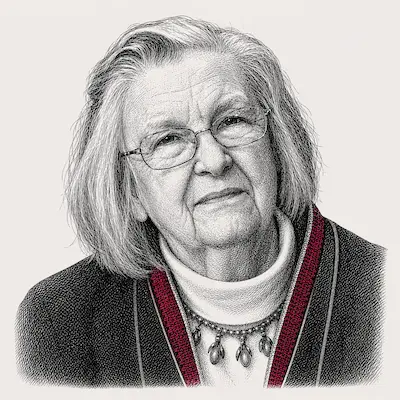 Elinor Ostrom
Institutions need identifiable leaders
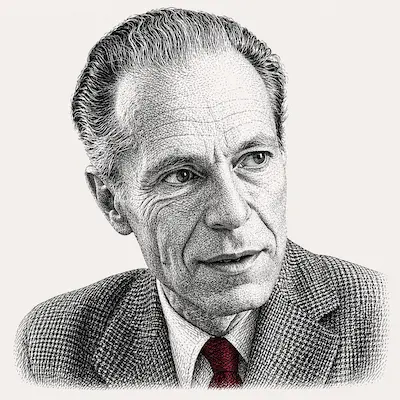 Albert O. Hirschman
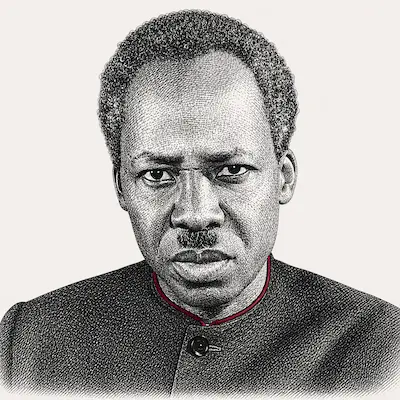 Julius Nyerere
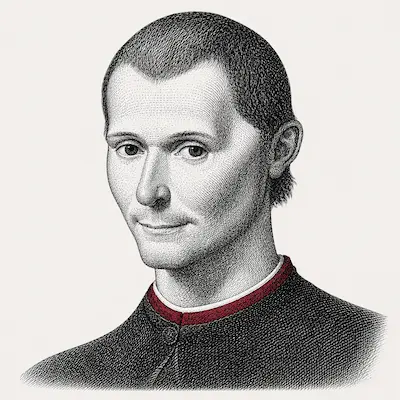 Niccolò Machiavelli
Selected members
Hannah Arendt
Will argue: Power arising from people acting in concert is real but council systems have never been shown to function at scale or make binding decisions.
Her theory of power as collective action and council democracy speaks directly to whether leaderless movements generate genuine political power.
Elinor Ostrom
Will argue: Leaderlessness can work if the movement quickly builds rule-making, monitoring and sanctioning institutions rather than relying on charisma or moral unity alone.
Her design principles for durable collective institutions directly test whether a horizontal movement can build lasting self-governing structures without hierarchical command.
Albert O. Hirschman
Will argue: A movement that mastered voice through blockades now faces a harder test, since parliamentary power requires sustained institutional loyalty and clear lines of responsibility that leaderlessness tends to dissolve.
His exit, voice and loyalty framework and his analysis of unbalanced growth and reform sequencing directly addresses how diffuse movements translate protest voice into institutional capacity.
Julius Nyerere
Will argue: Movements that avoid naming leaders early often find that unaccountable informal hierarchies form anyway, just without the transparency that formal leadership requires.
He led a movement-turned-government that began with genuine grassroots mobilisation and documented, with unusual honesty, how organisational diffuseness became bureaucratic capture without clear accountability.
Niccolò Machiavelli
Will argue: A movement that enters government without a clear leader to take responsibility and act decisively will be outmanoeuvred by the old regime's entrenched, committed defenders.
His analysis of why new political orders are uniquely fragile and why founders need concentrated, identifiable authority to defeat entrenched interests bears directly on a leaderless movement entering power.
Considered but not selected
Rousseau: his general will framework is relevant to collective legitimacy but risks being a token inclusion here since Arendt and Ostrom already cover the participatory-democracy pole with more operational specificity; flagged per special rules as a live concept embedded in Arendt's council-democracy discussion rather than given a separate seat. Nelson Mandela, his negotiated transition expertise is adjacent but the issue is specifically about leaderlessness as a structural choice, not about reconciliation or negotiation strategy, which is better covered by Machiavelli and Nyerere on institutional consolidation. Frantz Fanon, his critique of post-independence elite capture is relevant but overlaps substantially with Nyerere's more directly on-point documented experience of a movement becoming a government.