The Long Council
Who was selected, and why
How should India redistribute wealth?
The central tension
Should India redistribute wealth by taxing and transferring income now, or by first building the institutions and capabilities that make redistribution durable and legitimate?
Where they stand
Redistribute now (structural redistribution through taxation, asset reform, and social spending)
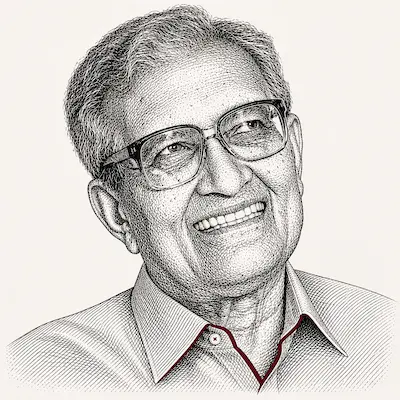 Amartya Sen
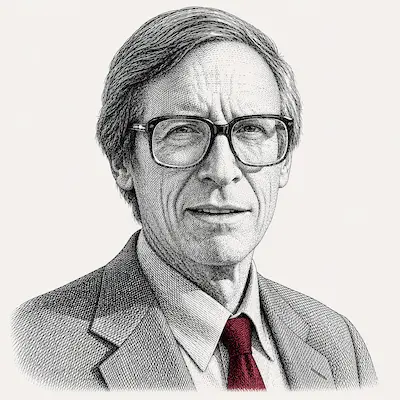 John Rawls
Build first (capability-building, institutional sequencing, and market-led growth before redistribution)
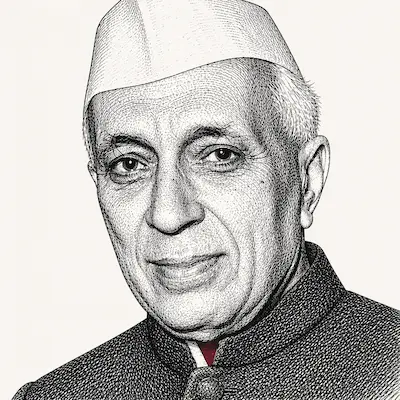 Jawaharlal Nehru
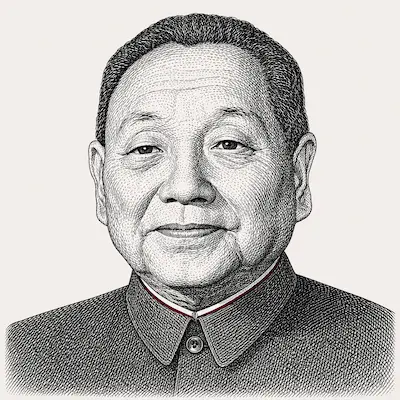 Deng Xiaoping
Redistribute now
Amartya SenJohn Rawls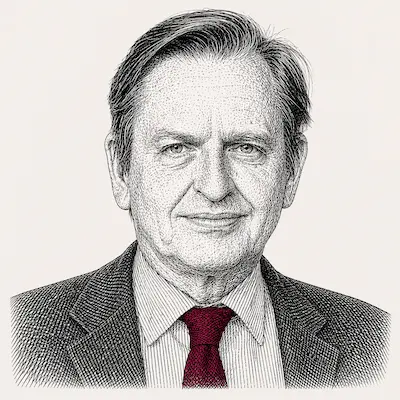 Olof Palme
Build first
Jawaharlal NehruDeng XiaopingSelected members
Amartya Sen
Will argue: Redistribution must expand real capabilities, health, education, nutrition, not just transfer income, and India's failure to do this is documented and ongoing.
He documented India's specific failures in nutrition, gender, and capability that make redistribution an urgent governance obligation, not a future luxury.
John Rawls
Will argue: India should aim for a property-owning democracy distributing productive assets, not merely income transfers that leave wealth concentration intact.
His difference principle provides the clearest philosophical framework for evaluating whether any redistributive design actually benefits India's least advantaged.
Olof Palme
Will argue: India should redistribute through wage structure and universal social insurance before wealth is concentrated, not through redistribution after the fact, though the Swedish model requires substantial adaptation to India's informal economy.
He governed the only documented large-scale implementation of redistribution that achieved equality and growth simultaneously, through wage compression and active labour markets rather than post-hoc transfers.
Jawaharlal Nehru
Will argue: Redistributive policy in India requires state institutional capacity first; ambitious redistribution without that capacity produces rent-seeking and misdirected spending, as his own record showed.
He made the foundational choices about Indian redistribution architecture, Five-Year Plans, public-sector investment, land reform, and his documented failures reveal why sequencing and institutional capacity matter more than redistributive ambition.
Deng Xiaoping
Will argue: Sustained growth through market liberalisation and targeted investment creates the surplus that makes redistribution fiscally possible; premature redistribution destroys the growth base, though his authoritarian sequencing cannot be transplanted to India.
He represents the strongest documented counterargument that growth must precede distribution, applied at comparable scale to India and with documented results that demand engagement.
Considered but not selected
Friedrich Hayek: His knowledge problem and spontaneous order arguments against redistribution are relevant but would largely duplicate Deng's growth-first position without adding a distinct line of reasoning; Deng brings the same structural caution with documented practitioner evidence at comparable scale.
Rosa Luxemburg: Her structural critique of capitalist accumulation is genuinely relevant to India's wealth concentration, but her framework addresses redistribution through transformation of ownership relations rather than policy design within a capitalist democracy, making her less applicable to the specific question of how India should redistribute within its existing constitutional framework.
Elinor Ostrom: Excluded per selection rules; while India's rural commons and community-level resource governance are relevant to some redistribution questions, the central issue here is macro-level wealth redistribution policy, which is outside her specialist commons framework.