The Long Council
Who was selected, and why
Should the EU build a unified military force?
The central tension
European strategic autonomy versus Atlantic alliance dependence, whether Europe can achieve genuine sovereignty through unified military capability or whether such integration would weaken the proven NATO framework that has guaranteed European security.
The two poles
Strategic Autonomy
Charles de Gaulle
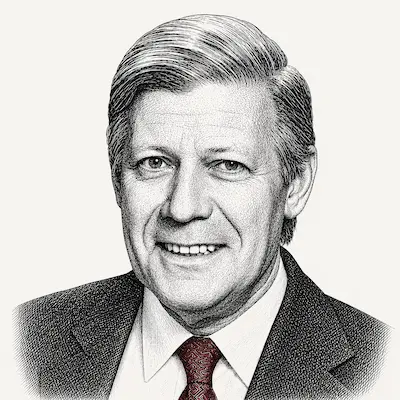 Helmut Schmidt
Atlantic Alliance
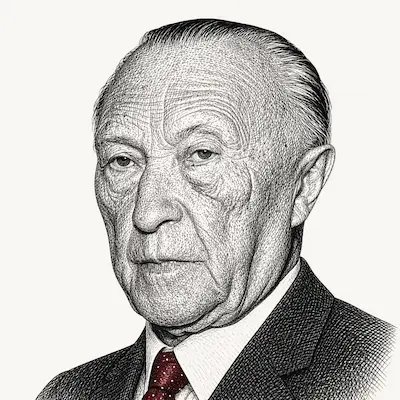 Konrad Adenauer
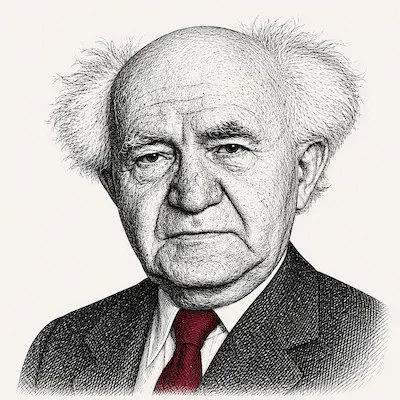 David Ben-Gurion
Selected members
Charles de Gaulle
Will argue: European sovereignty requires independent military capability; dependence on US protection is incompatible with European dignity and strategic flexibility
Architect of European strategic independence and documented opponent of subordination to US-led alliance structures
Helmut Schmidt
Will argue: European military integration can complement rather than replace NATO, but Europe needs autonomous capability to manage regional crises where US interests diverge from European ones
Managed European security during Cold War détente while maintaining both NATO commitment and European autonomy
Konrad Adenauer
Will argue: European security depends fundamentally on US commitment; divided European military capabilities would weaken rather than strengthen collective defense
Anchored West German security to Atlantic alliance and championed European integration within Western framework
David Ben-Gurion
Will argue: Military capability requires unified command and clear strategic doctrine; European military integration without genuine political integration would produce expensive ineffectiveness
Built independent military capability for a small state while managing alliance relationships with great powers
Considered but not selected
Sun Tzu: Pure strategic philosophy without specific alliance or institutional integration framework - Thatcher: Opposition to European integration would overshadow military-specific analysis - LKY: Small state strategy not applicable to continental-scale alliance questions