The Long Council
Who was selected, and why
Should the EU develop nuclear weapons itself?
The central tension
Strategic autonomy versus alliance dependence, whether European security requires an independent nuclear capability or whether existing arrangements (French deterrent, NATO nuclear sharing, US extended deterrence) provide adequate security at lower cost and risk.
The two poles
Strategic autonomy
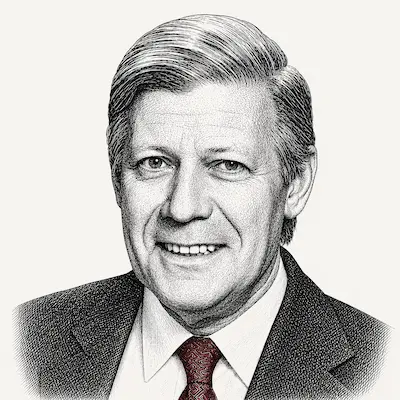 Helmut Schmidt
Charles de Gaulle
Alliance dependence
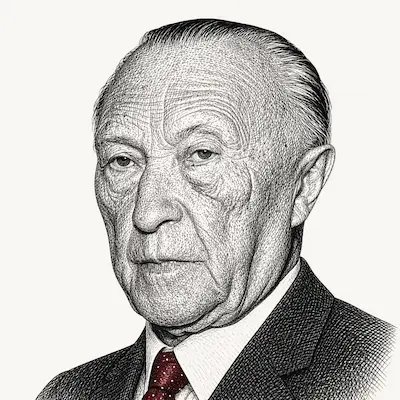 Konrad Adenauer
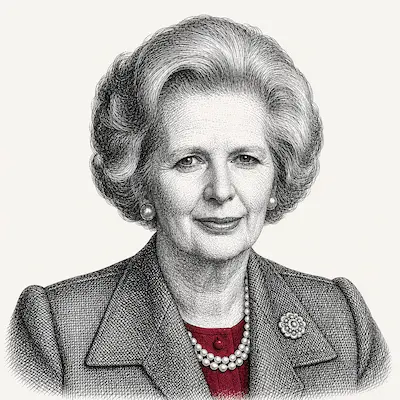 Margaret Thatcher
Selected members
Helmut Schmidt
Will argue: European strategic autonomy requires European nuclear capability as US commitment becomes less reliable; current arrangements leave Europe dependent on American decisions
Created the NATO Double-Track Decision and designed European security architecture during Cold War tensions with documented experience of nuclear strategy and alliance management
Konrad Adenauer
Will argue: European nuclear capability would destabilise the alliance structures that guarantee European security; integration should deepen existing arrangements, not replace them
Anchored West Germany to NATO nuclear architecture and documented the founding logic of European security through Atlantic alliance integration
Charles de Gaulle
Will argue: European states cannot rely on American nuclear guarantees when their vital interests diverge; EU nuclear capability is the logical extension of French strategic independence
Created France's independent nuclear deterrent (force de frappe) explicitly to ensure European strategic autonomy independent of US guarantees
Margaret Thatcher
Will argue: EU nuclear capability would undermine NATO solidarity, create dangerous proliferation precedents, and provide less reliable deterrence than existing arrangements
Governed during major nuclear modernisation decisions and documented advocate for maintaining NATO nuclear arrangements over European alternatives
Considered but not selected
David Ben-Gurion: Nuclear ambiguity strategy not applicable to EU context where transparency would be required - Indira Gandhi: Non-alignment framework incompatible with EU's alliance commitments - Franklin Roosevelt: Pre-nuclear governance experience not relevant to current strategic context