The Long Council
Who was selected, and why
Should the EU build an army?
The central tension
European strategic autonomy versus transatlantic alliance dependence, whether Europe can achieve genuine security independence without undermining the NATO framework that has guaranteed its defense for seventy years.
The two poles
Strategic Autonomy
Charles de Gaulle
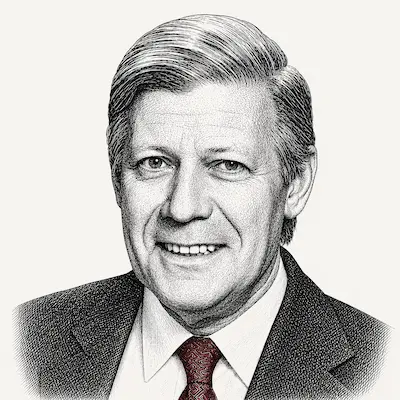 Helmut Schmidt
Alliance Dependence
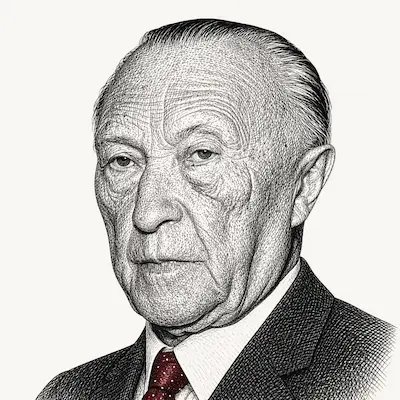 Konrad Adenauer
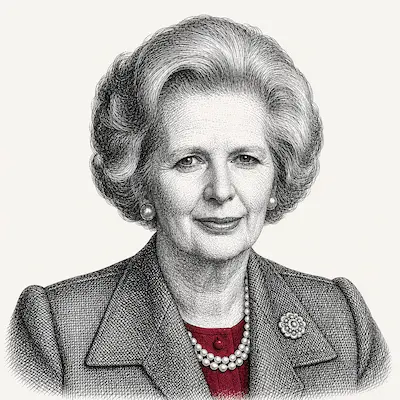 Margaret Thatcher
Selected members
Charles de Gaulle
Will argue: Europe cannot be sovereign without controlling its own defense; dependence on American protection makes Europe a client, not a partner
Architect of European strategic independence and the most systematic advocate for Europe governing its own defense
Helmut Schmidt
Will argue: European defense capability is necessary but must complement, not replace, NATO; the question is strategic autonomy within alliance structures
Governed European defense architecture during the Cold War and navigated the tension between European interests and alliance obligations
Konrad Adenauer
Will argue: European defense integration without American guarantee invites German domination and Russian pressure; the Atlantic framework prevents both
Founded West Germany's post-war security architecture through deep integration with Western alliance structures
Margaret Thatcher
Will argue: European armies are expensive duplications; NATO works; European defense integration is a French project to diminish American and British influence
Governed during the end of the Cold War and articulated the strongest defense of Anglo-American alliance primacy over European integration
Considered but not selected
Franklin D. Roosevelt: Foundational role in creating NATO's predecessor institutions but predates the specific EU-NATO tension by decades - Sun Tzu: Strategic framework applicable but lacks specific insight into alliance structures and democratic defense integration - Nehru: Non-alignment doctrine not applicable to alliance-integrated European democracies facing specific Russian threat