The Long Council
Who was selected, and why
Is fearing AI's power a distraction from fearing its owners?
The central tension
Should we worry more about a handful of powerful people controlling AI, or about AI itself becoming too powerful to control?
The two poles
Focus on owners and concentrated power
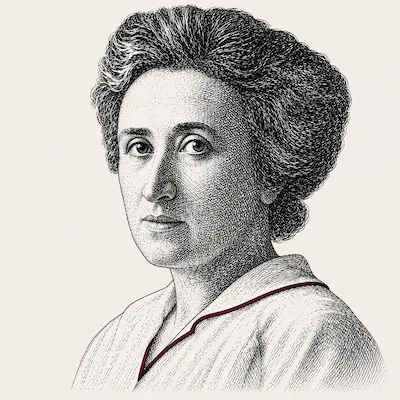 Rosa Luxemburg
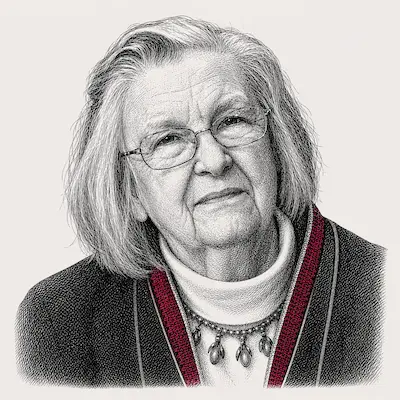 Elinor Ostrom
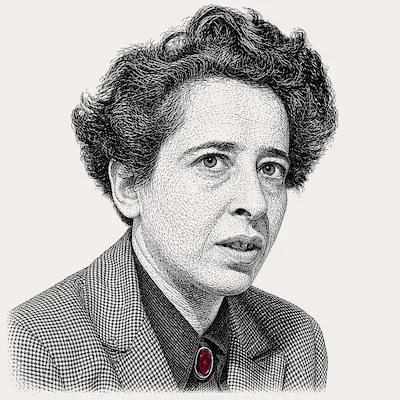 Hannah Arendt
Focus on the technology's own danger and the need for direct restraint regardless of who owns it
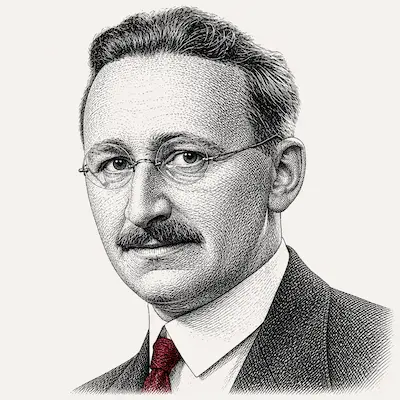 Friedrich Hayek
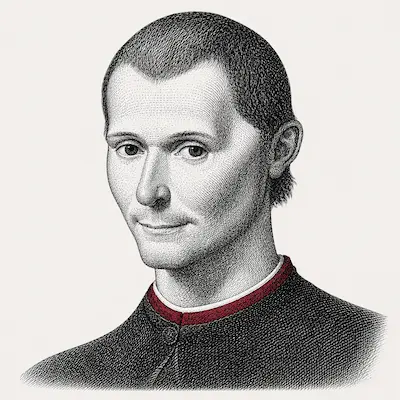 Niccolò Machiavelli
capital accumulation
institutional design
bureaucratic domination
knowledge problems
and the instrumental use of force and deception. This is flagged throughout.
Selected members
Rosa Luxemburg
Will argue: AI's danger is inseparable from who owns the capital behind it and whose interests accumulation serves.
Her theory of capital accumulation explains why private owners of transformative technology are the structural problem, not the technology itself.
Elinor Ostrom
Will argue: The real failure is concentrated private control without accountable rules, not the technology's raw capability.
AI is becoming a quasi-commons resource whose governance by private firms versus public institutions is exactly the design question her framework addresses.
Hannah Arendt
Will argue: Fixating on abstract AI power risks repeating the error of blaming systems instead of naming the people who command them.
Her distinction between power and violence, and her analysis of bureaucratic "rule by nobody," directly addresses whether diffuse technological systems or identifiable owners bear responsibility.
Friedrich Hayek
Will argue: Blaming owners misdiagnoses the problem, which is that no one, including the owners, can fully grasp or steer what they have built.
His knowledge problem argument suggests the danger is not who owns a technology but whether any actor, owner or regulator, can possess the knowledge to control it safely.
Niccolò Machiavelli
Will argue: New instruments of power corrupt and are fought over regardless of the founders' intentions, so both the owners and the tool must be watched.
His realist separation of power analysis from moral framing cuts through the debate by asking what capability actually does to incentives regardless of who holds it.
Considered but not selected
Ibn Khaldun: his asabiyya framework explains institutional decay and cohesion but adds little on the specific owner-versus-technology framing central to this question. Milton Friedman, his critique of concentrated power and monopoly is relevant but Hayek already carries the market-knowledge pole with stronger documented material. Frantz Fanon, his structural critique of elite capture is a plausible fit but his framework is specifically colonial and post-colonial, requiring heavier extrapolation than Luxemburg's more directly economic framework.