The Long Council
Who was selected, and why
How to negotiate successfully with current Iranian leaders?
The central tension
Should negotiators treat Iran's survival needs as the starting point and offer real sanctions relief, or hold maximum pressure until Iran makes irreversible concessions first?
Where they stand
Engage on survival terms (offer relief to get agreement)
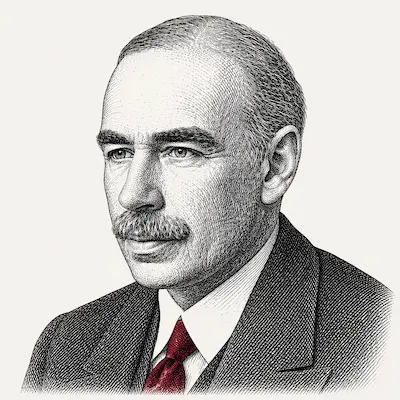 John Maynard Keynes
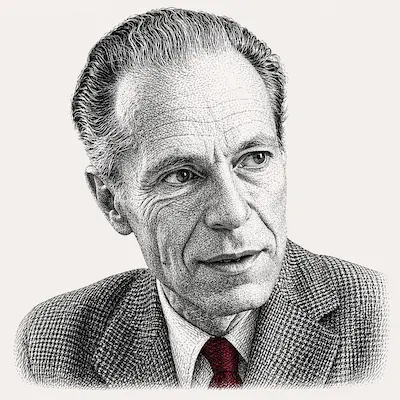 Albert O. Hirschman
Pressure until concession (extract commitments before relief)
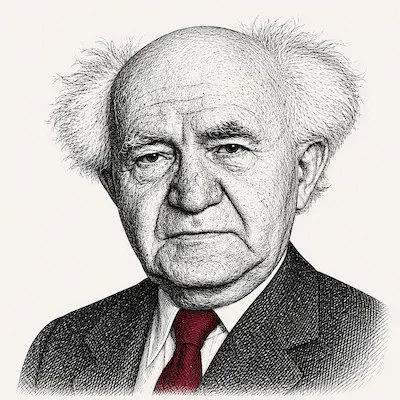 David Ben-Gurion
Process and legitimacy (how any deal is structured and whether it will hold)
 Niccolò Machiavelli
swing
Selected members
John Maynard Keynes
Will argue: Sanctions relief must be substantial and upfront enough that Iranian leaders can credibly sell compliance domestically, or any agreement will collapse.
His Versailles analysis is the council's sharpest documented case study of what happens when a settlement imposes costs the other party cannot structurally bear.
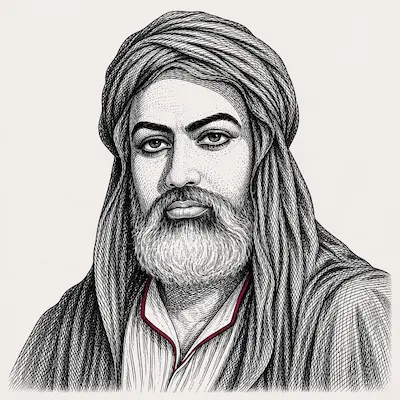
Ibn Khaldun
Will argue: External pressure on a regime with genuine popular legitimacy and ideological cohesion strengthens it; the real question is whether Khamenei's asabiyya is strong enough to survive, and the anchors suggest it is.
His framework on external pressure and asabiyya directly addresses whether maximum pressure consolidates or fractures a target regime.
David Ben-Gurion
Will argue: Any agreement that does not include verifiable, irreversible dismantlement of enrichment infrastructure is not a security agreement but a delay, and small states in the region cannot afford delays.
He is the council's documented practitioner of existential security negotiation and nuclear ambiguity strategy, operating in the same region against adversaries with overlapping interests.
Niccolò Machiavelli
Will argue: The negotiator who relies only on the other party's good faith has already lost; the agreement must be structured so that compliance is in Iran's self-interest regardless of intent, and defection is immediately costly.
His framework on the structural difficulty of new orders, the gap between the appearance and substance of agreements, and the management of adversaries who cannot be fully trusted is directly applicable.
Albert O. Hirschman
Will argue: The most durable agreements are those that make exit more costly than voice, designing the deal so that Iranian leaders have more to lose by breaking it than by maintaining it is more important than the specific concession levels.
His irreversibility threshold and exit/voice framework directly address the question of what kinds of commitments are durable versus which will be abandoned when political conditions change.
Considered but not selected
Helmut Schmidt: Considered for his energy security and détente experience, and his documented willingness to negotiate with adversaries under US pressure. Not selected because his specific framework (European monetary architecture, NATO alliance management) does not add a genuinely distinct analytical tradition beyond what Keynes and Machiavelli already cover on the deal-structure and leverage questions. His "negotiate with the adversary you have" position is real but is absorbed within the other members' arguments.
Sun Tzu: Considered for his framework on deception, information asymmetry, and achieving objectives without direct confrontation. Not selected because this is a cooperative governance problem with an adversarial dimension, his purely adversarial framework risks recommending tactics that destroy the negotiating relationship required for any agreement. The special flag in his profile applies: do not select for problems requiring negotiated cooperation.
Ali ibn Abi Talib: Considered for his documented Islamic governance framework and its potential relevance to understanding what legitimate authority means within Iran's political system (Anchor 1: Khamenei as supreme authority). Not selected because his framework addresses the internal legitimacy of a ruler toward his subjects, not the external dynamics of international negotiation. His counsel would be more relevant to a question about Iranian domestic governance reform than to the negotiating strategy question as posed.