The Long Council
Who was selected, and why
What conditions and actions would resolve the conflict between Iran and the USA?
The central tension
Should the US and Iran treat each other as adversaries who must be contained, or as rivals who can negotiate mutual interests?
The two poles
Negotiate mutual interests (engagement, staged concessions, security guarantees)
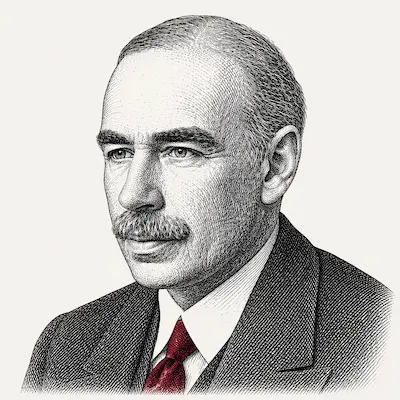 John Maynard Keynes
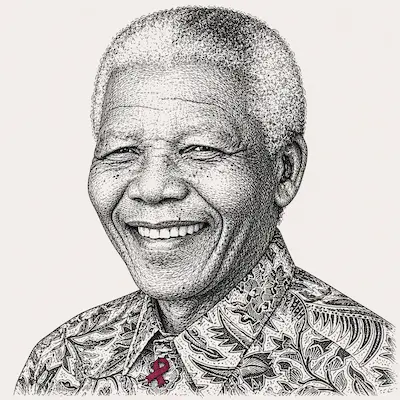 Nelson Mandela
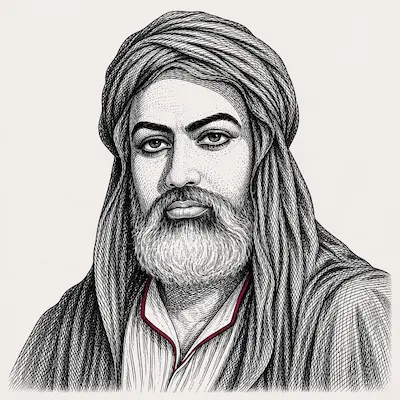 Ibn Khaldun
Contain and pressure (deterrence, sanctions, credible force)
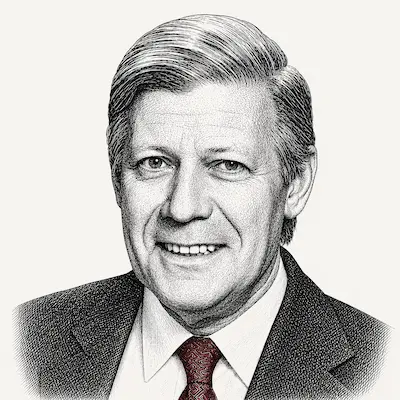 Helmut Schmidt
 Niccolò Machiavelli
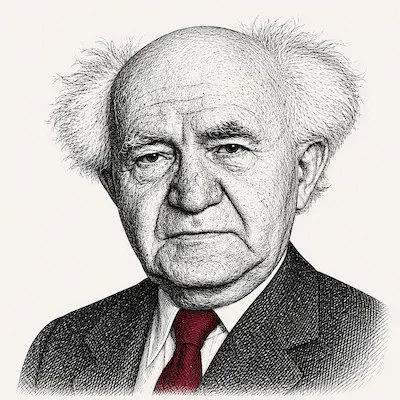 David Ben-Gurion
Selected members
Helmut Schmidt
Will argue: Mutual security interests and energy economics create real incentives for negotiation, but durable agreement requires credible deterrent capacity on both sides first.
Managed adversarial superpower relationships through reciprocal deterrence and direct negotiation, including documented engagement with the USSR during the Cold War.
John Maynard Keynes
Will argue: Sanctions designed to punish rather than create negotiating conditions repeat the Versailles error; a deal must give Iran a viable economic path or it will collapse under domestic pressure.
Demonstrated at Versailles that ignoring the structural economic grievances of a defeated or isolated state creates conditions for future catastrophe, not durable peace.
Nelson Mandela
Will argue: Neither side can achieve its objectives through permanent enmity; a staged confidence-building process with mutual concessions is the only documented path to a self-sustaining agreement.
Negotiated from a position of principle with a government that regarded him as an enemy, insisting that sustainable resolution requires inclusion of adversaries in a framework both sides can defend.
Ibn Khaldun
Will argue: Sanctions that impoverish the Iranian population without fracturing elite cohesion will strengthen the regime's internal legitimacy; the precondition for negotiated change is addressing the structural conditions that sustain revolutionary asabiyya. 5. Niccolò Machiavelli
His framework for how external pressure interacts with a regime's internal asabiyya directly predicts whether sanctions and military threats consolidate or fracture Iranian political cohesion.
David Ben-Gurion
Will argue: Any resolution must include verifiable limits on Iranian nuclear capability, the existential threat dimension cannot be bracketed as a secondary issue for later negotiation.
Built a small state's security doctrine against a hostile regional power through simultaneous deterrence and pragmatic alliance-making, with documented experience of Iran as part of the peripheral strategy.
Considered but not selected
Amartya Sen: His capability approach and democracy-as-development argument are relevant to Iranian civil society, but the question turns on inter-state strategic dynamics rather than domestic development policy; his framework adds less at the level of state-to-state negotiation design than the selected members.
Kautilya: His mandala framework for managing adversarial neighbours and his sequential use of sama/dana/bheda/danda is highly applicable, but Machiavelli covers the realist strategic pole with a stronger documented record of application to Western-context adversarial negotiations, and the council would risk redundancy between the two.
Hannah Arendt: Her power/violence distinction and analysis of how authoritarian regimes sustain themselves through atomisation are relevant to the Iranian domestic dimension, but the question as posed centres on the bilateral resolution framework rather than the internal politics of the Iranian state; her contribution would be thinner than the selected members'.