The Long Council
Who was selected, and why
What defines the success of the US after 250 years, compared to other nations?
The central tension
Does success mean durable institutions and freedom, or does it mean delivering genuine wellbeing to all the people inside them?
The two poles
Institutional durability & freedom
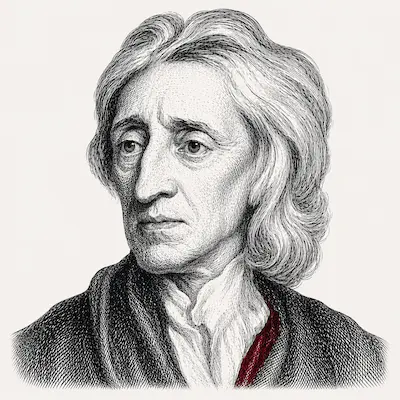 John Locke
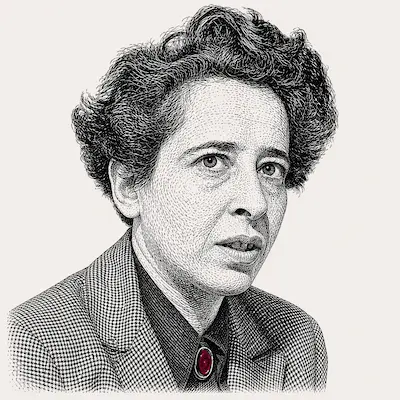 Hannah Arendt
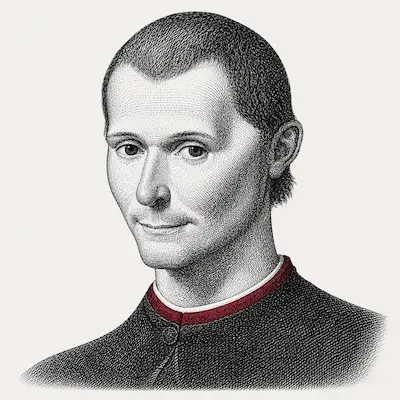 Niccolò Machiavelli
Delivered wellbeing & justice
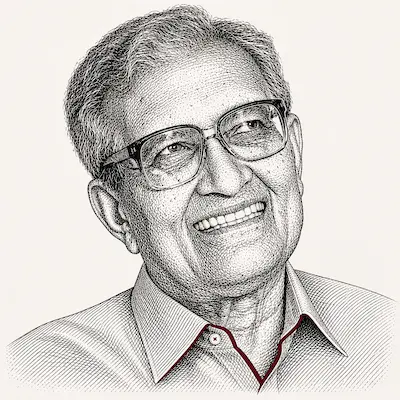 Amartya Sen
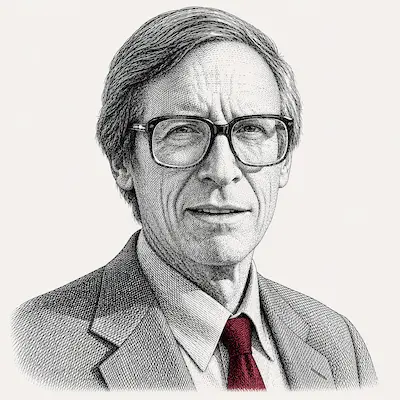 John Rawls
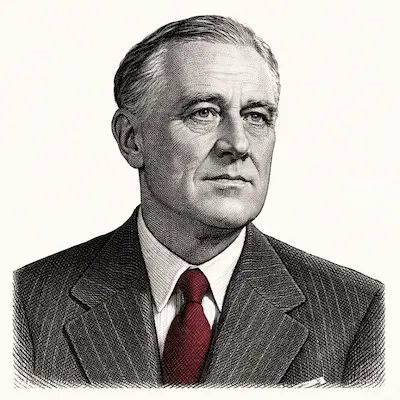 Franklin D. Roosevelt
Selected members
John Locke
Will argue: The US succeeded by institutionalising consent and individual rights at scale, but its contradictions on slavery and racial exclusion are foundational failures his own framework condemns.
His framework of consent, natural rights, and property directly furnished the US founding documents and remains the benchmark against which American success is measured.
Hannah Arendt
Will argue: The US founding genuinely solved the problem of creating new political authority without violence or divine sanction, but 250 years of bureaucratic rule by nobody and the erosion of genuine participation now threaten the power that founding generated.
Her systematic analysis of the American founding as the most successful act of new political authority in modernity, and of the conditions under which democracies erode, makes her the sharpest analyst of what the US built and what threatens it.
Niccolò Machiavelli
Will argue: By the Discursive standard, the US is a remarkable success, a republic that has survived succession crises, civil war, and great power competition, but its current institutional brittleness and factional polarisation are exactly the symptoms he warned precede decline.
His framework for evaluating whether a new political order actually holds, whether it survives succession, internal faction, and external pressure, is the realist counterpoint to idealist readings of American success.
Amartya Sen
Will argue: By capability metrics, US success is partial and unevenly distributed, extraordinary freedoms for many coexist with documented capability deprivation for millions, and the comparison with peer democracies on health, education, and social protection is unflattering.
His capability framework provides the only rigorous alternative metric to GDP and constitutional longevity: what were Americans actually able to do and be, across the full distribution of the population?
John Rawls
Will argue: The US established the right constitutional framework for a just basic structure but built a welfare-state capitalism that Rawls explicitly judged less just than a property-owning democracy, concentrating wealth while failing the least advantaged on measurable dimensions.
His difference principle offers the most precise philosophical test: inequalities in American society are only justified if they benefit the least advantaged, a standard the US has persistently failed to meet by its own constitutional logic.
Franklin D. Roosevelt
Will argue: American success is real but conditional, the republic proved it could reform capitalism to save itself, build international institutions, and survive existential crisis, but its documented failures on racial justice and civil liberties reveal that its ideals consistently outrun its practice.
He is the practitioner who most directly tested whether American institutions could survive catastrophic economic failure and global war, and who defined what American success looks like in its most expansive democratic moment.
Considered but not selected
Alexis de Tocqueville: Not on the roster. His framework is the obvious reference for American democratic exceptionalism, but he is not a council member and cannot be selected.
Ibn Khaldun: His asabiyya cycle framework would diagnose current US polarisation as a sign of dynastic decline, but the question asks for a comparative evaluative framework across 250 years, not a structural decay diagnosis. His analytical contribution here would largely duplicate Machiavelli's institutional durability argument without adding a distinct tradition, and the balance of poles was already achieved.
Elinor Ostrom: The question does not primarily turn on shared resource governance or collective-action design. She would add a polycentric institutional lens but this is not the fulcrum of the issue as posed, and her selection rules explicitly caution against treating her as a general-purpose voice.