The Long Council
Who was selected, and why
Can the European Union become both more democratic and more decisive at the same time, and if so, how?
The central tension
Democratic legitimacy versus executive efficiency, the more the EU involves national parliaments, the European Parliament, and citizen consultation, the slower and more cumbersome its decision-making becomes; but the more it centralises authority for speed and coherence, the more it appears technocratic and unaccountable.
The two poles
Democratic Accountability
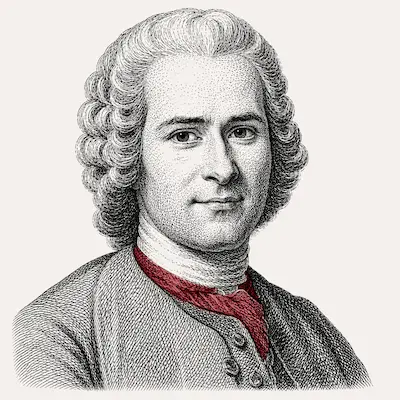 Jean-Jacques Rousseau
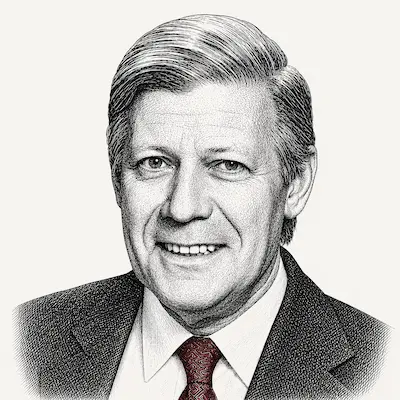 Helmut Schmidt
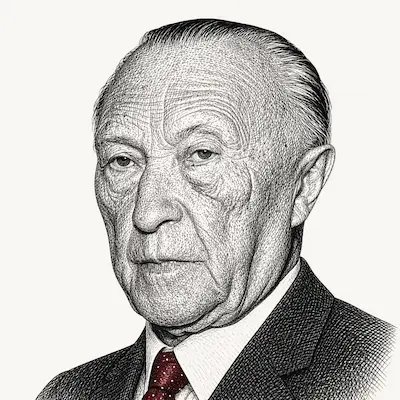 Konrad Adenauer
Executive Efficiency
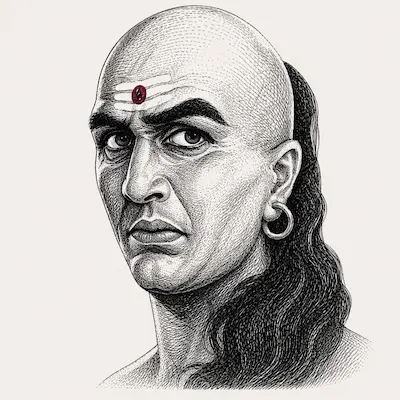 Kautilya
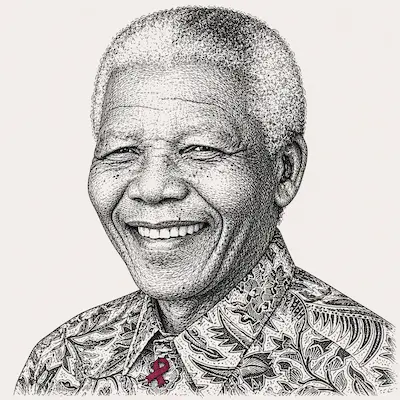 Nelson Mandela
Selected members
Jean-Jacques Rousseau
Will argue: That the EU's democratic deficit is structural, meaningful democracy requires citizens who can participate directly in their own governance, and the EU's scale and complexity make this impossible
His theory of popular sovereignty and the general will addresses the fundamental legitimacy question: can European citizens constitute a genuine political community capable of self-rule?
Kautilya
Will argue: That institutional design must prioritise effectiveness first, legitimate authority derives from delivering welfare and security, not from elaborate consultation processes
The Arthashastra provides the most systematic framework for designing institutions that are both responsive to welfare concerns and capable of decisive action under complex conditions
Helmut Schmidt
Will argue: That European integration requires accepting democratic costs in the short term for democratic benefits in the long term, effectiveness builds the legitimacy that consultation cannot create
Governed West Germany within European frameworks while maintaining national democratic accountability, and navigated the tension between speed and legitimacy during multiple crises
Konrad Adenauer
Will argue: That European institutions must be designed to make national democracies stronger, not to bypass them, integration should enhance rather than replace national democratic processes
Architect of European integration from its founding, who understood that pooling sovereignty could strengthen rather than weaken democratic legitimacy under the right institutional conditions
Nelson Mandela
Will argue: That democratic legitimacy and decision-making effectiveness are not in tension but mutually reinforcing when institutions are designed to make inclusion productive rather than paralysing
Navigated the transition from liberation to governance by designing institutions that balanced inclusive legitimacy with effective decision-making capacity
Considered but not selected
Hannah Arendt: Excluded because her critique of bureaucratic rule and preference for council systems provides powerful diagnosis but limited institutional design guidance for the EU's specific scale and complexity - John Rawls: Excluded because his framework for justice as fairness is primarily domestic and his international theory in Law of Peoples does not address supranational democratic institution-building - Franklin D. Roosevelt: Excluded because his coalition-building experience, while relevant, was within a single national framework rather than across multiple national democracies