The Long Council
Who was selected, and why
Should the EU harmonize legislation and tax policy across all member states?
The central tension
The fundamental conflict between deeper European integration (which requires surrendering national control over core sovereign functions) and democratic accountability (which operates through national institutions that citizens can meaningfully influence).
Selected members
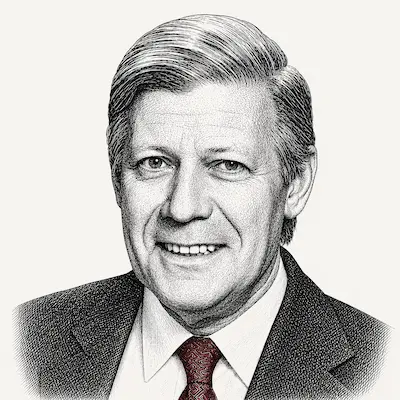
Helmut Schmidt
Will argue: European integration must deepen institutionally before widening politically, but fiscal sovereignty cannot be surrendered without political union first being achieved.
As architect of the European Monetary System and advocate for European stability, Schmidt navigated the specific tension between German sovereignty and European integration throughout his chancellorship.
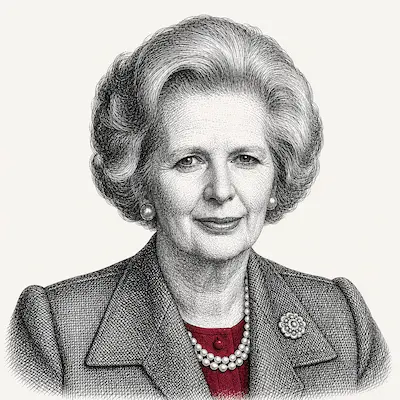
Margaret Thatcher
Will argue: The single market (free movement of goods/services/capital) is beneficial, but harmonized legislation and taxation constitute a European superstate that destroys democratic accountability.
Her Bruges Speech (1988) and resistance to European federalism represent the most articulated case for preserving national sovereignty within European cooperation.
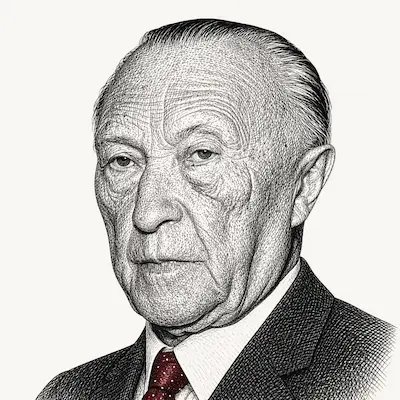
Konrad Adenauer
Will argue: Harmonization is necessary to prevent a future German government from dismantling integration, European institutions must be strong enough to survive national political changes.
As founding architect of European integration and the Franco-German partnership, Adenauer established the intellectual case for surrendering sovereignty to gain effective sovereignty through European institutions.
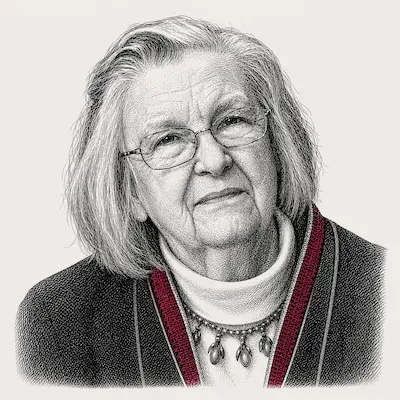
Elinor Ostrom
Will argue: Complete harmonization destroys the adaptive capacity that comes from institutional diversity, some coordination is necessary, but uniform rules eliminate the experimentation that produces policy innovation.
Her polycentric governance framework and analysis of how multiple overlapping institutions handle complex problems applies directly to the EU's multi-level governance structure.
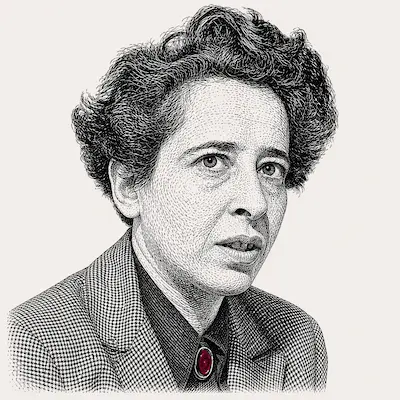
Hannah Arendt
Will argue: Harmonization without genuine European democratic institutions creates rule by nobody, citizens cannot hold accountable institutions they cannot meaningfully influence through elections.
Her analysis of legitimacy, the relationship between power and violence, and the conditions for democratic accountability addresses the core tension between technocratic efficiency and democratic participation in European integration.
Considered but not selected
John Locke: His consent framework requires clear mechanisms for popular approval that don't exist at EU scale for harmonization decisions.
Rousseau: The general will framework cannot operate across the cultural and linguistic diversity of the EU, would only provide abstract principles without operational guidance.
Hayek: While relevant to the economic arguments, his framework overlaps too much with Thatcher's documented positions and adds limited additional perspective.