The Long Council
Who was selected, and why
How can the EU reduce its dependency on US and Chinese AI?
The central tension
Technological sovereignty versus global integration, whether the EU should prioritize autonomous AI development through industrial policy and strategic autonomy, or leverage global networks and market mechanisms while managing dependencies through regulatory and alliance strategies.
The two poles
Sovereignty
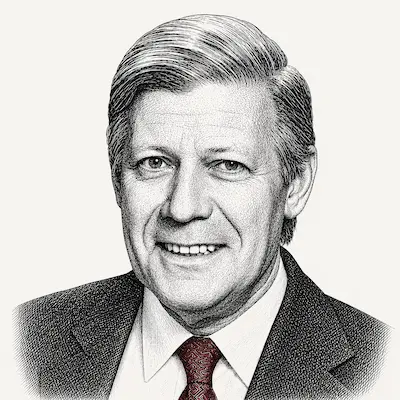 Helmut Schmidt
Jean-Baptiste Colbert
Integration
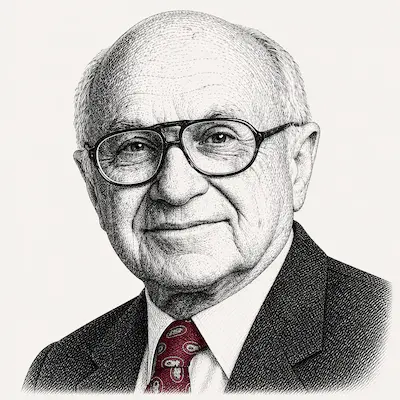 Milton Friedman
Selected members
Helmut Schmidt
Will argue: EU must treat AI capability as infrastructure sovereignty requiring state investment, European coordination, and diversified dependencies rather than autarky.
Schmidt's framework on energy security as sovereignty, European integration, and small-power strategy under great power competition directly applies to AI dependency.
Jean-Baptiste Colbert
Will argue: The EU needs coordinated industrial policy, strategic state investment in AI infrastructure, and selective protection of European AI development until it achieves competitive scale.
Colbert's mercantile framework for building state capacity in strategic industries against established competitors provides the historical precedent for industrial policy in emerging technologies.
Milton Friedman
Will argue: EU should focus on regulatory frameworks and market mechanisms rather than industrial policy, leverage global AI development through trade and investment, and avoid the inefficiencies of state-directed technology development.
Friedman's framework on free markets, trade benefits, and the costs of government intervention provides the counterargument to industrial policy approaches to AI development.
Considered but not selected
LKY: Relevant for small state technology strategy but his city-state model doesn't translate well to the EU's federal complexity and democratic constraints - Deng Xiaoping: Relevant for state-led technology development but his authoritarian framework conflicts with EU governance structures and would require extensive extrapolation - Hayek: Would reinforce Friedman's market position without adding distinct analytical value to the AI-specific technology questions