The Long Council
Who was selected, and why
How can the EU protect its economy from heavily subsidized Chinese imports?
The central tension
Free trade efficiency versus industrial sovereignty, whether the EU should accept Chinese subsidized imports for consumer benefit or protect domestic industry through strategic trade policy.
The two poles
Free Trade
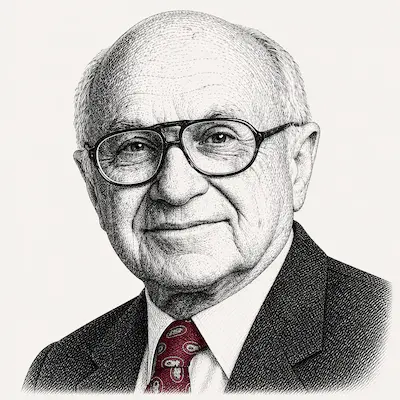 Milton Friedman
Strategic Protection
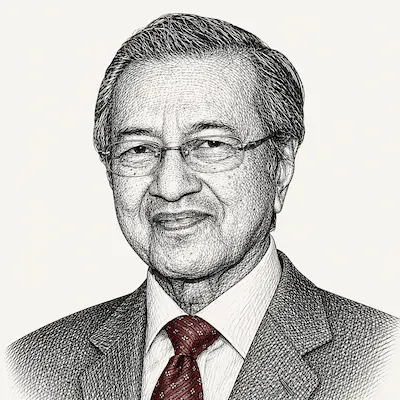 Mahathir Mohamad
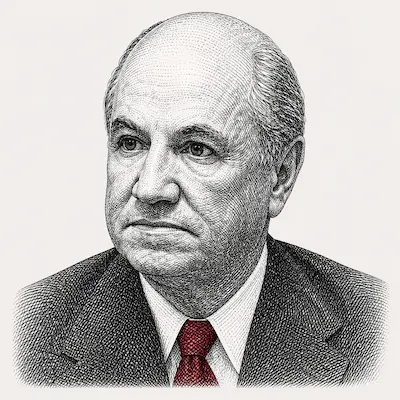 Raúl Prebisch
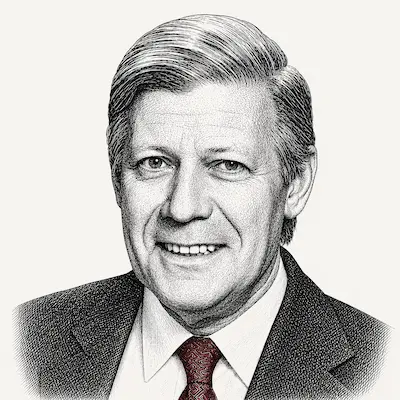 Helmut Schmidt
Selected members
Milton Friedman
Will argue: Chinese subsidies benefit European consumers; EU protection would impose costs on its own citizens to protect inefficient industries
The strongest intellectual voice for free trade and against protectionist responses to subsidies
Mahathir Mohamad
Will argue: The EU has every right to protect its strategic industries from predatory Chinese practices; economic sovereignty requires defensive measures
Experienced practitioner of protecting domestic industry from unfair international competition during the 1997 Asian Financial Crisis
Raúl Prebisch
Will argue: Chinese subsidies create artificial comparative advantage that undermines EU industrial development; free trade between structurally unequal partners produces divergence
Theorist of how asymmetric trade relationships disadvantage the importing economy structurally
Helmut Schmidt
Will argue: Industrial dependence on China creates the same sovereignty vulnerabilities as energy dependence; the EU must diversify its supply chains and protect strategic capabilities
Governed during energy crises and understood economic dependency as a sovereignty question
Considered but not selected
Lee Kuan Yew: His framework is for a small trading state, not a large economic bloc like the EU; his experience is making Singapore indispensable rather than protecting domestic industry - Hayek, Would largely echo Friedman's free trade position without adding distinct analytical value - Deng Xiaoping, His state capitalism model is part of the problem being analyzed, not a solution framework for the EU