The Long Council
Who was selected, and why
How can Europe develop AI capabilities while reducing its dependence on the US?
The central tension
Should Europe build its own AI industry even at real cost, or stay deeply tied to US technology?
Where they stand
Build European AI independence
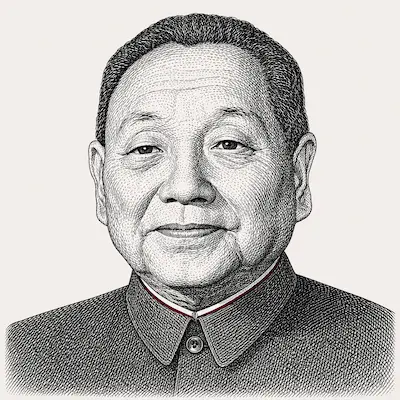 Deng Xiaoping
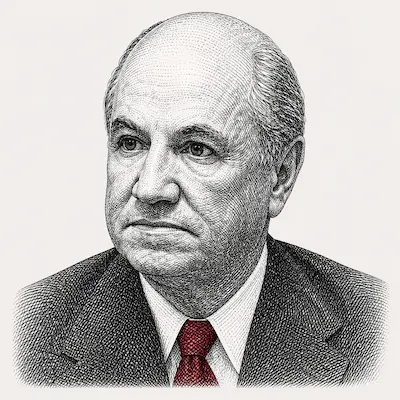 Raúl Prebisch
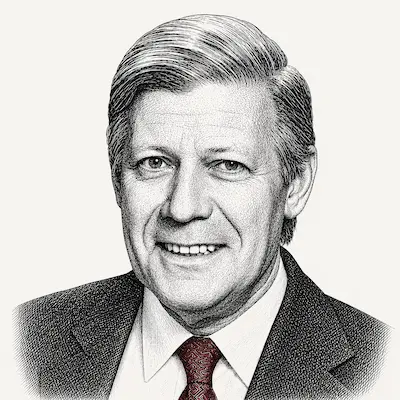 Helmut Schmidt
Stay open and interdependent
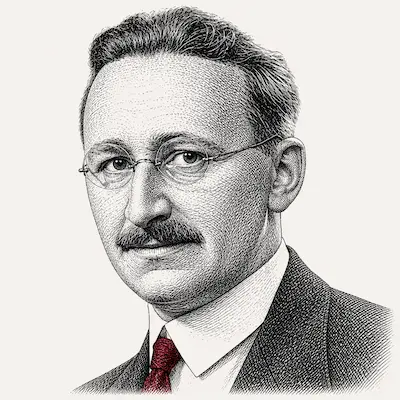 Friedrich Hayek
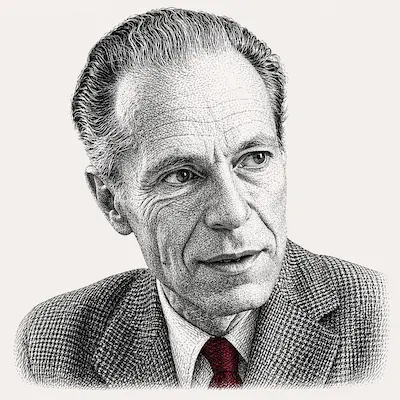 Albert O. Hirschman
Design smarter shared institutions
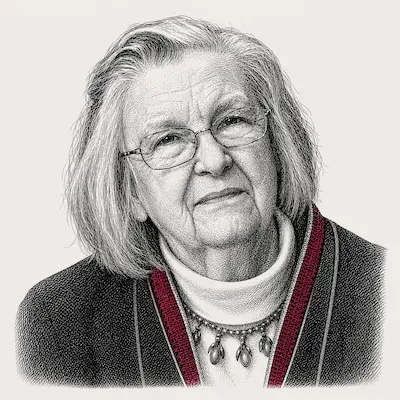 Elinor Ostrom
Selected members
Deng Xiaoping
Will argue: Shelter European AI firms now, use public contracts to build capability, and open up only once homegrown alternatives exist.
He turned a technology-lagging country into a global competitor by using state-directed industrial policy and protected development zones.
Raúl Prebisch
Will argue: Without its own AI industry, Europe will keep setting the rules while America captures all the money and power.
He proved that countries supplying inputs to richer technology powers get poorer terms over time, exactly Europe's current risk.
Helmut Schmidt
Will argue: Europe cannot match the US in five years but must stop locking in dependencies that will make it subordinate in twenty.
He treated energy dependence as a security threat and built European monetary coordination to reduce reliance on a single outside power.
Friedrich Hayek
Will argue: No EU official can know which AI bets will pay off, and protecting the wrong champions will produce expensive mediocrity.
He showed that central planners lack the scattered local knowledge needed to pick winners in complex fast-moving industries.
Albert O. Hirschman
Will argue: The real question is when dependence on US cloud and chips becomes too embedded to ever reverse, and Europe is approaching that point.
He mapped how trade relationships quietly lock countries in until exit becomes practically impossible, which fits Europe's infrastructure choices now.
Elinor Ostrom
Will argue: Each EU country is cutting its own deal with US tech giants because no one has built trusted shared European infrastructure yet.
She designed rules that stop groups from free-riding on shared resources, exactly what 27 competing member states need here.
Considered but not selected
Lee Kuan Yew: Highly relevant on small-state technology strategy and meritocratic industrial policy, but his framework is specific to a city-state with a single government making integrated decisions. The EU's 27-member collective action problem is structurally different from Singapore's unitary governance, and Deng's catch-up industrialisation framework covers the "strategic industrial policy" pole more completely at continental scale.
Nehru: His Five-Year Plan and Planning Commission experience is directly relevant to state-led technology development, and his non-alignment doctrine applies to Europe's attempt to maintain strategic autonomy from both US and Chinese AI ecosystems. However, the council already has strong coverage of the industrial policy pole (Deng, Prebisch, Schmidt), and Nehru's documented failures, the licence raj, the 1962 China miscalculation from strategic idealism, would primarily reinforce the Hayek critique rather than adding a new analytical dimension.
Thatcher: Relevant as a counterpoint to industrial policy (she would ally with Hayek on the knowledge problem and add documented opposition to EU-level economic coordination), but her framework would largely echo Hayek's without bringing a distinct register. The Hayek-Hirschman pairing on the integration-realism pole is analytically richer than substituting either for Thatcher, who adds rhetorical force but less analytical depth on this specific question.