The Long Council
Who was selected, and why
How can the EU benefit from the US-China AI race?
The central tension
Should the EU use its regulatory power as a market weapon to shape global AI, or does heavy regulation simply push innovation elsewhere and leave Europe behind?
The two poles
Regulation as leverage
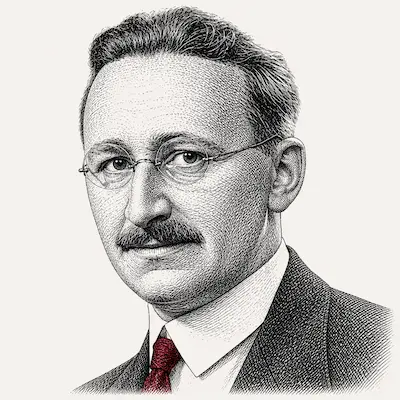 Friedrich Hayek
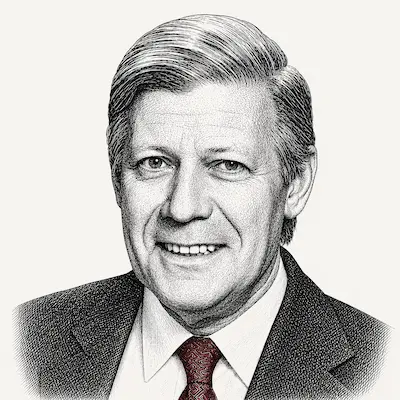 Helmut Schmidt
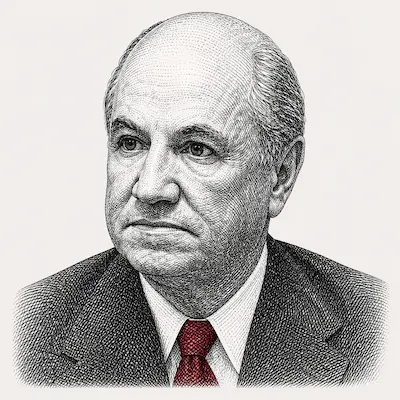 Raúl Prebisch
Innovation and openness
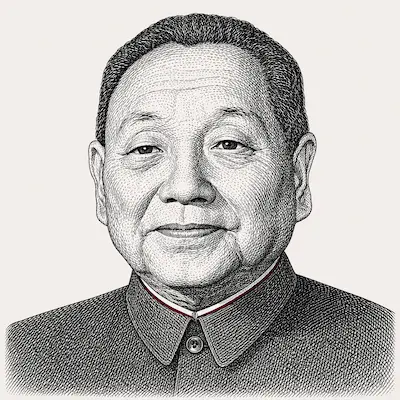 Deng Xiaoping
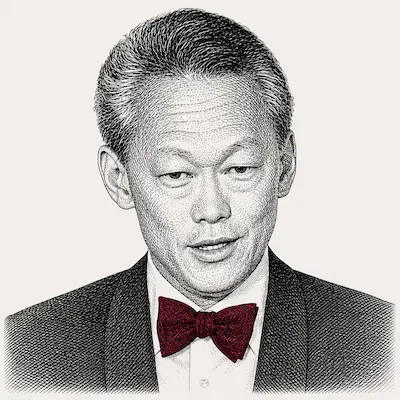 Lee Kuan Yew
Selected members
Helmut Schmidt
Will argue: The EU AI Act is a sovereignty instrument, not a product standard, and Brussels must use it as Schmidt used the EMS, to create structural dependencies that serve European interests rather than American or Chinese ones.
Governed a mid-size trading state that built strategic leverage through institutional construction, energy diversification, and alliance management rather than raw power.
Friedrich Hayek
Will argue: The EU AI Act codifies regulators' pretence of knowledge about a technology that is still discovering itself, and will produce a two-tier world where the EU regulates what the US and China actually build.
His knowledge-problem argument directly challenges whether any regulatory body can correctly specify what "safe" or "high-risk" AI means without destroying the dispersed innovation that produces the knowledge regulators claim to possess.
Deng Xiaoping
Will argue: The EU should create differentiated AI development zones, regulatory sandboxes that allow experimental deployment, rather than applying uniform binding rules that freeze the technology at today's risk profile.
Designed a strategy of selective opening, importing technology and capital while maintaining political control, that extracted maximum developmental benefit from great-power rivalry without subordinating China to either bloc.
Lee Kuan Yew
Will argue: The EU's comparative advantage is not being a third superpower in AI but being the world's most credible certifier of AI safety, making European approval a prerequisite for access to safety-conscious markets globally, as Singapore made itself indispensable for trade rather than trying to outcompete its neighbours.
Governed a small trade-dependent economy that made itself indispensable to both US and Chinese interests by being a disciplined, high-quality node in global supply chains, exactly the position the EU's semiconductor and safety-standard infrastructure could occupy.
Raúl Prebisch
Will argue: If the EU remains a consumer of AI systems built to US or Chinese standards, it will face a digital terms-of-trade problem, paying technology rents to the centre while its own productive capacity atrophies; the AI Act, if enforced with enough market muscle, is the first instrument to make the EU a standard-setter rather than a standard-taker.
Documented that structural asymmetries in trade, not policy mistakes, systematically transfer value from peripheral producers to centre standard-setters, and that the only escape is to move up the value chain from standard-taker to standard-setter.
Considered but not selected
Amartya Sen: Relevant on whether AI development should be measured by capability expansion rather than GDP growth, but the council question is geopolitical-strategic positioning, not development philosophy. His framework would be essential in a session specifically on AI's social effects; here it would repeat the regulatory-leverage argument without adding a distinct line.
Machiavelli: Tempting for the realist framing of EU leverage, but Schmidt and LKY already cover strategic positioning from a practitioner base that is richer and more directly documented for this type of economic-geopolitical calculation. Machiavelli would add rhetorical sharpness but not analytical depth the others do not already supply.
Elinor Ostrom: The EU's AI governance challenge has a commons dimension (shared regulatory infrastructure, data commons, open-source models), but the question as posed is primarily about geopolitical and competitive positioning rather than collective-action design for shared resources. Ostrom's framework would be useful in a follow-on session specifically on AI data governance architecture; it does not apply cleanly to the strategic-leverage question here.