The Long Council
Who was selected, and why
Should the EU impose trade barriers against China to protect its economy?
The central tension
Economic protection versus openness, whether defensive trade barriers preserve strategic autonomy and industrial competitiveness, or whether they damage prosperity and escalate geopolitical competition.
The two poles
Protection
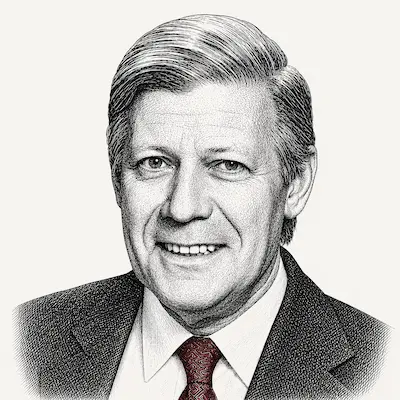 Helmut Schmidt
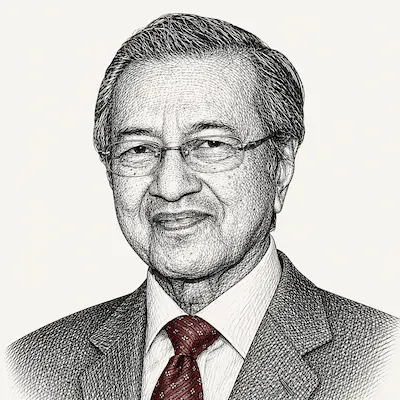 Mahathir Mohamad
Openness
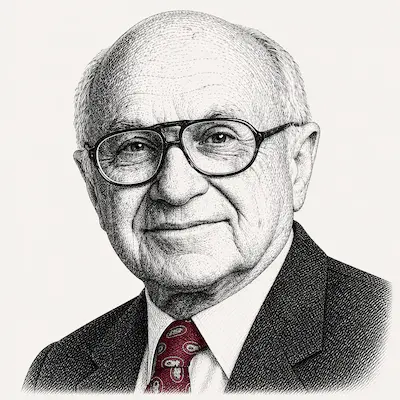 Milton Friedman
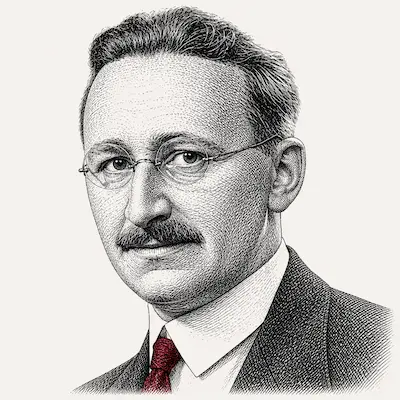 Friedrich Hayek
Selected members
Helmut Schmidt
Will argue: Trade barriers are justified when they protect European strategic autonomy and prevent dangerous dependencies, especially in critical technologies
Governed West Germany as a trade-dependent economy under great power competition with documented positions on energy security and economic sovereignty
Milton Friedman
Will argue: Trade barriers harm European consumers and businesses more than they protect them, and will provoke Chinese retaliation that damages both economies
The leading advocate for free trade and opponent of protectionism, with systematic arguments about the costs of trade barriers
Mahathir Mohamad
Will argue: Industrial policy and selective protection are necessary for Europe to maintain technological competitiveness against subsidised Chinese competition
Architect of Malaysian industrial policy and documented critic of Western economic orthodoxy, with direct experience confronting international pressure during the Asian Financial Crisis
Friedrich Hayek
Will argue: Trade barriers distort price signals, protect inefficiency, and lead to retaliation cycles that harm European prosperity and global economic integration
Systematic theorist of spontaneous order and the limits of government intervention in markets, with documented positions on trade and economic nationalism
Considered but not selected
Lee Kuan Yew: Relevant for small state strategy but Europe is not a small state, and his framework doesn't directly address EU-China trade architecture - Deng Xiaoping: Would provide Chinese perspective but his framework is about Chinese development strategy, not European trade policy responses - Jean-Jacques Rousseau: His general will framework doesn't apply well to international trade policy between sovereign states