Built from documented writings, speeches, decisions and historical records. Council members argue from documented positions, applied to today's question.
Europe cannot win the AI spending race, but it can make its approval the price of entry to safety-conscious markets worldwide.
Prebisch and Lee converge on the same mechanism: whoever sets the standard collects the rent. The EU AI Act, enforced with market muscle, turns European approval into a prerequisite for global sales. Schmidt's 1973 energy crisis argument sharpens this: regulatory leverage only holds if the underlying market cannot be bypassed. The EU's 450 million consumers make that bypass costly enough to matter.
Hayek and Deng both warn that the Act risks codifying yesterday's risks while US and Chinese labs build tomorrow's systems. Deng's answer from Shenzhen in 1979 is the most practical: carve genuine sandboxes, let firms deploy under monitored conditions, and rewrite the rules as data arrives. A standard built on live deployment evidence is enforceable; one built on anticipated harms is not.
- 1Enforce the EU AI Act as a market-access condition, making European approval a prerequisite for sales across safety-conscious global markets.
- 2Carve genuine regulatory sandboxes within the AI Act, allowing monitored deployment and rewriting rules as live data arrives.
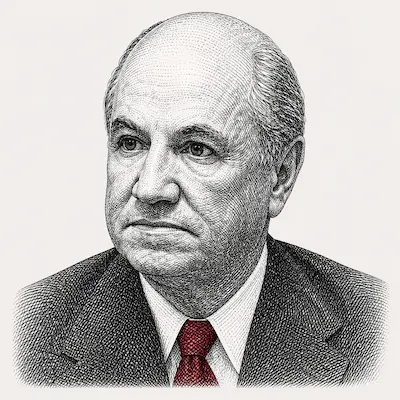
Europe must become a standard-setter, not a standard-taker.
I spent the 1950s watching Latin American countries export copper and coffee while importing the machinery needed to process them. The centre set the standards; the periphery paid the rents. Europe now faces the same structural trap in AI. If Brussels allows its firms to consume AI systems built to American or Chinese specifications, it will pay technology rents indefinitely while its own productive capacity hollows out. The AI Act is the first instrument that could reverse this. Enforce it with enough market muscle and European approval becomes a prerequisite, not a courtesy.
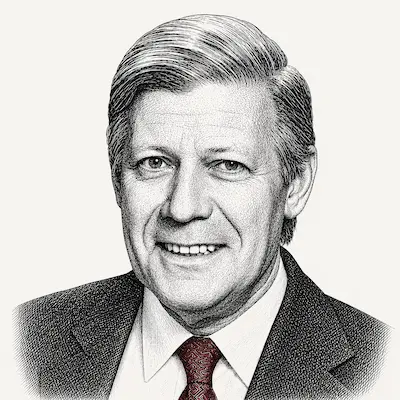
Regulatory power without industrial depth is a paper fortress.
Prebisch is right about the trap, but I have seen what happens when you build leverage on a foundation that does not exist. In November 1973 I told the Bundestag that energy dependence was a sovereignty question, not an energy question. The same logic applies here. A standard is only as powerful as the market it controls. Europe's semiconductor position is real. Its AI research base is thinner. Brussels must use the AI Act the way I used the European Monetary System: not as an end in itself, but as a structural dependency that others cannot easily escape.
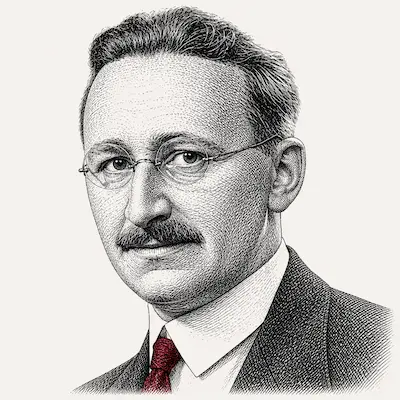
Regulators cannot specify what they cannot yet know.
Schmidt asks whether the knowledge problem applies to safety rules. It applies most acutely there. In 1974 I used my Nobel lecture to warn that the greatest danger in social science is claiming knowledge that cannot in principle be possessed. AI is still discovering what it is. The EU AI Act classifies risks and mandates conformity assessments for a technology whose capabilities are changing faster than any legislative cycle. Brussels will codify yesterday's risk profile and call it safety. The US and China will build tomorrow's systems. Europe will regulate what others invent.
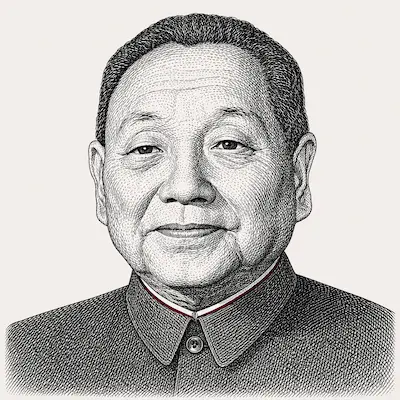
Test first, regulate later; Europe has reversed the order.
Hayek asks whether experimental zones can outrun a binding legal text. In 1979 I established Shenzhen as a laboratory precisely because nobody, including me, knew what would work. We crossed the river by feeling the stones. Europe has written the map before entering the water. The AI Act applies uniform rules to a technology that is still discovering its own shape. Brussels should carve out genuine regulatory sandboxes, allow deployment under monitored conditions, and let results inform the rules. A standard built on real deployment data is enforceable. One built on anticipated risks is a bureaucratic exercise.
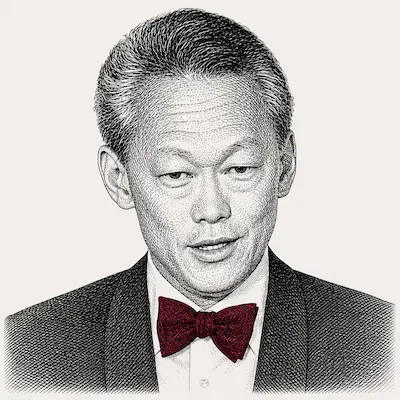
Make yourself indispensable; do not try to outbuild the giants.
Deng asks whether a small market can certify what large ones will accept. In 1965 Singapore had no hinterland, no resources, and no army worth the name. We survived by making ourselves so useful that large states found it in their interest to keep us there. Europe is not small, but it cannot outspend Washington or Beijing on AI development. What it can do is become the world's most credible certifier of AI safety, the jurisdiction whose approval unlocks access to every safety-conscious market globally. Prebisch is right that standard-setting transfers value. Schmidt is right that you need real leverage. The certification role provides both without requiring Europe to win the arms race it cannot win.