The Long Council
Who was selected, and why
Is China's surveillance system a public safety success or a human rights failure?
The central tension
The tension between collective security and individual privacy, whether comprehensive state surveillance produces legitimate order or authoritarian control.
Selected members
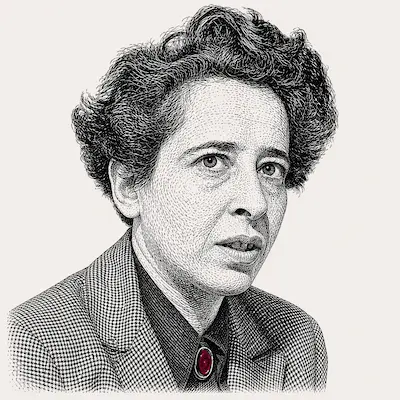
Hannah Arendt
Will argue: That comprehensive surveillance systems create the preconditions for totalitarian control by atomizing individuals and eliminating the unpredictable spaces where genuine political action occurs.
The definitive theorist of totalitarian systems and how ordinary people become complicit in systematic control through bureaucratic "banality."
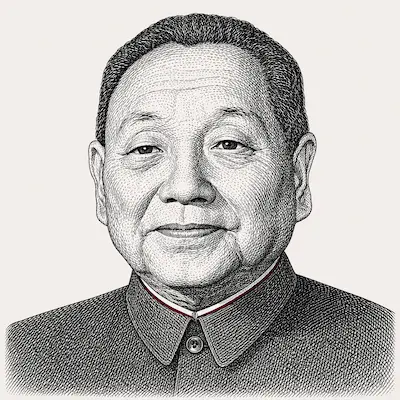
Deng Xiaoping
Will argue: That surveillance technology is a modern instrument for maintaining the stability required for development, the alternative is not privacy but chaos.
The architect of China's reform model and the documented believer that political stability is the precondition of economic development.
John Stuart Mill
Will argue: That surveillance of this scope violates the principle that state power should be limited to preventing harm to others, not monitoring all behavior.
The foundational liberal theorist of individual liberty and the limits of legitimate state authority over personal conduct.
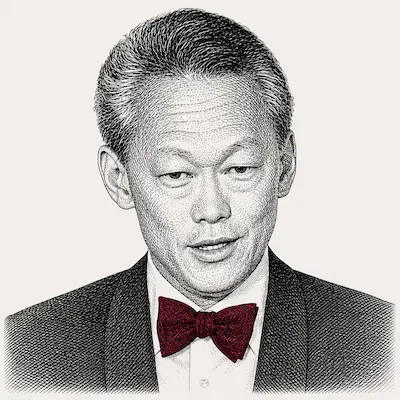
Lee Kuan Yew
Will argue: That comprehensive monitoring produces better governance outcomes than privacy-based systems and that individual privacy is a luxury unstable societies cannot afford.
The documented advocate for prioritizing collective security over individual privacy rights, with practical experience governing through comprehensive social monitoring.

Eleanor Roosevelt
Will argue: That systematic surveillance violates multiple UDHR provisions (privacy, freedom of movement, freedom of association) regardless of its effectiveness.
The architect of international human rights framework who must address the universal versus cultural-specific claims about surveillance.
Considered but not selected
Confucius: His framework addresses moral governance but not technological surveillance systems specifically - Amartya Sen: While relevant on development vs. democracy questions, the surveillance issue requires more direct engagement with authoritarian control mechanisms - Rawls: His ideal theory framework is less applicable to existing authoritarian systems than to institutional design questions