The Long Council
Who was selected, and why
How should civil society organizations shift media coverage of Ukraine from military strategy to democratic values and human rights?
The central tension
Should advocates lead with human rights to build lasting support, or with military stakes to keep current allies on board?
Where they stand
Human rights first
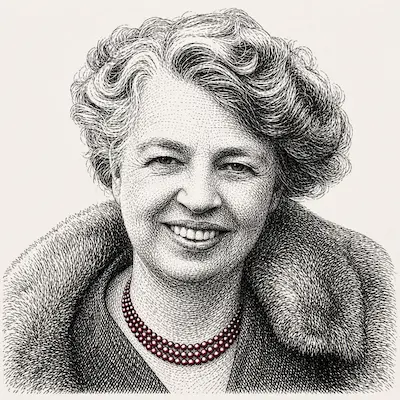 Eleanor Roosevelt
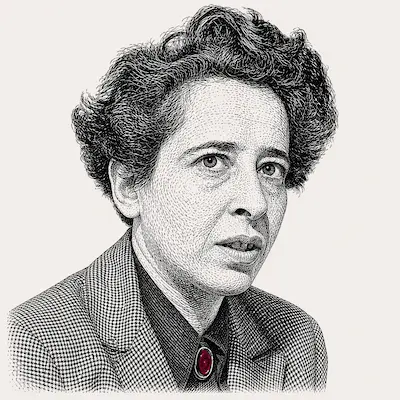 Hannah Arendt
Military stakes first
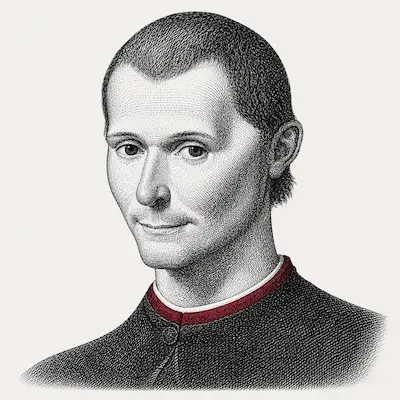 Niccolò Machiavelli
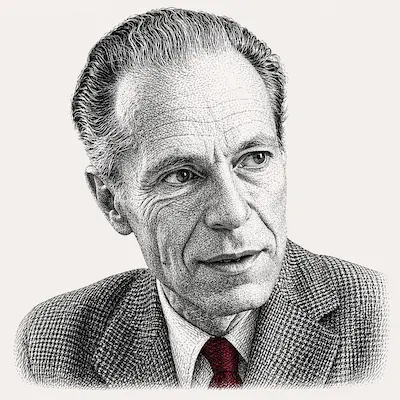 Albert O. Hirschman
Values framing
Eleanor RooseveltHannah Arendt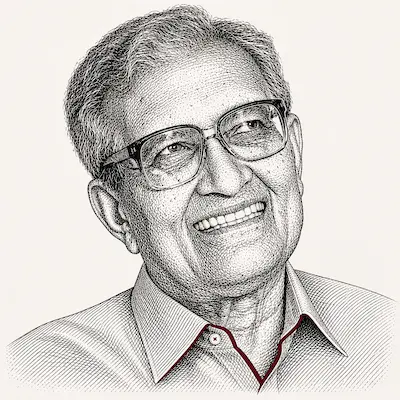 Amartya Sen
Strategic realism / conditionality
Niccolò MachiavelliAlbert O. HirschmanSelected members
Eleanor Roosevelt
Will argue: Name specific rights violations by law and article so audiences see a concrete legal order under attack, not just a war.
She built the international human rights framework and used public platforms to shift how people talked about rights.
Hannah Arendt
Will argue: Show audiences what occupation actually destroys, such as schools, civic life, and belonging, so they grasp what is truly at risk.
She explained how destroying political life harms people more deeply than any single rights violation, which is exactly Ukraine's story.
Amartya Sen
Will argue: Democracy and security are the same argument: empirical evidence shows democracies are tougher and hold coalitions together longer.
His research proved democratic institutions make societies stronger, giving advocates hard facts instead of just moral appeals.
Niccolò Machiavelli
Will argue: Switching frames risks losing the audiences already committed to Ukraine for strategic reasons, and that cost must be counted first.
He documented how hard it is to change a coalition's mind once it is built around a particular kind of appeal.
Albert O. Hirschman
Will argue: Test every objection to rights framing before accepting it, since most follow predictable patterns of exaggeration rather than real evidence.
His toolkit identifies exactly which arguments against reframing are genuine concerns and which are just rhetorical resistance.
Considered but not selected
Frantz Fanon: Relevant to the structural question of why Western media frames conflict through a military lens (the colonial gaze applied to Eastern European bodies), and to the limits of universalist rights frameworks that ignore structural context. Excluded because his framework is specific to colonial and post-colonial dynamics, and applying it to Ukraine, a European democracy resisting a Russian imperial project, requires extensive extrapolation that would distort rather than illuminate. His framework would be selected if the question were about how Global South civil society covers the conflict.
Rousseau: His general will framework is formally relevant to the question of democratic legitimacy, and the Special Flag (general will when live) was considered. Excluded because the question is about media framing strategy for civil society organizations, not about the philosophical foundations of democratic legitimacy, Arendt and Sen cover the democracy dimension with more applicable frameworks, and adding Rousseau would create a third voice on the values pole without adding a distinct analytical tradition.
Elinor Ostrom: Her framework for institutional design and collective action problems was considered for the question of how civil society organizations collectively coordinate a media reframing campaign. Excluded because this is not a commons or collective-action problem in the technical sense she addresses, it is a political communication and strategic framing problem. Her specialist framework would not add comparative value here.