The Long Council
Who was selected, and why
Who should bear the main cost of climate disaster recovery?
The central tension
Should climate costs fall on whoever emitted the most historically, or should they be shared through whatever system actually gets recovery money moving fastest?
The two poles
Polluter pays and historical responsibility
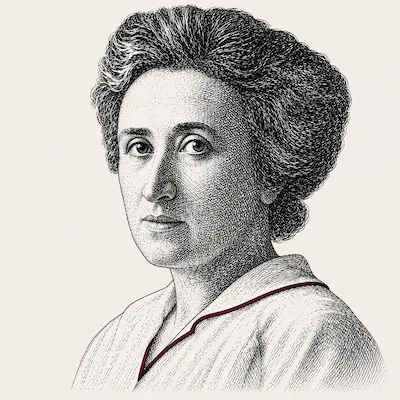 Rosa Luxemburg
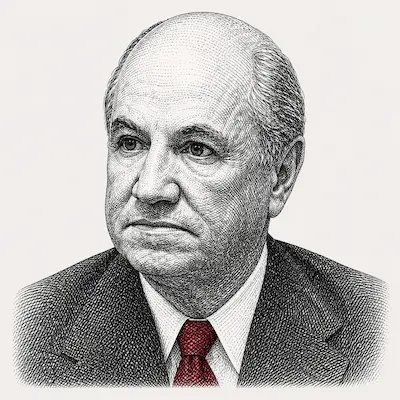 Raúl Prebisch
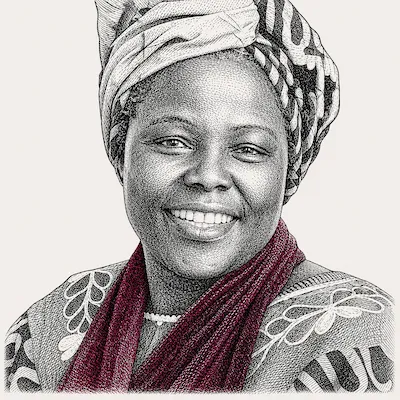 Wangari Maathai
Pragmatic burden-sharing through markets and institutions
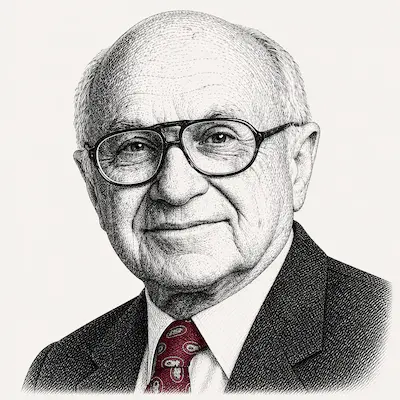 Milton Friedman
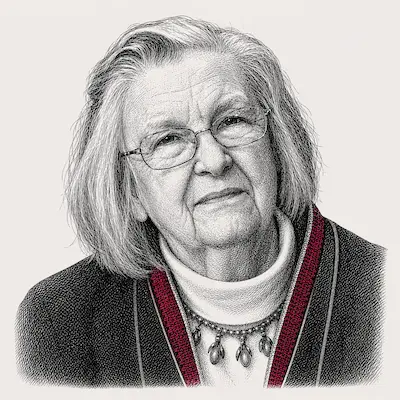 Elinor Ostrom
Selected members
Rosa Luxemburg
Will argue: The richest emitters structurally extracted the wealth now needed for recovery and must be made to return it through binding obligation, not charity.
Her theory of imperialism explains why capital accumulation in rich countries systematically extracts value from poorer ones now facing climate damage.
Raúl Prebisch
Will argue: Rich countries must fund recovery because the trading system itself transfers climate costs onto commodity exporters already losing ground on prices.
His terms-of-trade analysis directly explains the cocoa price surge anchor and why commodity-dependent countries bear disaster costs without compensation.
Wangari Maathai
Will argue: Recovery funding without local democratic control over land and resources reproduces the extraction that caused the vulnerability in the first place.
Her framework directly connects land governance, resource extraction, and climate vulnerability in the Global South to questions of who pays and who decides.
Milton Friedman
Will argue: Direct cash transfers and functioning insurance markets will get recovery resources to people faster than international wealth-transfer schemes.
Provides the sharpest documented case that market mechanisms and insurance, not state transfers, allocate disaster risk and recovery most efficiently.
Elinor Ostrom
Will argue: Neither a single global fund nor pure national self-reliance will work, recovery finance needs nested, locally accountable institutions with real monitoring.
Disaster recovery funding is a collective-action and institutional-design problem about who governs shared resources and risk pools at what scale.
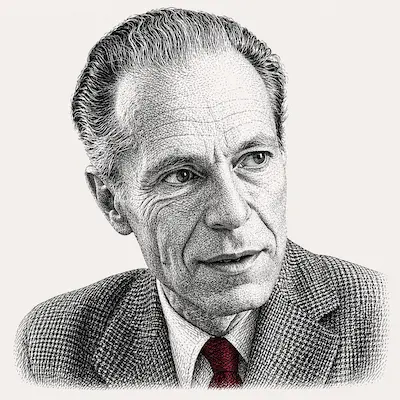
Albert O. Hirschman
Will argue: Climate recovery finance should be structured incrementally with exit options, since irreversible funding commitments make correcting course nearly impossible.
His irreversibility threshold and hiding hand concepts bear directly on how to evaluate large, permanent climate finance commitments made under uncertainty.
Considered but not selected
Amartya Sen: strong on capability and entitlement framing of disaster impact, but Prebisch and Maathai already cover the structural Global South case with more direct material on this specific funding question; adding Sen risks a third echo on the same pole without a distinct enough angle. John Rawls, the difference principle is relevant in the abstract but his framework is explicitly ideal theory and offers little on the live mechanics of who actually transfers funds; Luxemburg and Prebisch provide sharper, more material versions of the same underlying claim. Hannah Arendt, statelessness and rights-without-membership is tangentially relevant to climate refugees but is a stretch from the core recovery-funding question; excluded to keep the table focused.