The Long Council
Who was selected, and why
Who should pay for the added cost of sustainable kerosene in Europe?
The central tension
[The conflict between environmental mandates and economic distribution, whether climate policy costs should be absorbed by consumers, subsidized by governments, or borne by industry]
Selected members
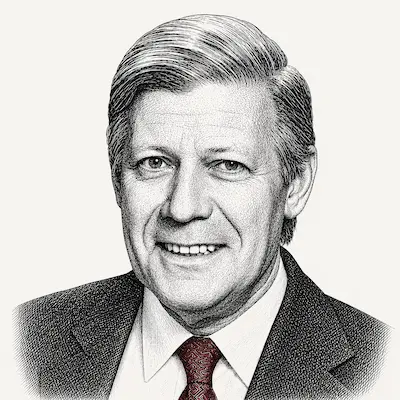
Helmut Schmidt
Will argue: That Europe cannot allow climate policy to recreate the energy dependency that made it vulnerable in the 1970s, requiring structured cost distribution that maintains industrial competitiveness
European energy security architect who governed through oil shocks and understood sovereign dependency on external resources as governance failure
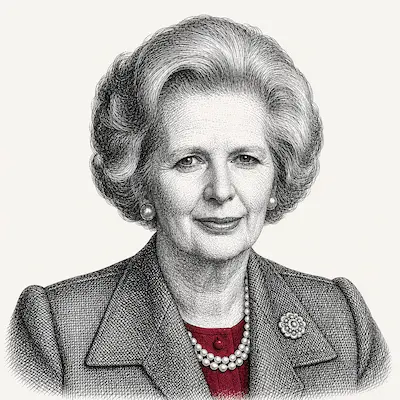
Margaret Thatcher
Will argue: That market pricing should determine sustainable fuel adoption rates, and that subsidizing green technology through passenger surcharges is a market distortion
Architect of market-based environmental policy and opponent of regulatory approaches that distort market signals
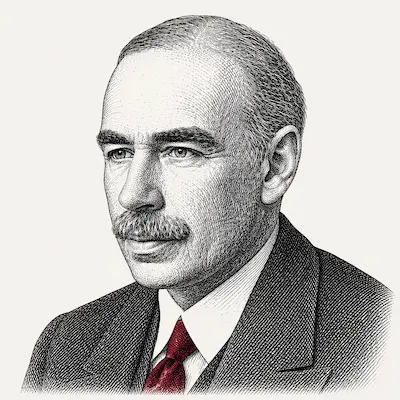
John Maynard Keynes
Will argue: That climate policy represents investment under genuine uncertainty where the insurance principle applies, paying costs now to avoid catastrophic future scenarios
Theorist of managing economic transitions under uncertainty, especially when costs and benefits are asymmetrically distributed across time
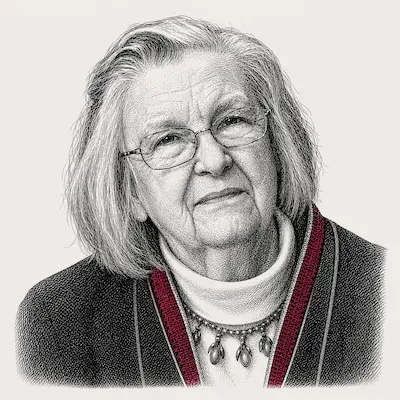
Elinor Ostrom
Will argue: That sustainable aviation fuel represents a global commons problem requiring polycentric governance and graduated cost-sharing arrangements
Analyst of how collective action problems are resolved when costs and benefits are distributed asymmetrically across actors
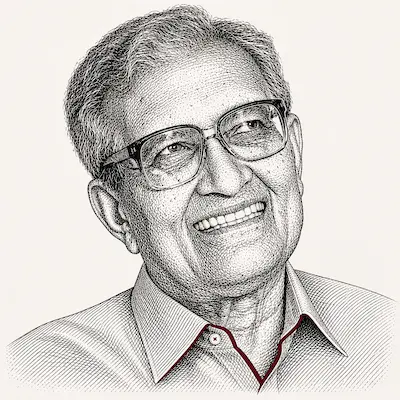
Amartya Sen
Will argue: That the payment mechanism must consider differential impact on capabilities, airline surcharges are regressive, hitting lower-income travelers disproportionately
Theorist of capability and the distributional effects of policy costs, whose welfare is reduced and whose capabilities are enhanced by different payment mechanisms
Considered but not selected
Friedman: Excluded because his framework would simply oppose the mandate entirely rather than addressing the cost distribution question given the mandate exists
Roosevelt: Excluded because sustainable aviation fuel is not a crisis requiring emergency intervention but a structured transition requiring institutional design
Lee Kuan Yew: Excluded because airline fuel policy is not a small state survival question and his framework lacks environmental policy depth