Does restricting student demonstrations strengthen or weaken state legitimacy?
Built from documented writings, speeches, decisions and historical records. Council members argue from those positions, applied to today's question.
- 1Macron announced a nationwide protest ban targeting student demonstrations.
- 2A judge overruled the ban, allowing a student protest march in Paris to proceed.
The council treats these as reported facts, not settled truth. The members supply the reasoning; the asker supplied the sources.
Restricting student protest weakens state legitimacy. A ban that courts overturn makes that weakness permanent and public.
Arendt, Rousseau, and Hirschman converge on the same mechanism from different starting points. Governments that ban assembly signal they have lost the capacity to govern through consent. Rousseau locates that loss in the severed relationship between ruler and governed. Hirschman adds a ratchet: once a prohibition is issued and reversed, the reputational cost cannot be undone.
Machiavelli and Ibn Khaldun sharpen the point rather than contest it. Machiavelli argues the error was not the attempt but the failure to follow through; a half-measure reversed is worse than no measure at all. Ibn Khaldun reads the ban as a symptom, not a cause: governments that still hold genuine popular cohesion do not need to stop students from walking in the street.
The one live disagreement is whether any restriction could ever be executed cleanly enough to avoid this damage. Machiavelli says yes, in principle. The other four say the attempt itself is the concession.
- 1Replace legal prohibition of student marches with direct government engagement before protests escalate to the streets.
- 2Treat any judicial reversal of a protest ban as a permanent reputational cost; do not reissue the restriction in modified form.
- 3Publish the government's reasoning for any assembly restriction before courts rule, not after, to preserve at least procedural legitimacy.
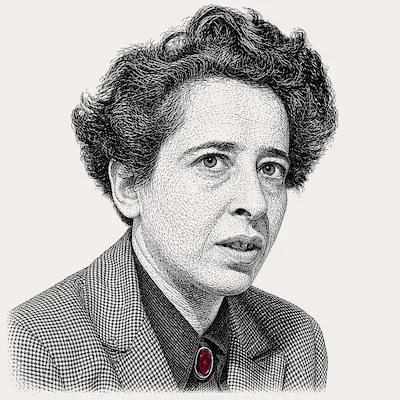
A ban overruled by a court has already surrendered its claim to power.
When the French government prohibited student marches, it did not demonstrate strength. It demonstrated that it could no longer govern through consent. Power, as I watched it collapse in Weimar and then in occupied Paris, is not force. It arises when people act together and dissolves when they stop. A judge's reversal did not weaken the state further. The state had already weakened itself the moment it reached for prohibition instead of persuasion.
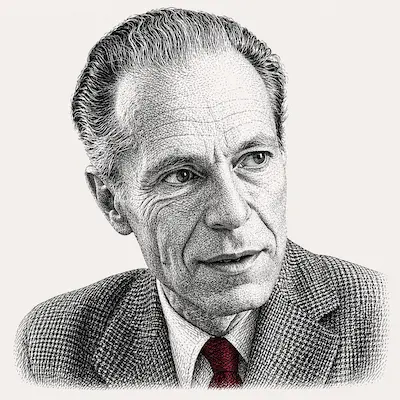
Suppressing voice does not eliminate grievance; it makes it irreversible.
Arendt is right that the ban announced weakness. My framework adds something specific: when voice is blocked, people do not simply accept the situation. They exit, or they wait. Neither serves the state. In Colombia in the 1950s, I watched governments mistake silence for consent until the silence became something else entirely. The judicial reversal here is significant not because it restored the march but because it made the government's reputational move permanent. You cannot unbid a prohibition. The damage to legitimacy is already priced in.
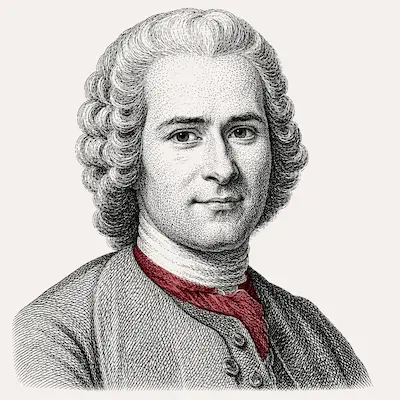
Forbidding assembly severs the ruler from the governed.
Hirschman asks where the general will resides. It cannot reside in a government that prohibits its citizens from speaking together in public. The social contract I described is not a document. It is a living relationship between the governed and those who govern in their name. When a ruler silences assembly, he does not protect order. He announces that he has confused his own continuation with the common good. The students in the streets of Paris are not the threat to legitimacy. The ban was.
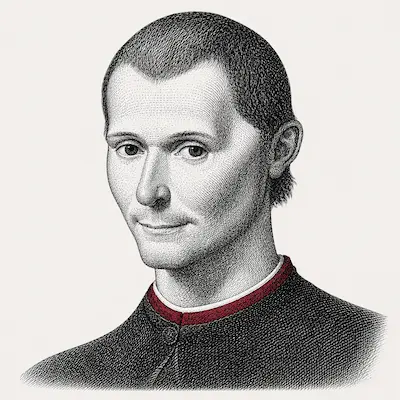
A restriction that is overruled transforms strength into advertisement of weakness.
Rousseau asks whether a failed ban costs more than restraint. It does, and the calculation is straightforward. When Cesare Borgia moved against his enemies in 1502, he moved decisively and completely. A half-measure that is reversed does not occupy a middle ground between strength and weakness. It occupies a worse position than either. The prince who strikes and misses has shown his enemies the limit of his reach. A government that bans protest and watches a court lift the ban has not preserved order. It has published its own ceiling.
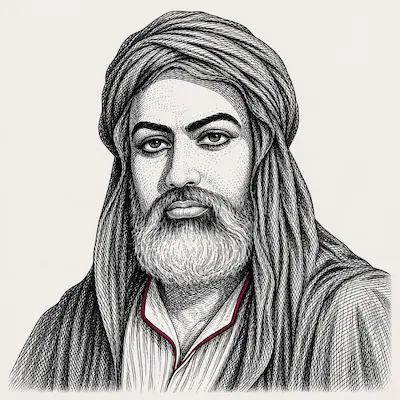
A dynasty that bans dissent has already lost the cohesion to govern through legitimacy.
Machiavelli's point about the half-measure is sound, but the deeper question is what the ban reveals about the ruling group itself. I watched the Hafsids in Tunis and the Marinids in Morocco reach for coercion at precisely the moment their internal cohesion began to fail. A government with strong asabiyya does not need to prohibit students from walking in the street. It governs through a relationship the population accepts. The ban, and the court's reversal of it, are not the cause of weakened legitimacy. They are its symptoms.
The convergence note
Where the council converges: The ban weakened state legitimacy regardless of whether it held. A government that prohibits public assembly and is then overruled by its own judiciary has publicly demonstrated the limits of its authority.
Where it divides: Machiavelli and Ibn Khaldun disagree with Rousseau and Arendt on cause and effect. Machiavelli treats the failed execution as the error; Arendt and Rousseau treat the attempt itself as the error. Hirschman stands apart from all four, arguing the reputational damage is now irreversible regardless of what follows.
For a policymaker to decide on: Should a government facing sustained student protest use legal restriction or direct engagement, knowing that a restriction overturned by courts costs more legitimacy than no restriction at all?