When is civil disobedience justified against a democratically elected government?
Built from documented writings, speeches, decisions and historical records. Council members argue from documented positions, applied to today's question.
Civil disobedience is justified when a government systematically ignores a serious wrong and closes off every lawful avenue to contest it.
Rawls and Locke agree on the floor: the injustice must be serious, not merely a lost vote, and lawful channels must have been genuinely tried. Mandela's 1961 decision to move from petition to sabotage is the council's clearest anchor: decades of nonviolent protest met with Sharpeville, banning orders, and silence. Arendt adds that open, collective, nonviolent action is itself a form of democratic speech, not its opposite. Mandela's proportionality rule holds across the table: target the wrong, not bystanders, and return to negotiation when it becomes possible.
The split is over who decides when institutions are too corrupted to trust. Luxemburg and Rousseau argue that a parliament captured by property or faction cannot set the threshold for its own resistance. Rawls and Locke reply that lowering the threshold hands every losing faction a license to break the law.
- 1Treat organised civil disobedience as a formal signal of institutional failure; require government to publicly respond to the grievance within a defined period.
- 2Codify proportionality as the legal standard: disobedience targeting the specific wrong, not bystanders, receives lesser sanction than indiscriminate law-breaking.
- 3Reject prosecution as the default response when government has demonstrably closed all lawful channels for contesting a serious injustice.
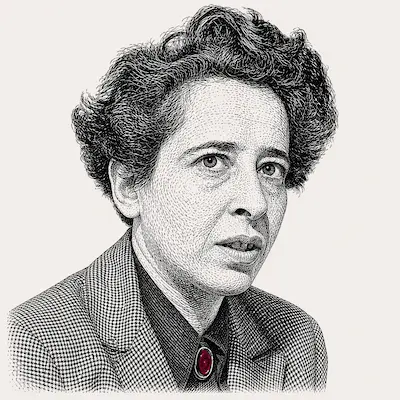
Civil disobedience is political power, not its negation.
When citizens act together in public, nonviolently, and accept legal consequences, they are not undermining democracy, they are practicing it. I watched the American civil rights movement in the 1960s and saw something the courts and Congress could not produce alone: collective action that generated genuine political power. A democratically elected government that passes unjust laws has not thereby earned obedience. Majority rule is a procedure, not a guarantee of justice. The dissenter who acts openly, in concert with others, speaks louder than the ballot.

Disobedience is justified only after normal channels fail.
Arendt asks whether injustice must be clear-cut. Yes, substantially so, and that is not a timid answer. In a nearly just society, citizens owe one another a duty of civility: to work within shared institutions before breaking their rules. Civil disobedience is justified when three conditions are met. The injustice must be serious and evident. Normal political channels must have been genuinely exhausted. And the action must be public and nonviolent, addressed to the conscience of the majority. Outside those conditions, disobedience corrodes the cooperative framework everyone depends on.
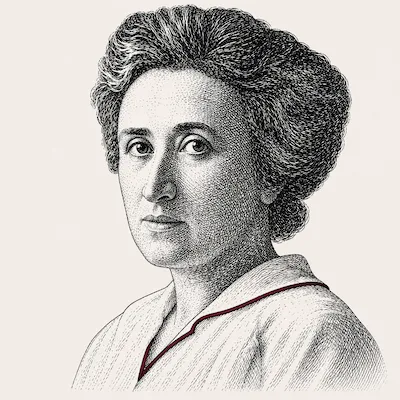
Democratic institutions can reproduce the very injustice they claim to remedy.
Rawls asks me to exhaust normal channels. I watched the German Social Democratic Party exhaust those channels between 1890 and 1914, winning seats, passing motions, filing petitions, and then voting for war credits in August 1914 because the institutions had absorbed and neutralised every challenge to the ruling class. When parliament is structurally captured by property and privilege, "nearly just" is a description that flatters the powerful. Mass collective action, including law-breaking, is not the failure of democracy. It is democracy asserting itself against its own institutional betrayal.
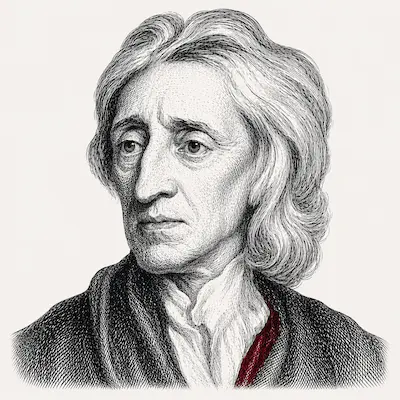
Resistance requires systematic violation, not individual grievance.
Luxemburg challenges me on whose interests my threshold serves. I will answer plainly. In 1689 I argued that a government dissolves itself when it systematically destroys the conditions under which it was entrusted with power, not when it passes laws citizens dislike, not when one election goes badly. The right of resistance belongs to the people collectively and is triggered by a pattern of violation, not a single injustice. Set the threshold too low and every faction that loses a vote claims a mandate to break the law. That is not liberty. It is the war of all against all wearing liberty's clothes.
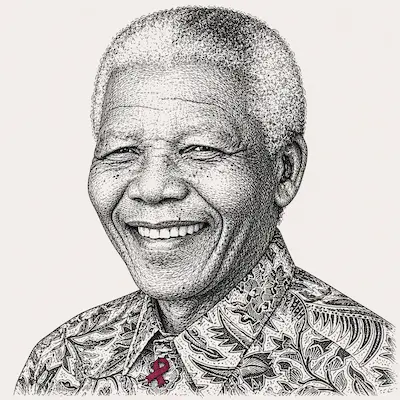
Calibrate the form of resistance to the severity of the injustice.
Locke asks when patience becomes justified action. For us, it was 1961, after the Sharpeville massacre, after decades of petition, legal challenge, and nonviolent protest met with bullets and banning orders. We did not move to sabotage because we were impatient. We moved because every lawful avenue had been closed and the state had answered our restraint with escalating violence. But I insist on Locke's underlying logic: the form of disobedience must be proportionate. We targeted infrastructure, not people. And when negotiation became possible in 1990, we suspended armed operations unilaterally, because legitimacy had to be built, not just seized.
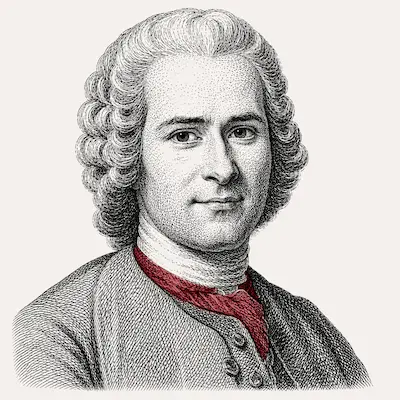
A majority that serves faction, not the common good, has no rightful claim.
Mandela puts the sharpest question on the table. In Geneva I saw how easily a nominal majority becomes the instrument of wealthy citizens who have shaped the rules to protect their own advantage. The general will is not the will of the majority, it is the will directed at the common good. When an elected government serves a faction, a class, or a propertied interest while calling it the people's mandate, it has forfeited the only title that makes obedience owed. Resistance in that case is not rebellion against democracy. It is democracy recovering its own meaning.
The convergence note
Where the council converges: Civil disobedience requires public, nonviolent action and genuine exhaustion of available alternatives. No member defends reflexive or individual law-breaking as justified.
Where it divides: Rawls and Locke require a high threshold, substantial, systematic injustice in an otherwise functioning system, before disobedience is warranted. Luxemburg and Rousseau reject the "nearly just" premise: when institutions structurally reproduce inequality or factional rule, the threshold test itself becomes a tool of the powerful. Mandela occupies the middle: he accepts proportionality and exhaustion as real constraints, but insists that a state which answers restraint with violence has already dissolved the obligation to remain within legal bounds.
For a policymaker to decide on: Should a democratic government treat organised civil disobedience as a legitimate signal of institutional failure requiring response, or as a threat to rule of law requiring prosecution? And at what point does a government's refusal to respond to lawful protest itself justify crossing into unlawful action?