Can one man dominate a democracy for thirty years and still serve it?
Built from documented writings, speeches, decisions and historical records. Council members argue from those positions, applied to today's question.
- 1Netanyahu first became prime minister 30 years ago and has held the office for 19 of the past 30 years.
- 2Israel's war in Gaza, following the October 7, 2023 attacks, killed more than 70,000 Palestinians according to the article.
- 3Gadi Eisenkot, a former IDF chief of staff who entered politics four years ago, is Netanyahu's lead opposition challenger.
- 4Netanyahu is currently facing an ongoing corruption trial and a scandal dubbed "Qatargate" involving aides accused of taking Qatari money.
The council treats these as reported facts, not settled truth. The members supply the reasoning; the asker supplied the sources.
Thirty years in power has produced decay, not stewardship. Netanyahu's fusion of his corruption trial with the war weakens Israel's democracy more than it protects it.
Arendt and Mandela agree a leader who governs through an ongoing trial and the Qatargate scandal has lost the acknowledgment authority rests on. Ibn Khaldun reads the same evidence through 1,400 years of dynastic collapse: rising scandal and unresolved war mark cohesion running out, not strength enduring. Machiavelli concedes Netanyahu's survival skill but insists a republic's health lies in its capacity to replace him. Eisenkot, a former IDF chief of staff untainted by either scandal, is exactly the correction mechanism Machiavelli says Israel built for this moment.
Ben-Gurion alone argues continuity through existential war can outweigh these costs when no alternative is tested. But even he built the Israeli state so no single man's survival could be confused with the state's, the standard Netanyahu now fails.
- 1Separate Netanyahu's corruption trial from the war's command decisions so voters can judge each on its own record.
- 2Promote Gadi Eisenkot or another untainted former military leader as a tested alternative to break the fusion of trial and war.
- 3Reject continuity arguments that treat one man's political survival as equivalent to the state's security.
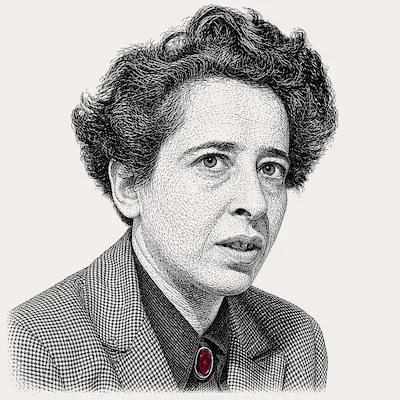
Thirty years in power means authority has become mere enforcement.
Authority is lost the moment it must be imposed rather than acknowledged. Netanyahu governs through an ongoing corruption trial and a scandal over Qatari money reaching his own aides. That is not the acknowledgment power rests on. In 1963 I watched Eichmann perform loyalty to a system rather than think within it; what I see here is institutional self-preservation dressed as leadership. A democracy that re-elects the same man for 19 of 30 years is not being governed, it is being administered by someone defending his own survival.
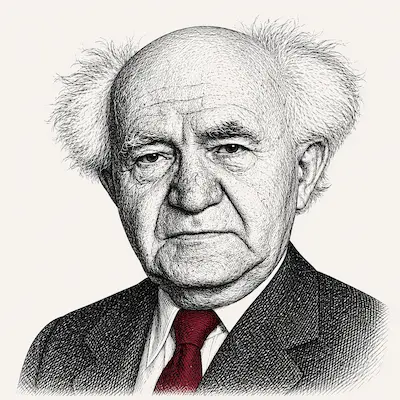
Longevity is earned by delivering survival, not by surviving in office.
I declared independence in 1948 knowing the Arab armies would invade within hours. Israel's security has never been a settled condition, and continuity of a tested leader through existential war has genuine value when alternatives are untested. But I built mamlachtiut, the state above any single man, precisely so no one's personal survival could become confused with the nation's. Gadi Eisenkot commanded the army that fought this war. A security state that cannot promote its own generals above its incumbent has stopped practicing what I founded it to practice.
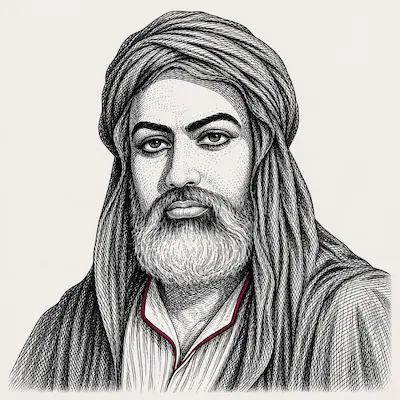
Thirty years of rule has consumed the cohesion that once justified it.
A dynasty does not fall from outside pressure. It falls because luxury and length in power erode the solidarity that built it, and the court grows more occupied with its own survival than with the people's welfare. I watched this pattern across the Marinids and Hafsids: rising tax burdens, expanding scandal, war without resolution, these are the documented symptoms of asabiyya running out, not incidental noise. A corruption trial and a war that has killed more than 70,000 are not accidents accompanying a strong ruler. They are the decay itself.
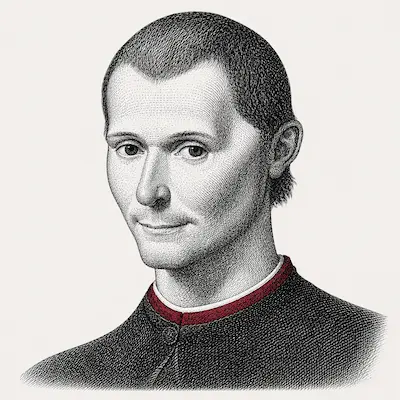
Surviving scandal is skill, but a republic that cannot replace him is failing.
I do not fault a prince for using fear, suspicion, even scandal, to remain in power. Cesare Borgia taught me that boldness often outperforms caution. But I also wrote in my Discourses that a republic's health depends on its capacity to correct itself through its own institutions, not merely to tolerate one man's permanence. A credible rival with no prior political baggage, a serving former chief of staff, exists precisely for this purpose. If the republic cannot use him, the failure is not Netanyahu's cunning. It is the republic's weakened correction mechanism.
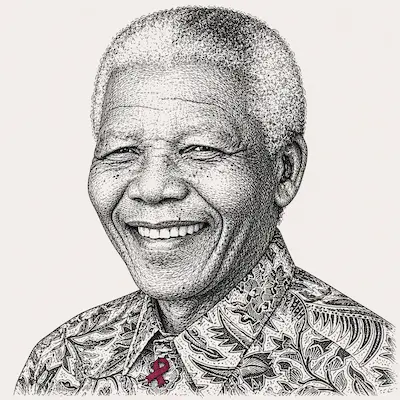
A leader who will not cultivate his own obsolescence has stopped serving.
I chose a single term in 1999 because I believed a leader who does not build the conditions for his own replacement becomes a parasite on the institution he claims to protect. Nineteen years across thirty is not stewardship, it is occupation. A corruption trial running alongside a war does not demonstrate indispensability, it demonstrates a man who has fused his personal legal jeopardy with the state's security question so completely that voters cannot judge one without the other. That fusion, not the war or the trial alone, is what should concern any democracy.
The convergence note
Where the council converges: All five agree that thirty years of dominance has produced visible decay, whether named as lost authority, eroded cohesion, or weakened self-correction. None defends the current record as healthy.
Where it divides: Ben-Gurion and Machiavelli accept that concentrated, long-held power can still serve a state under real threat, while Arendt, Ibn Khaldun, and Mandela argue the decay itself proves the threshold has already been crossed.
For a policymaker to decide on: Whether continuity under active corruption charges is a stabilising security asset or an institutional failure that a credible, untainted rival like Eisenkot is specifically positioned to correct.