Built from documented writings, speeches, decisions and historical records. Council members argue from documented positions, applied to today's question.
Trump's approach was not sound. It spent political capital attacking institutions he needed to govern, and built nothing durable in their place.
Machiavelli and Ibn Khaldun judge the failure as strategic: Borgia and the Almoravids both show that power built on personal loyalty alone collapses when the leader weakens. Trump mobilised real solidarity, then burned it against courts, press, and the civil service whose cooperation he needed.
Arendt, Locke, and Rousseau go further: the methods were wrong in kind, not just in result. Attacking shared facts dissolves the public ground democratic politics needs to function. An executive who treats courts and elections as obstacles has placed his will above the law.
The one split worth naming: Machiavelli would accept these methods if they had produced durable new structures. They did not, so even he finds no defence.
- 1Strengthen procedural constraints on executive conduct; codify limits on presidential interference with courts, press, and elections in statute.
- 2Rebuild civic institutions capable of resisting norm erosion without waiting for new rules to be passed.
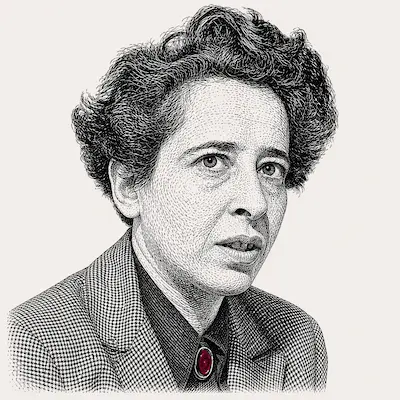
Attacking truth as a governing method destroys the public realm itself.
Trump's approach was not merely unorthodox, it was structurally corrosive. Legitimate political power arises when citizens act together in a shared world of acknowledged facts. When I covered Eichmann's trial in Jerusalem in 1961, I watched how the suspension of judgment, not malice, enables institutional collapse. Trump's systematic assault on factual reality, on the judiciary, on the press, did not disrupt a corrupt establishment. It dissolved the shared ground on which any democratic politics, including his own, depends.
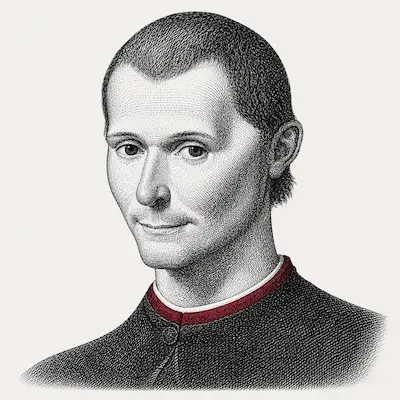
Disruption without durable order is energy without architecture.
Arendt asks whether disruption builds power. My answer: it depends entirely on what the disruption achieves. In 1502 I watched Cesare Borgia consolidate central Italy through fear, confrontation, and the elimination of rivals. I admired it. But Borgia's order collapsed the moment his father died, because he built loyalty to himself alone, not to institutions that could outlast him. Trump's confrontation with established arrangements might have been legitimate if it produced durable new structures. It produced personal drama instead. That is not virtù. That is appetite.
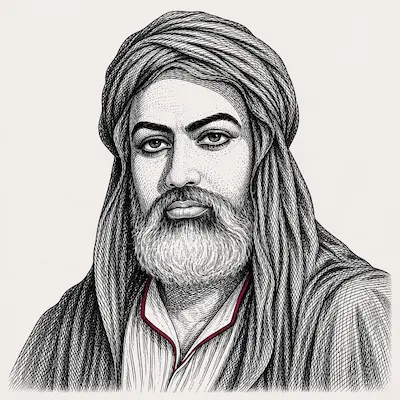
A ruler who fractures state cohesion exhausts power faster than he builds it.
Machiavelli asks about solidarity. I watched the Almoravids, the Hafsids, and the Marinids run the same cycle: a group with genuine asabiyya conquers, then the ruler concentrates power by dismantling the very cohesion that brought him to authority. Trump arrived with real group solidarity, a coalition bound by shared grievance, which is a recognisable political force. But he spent that solidarity attacking the administrative institutions whose cooperation he required to govern. By 1400 I advised Timur himself: a conqueror who destroys the civil apparatus inherits rubble, not a state.
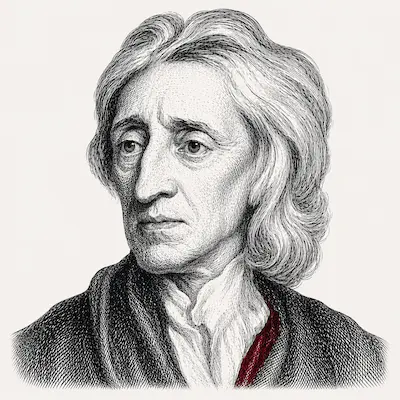
Executive power without legal constraint is tyranny by my precise definition.
Khaldun asks whether disruption can be legitimate resistance. My answer is exact: resistance is legitimate when government systematically violates the trust on which its authority rests. But that right belongs to the people collectively, not to the executive himself. In my Second Treatise I wrote that wherever law ends, tyranny begins. An executive who treats courts, elections, and the press as obstacles to be circumvented has not reformed a broken system. He has placed his own will above the general rules. That is the definition I documented, and it fits.
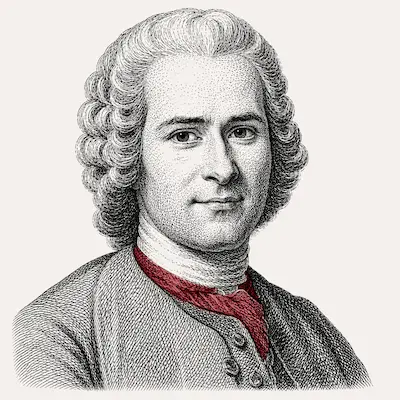
Claiming the people's voice while serving private resentment is the oldest fraud.
Locke asks whether private grievance can become a genuine general will. No. The general will is directed at the common good, not the aggregation of what particular groups feel they have lost. In 1762 I wrote that the English believed themselves free only during elections and enslaved immediately after. Trump's claim to speak for "the people" against institutions exploited exactly that legitimate frustration. But the general will requires citizens identifying with shared civic life. What he mobilised was the will of a faction dressed in the language of the whole. That is not sovereignty. That is usurpation wearing a popular mask.
The convergence note
Where the council converges: All five members agree that Trump's approach lacked the institutional architecture that makes disruption politically durable. Disruption without construction is the shared diagnosis.
Where it divides: Machiavelli and Ibn Khaldun assess the failure as strategic: the methods were not inherently wrong, the results were. Arendt, Locke, and Rousseau argue the methods were wrong in kind: attacking shared reality, legal constraint, and the common good cannot be rehabilitated by outcomes.
For a policymaker to decide on: The concrete choice is whether democratic systems need stronger procedural constraints on executive conduct, or stronger civic institutions capable of resisting norm erosion without new rules.