The Long Council
Who was selected, and why
Can democracy still solve long-term problems?
The central tension
Democracy rewards politicians for what voters feel now, but long-term problems demand painful choices whose benefits only future voters will see.
The two poles
Democracy can adapt
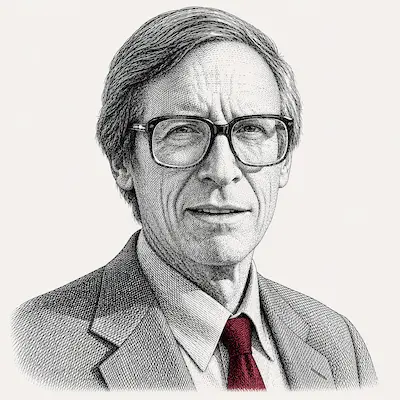 John Rawls
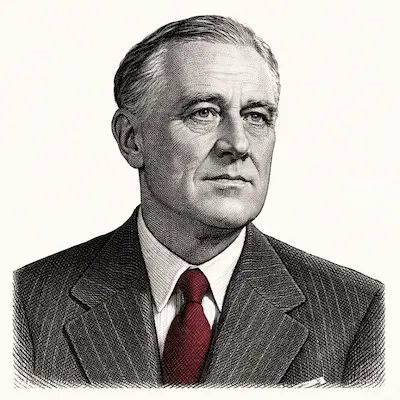 Franklin D. Roosevelt
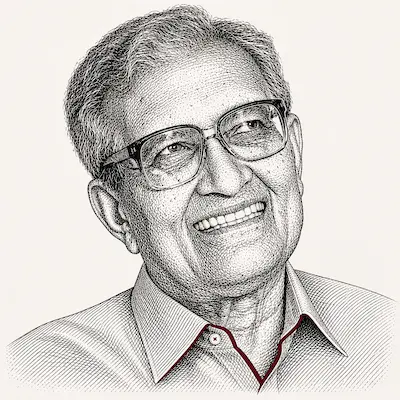 Amartya Sen
Democracy is structurally broken for this
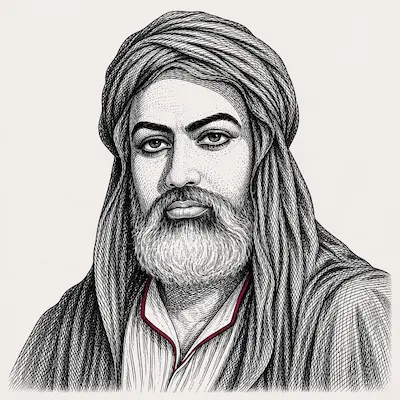 Ibn Khaldun
 Niccolò Machiavelli
 Lee Kuan Yew
Selected members
John Rawls
Will argue: Democratic legitimacy is durable precisely because it can generate principles that bind present majorities to the interests of those not yet present to vote.
His difference principle and original position ask exactly what institutional design future-blind decision-making requires.
Franklin D. Roosevelt
Will argue: Democracy can be stretched toward long-term commitments when leaders frame sacrifice as investment and build institutions whose beneficiaries become their own political constituency.
He is the council's documented practitioner of democratic mobilisation for costly long-term structural change against short-term political resistance.
Amartya Sen
Will argue: Democracy's apparent short-termism is often an information failure, not a structural one, a free press and genuine public deliberation force governments to face long-term costs that authoritarian systems can conceal until collapse.
His documented empirical claim that no democracy has experienced a famine, democracy's accountability mechanisms force governments to act before slow-moving crises become catastrophes.
Ibn Khaldun
Will argue: The problem is not democracy specifically but the universal tendency of stable, prosperous orders to lose the solidarity that made collective action possible, democratic institutions may accelerate this by giving organised present interests veto power over diffuse future ones.
His asabiyya cycle identifies the structural mechanism by which successful political orders lose the cohesion required for collective sacrifice, democratic prosperity may be self-undermining in exactly the way his dynasties were.
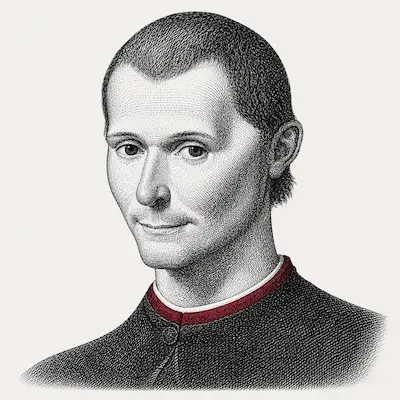
Niccolò Machiavelli
Will argue: The structural asymmetry between concentrated present losers and dispersed future winners is not a failure of democratic will but a predictable feature of all political orders, and the remedy is institutional design that insulates certain decisions from electoral cycles, not the abandonment of democratic legitimacy.
His documented analysis of why new orders are harder to establish than old ones is the sharpest structural account of why democratic systems resist long-term institutional reform even when the need is clear.
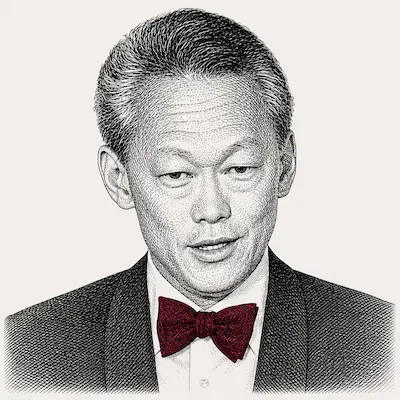
Lee Kuan Yew
Will argue: The empirical record shows that the policy instruments actually capable of addressing 30-year problems, pension reform, infrastructure investment, population policy, energy transition, are consistently delayed or diluted by electoral politics, and the Singapore model demonstrates that institutional insulation from short-term democratic pressure is not incidental but structural to long-term performance.
He is the council's only practitioner who explicitly built a governance system on the proposition that electoral democracy cannot solve long-term problems and documented why.
Considered but not selected
Hannah Arendt: Her theory of political power as collective action in concert is relevant to democratic renewal, but her framework focuses on the conditions of legitimate authority rather than the institutional design problem of long-term commitment. Rawls and Sen cover the normative and empirical ground she would occupy, without her T4 limitation that she explicitly excluded economic and social questions from the political realm, precisely the domain where long-term democratic failure is most acute.
Helmut Schmidt: Directly relevant: his documented position that leaders must imagine scenarios worse than the present and his fiscal consolidation against party opposition are practitioner cases for democratic long-termism. Excluded because Roosevelt covers the practitioner-of-democratic-mobilisation role and Schmidt's most distinctive contributions (energy security, European monetary architecture) are issue-specific rather than analytical about democracy's structural capacity. He could replace Roosevelt in a more European-focused framing.
Elinor Ostrom: Her polycentric governance framework and Nobel lecture application to climate change are directly relevant to whether democratic institutions can manage long-horizon collective action problems. Excluded because the question is about democracy's structural capacity, not specifically about common-pool resource governance, her specialist framework would narrow rather than illuminate the central tension. If the question were reframed as "can democratic institutions solve the climate commons problem," she would be essential.