The Long Council
Who was selected, and why
When is civil disobedience justified against a democratically elected government?
The central tension
Does democratic legitimacy require citizens to obey unjust laws, or does justice sometimes demand breaking them?
The two poles
Legitimacy of civil disobedience
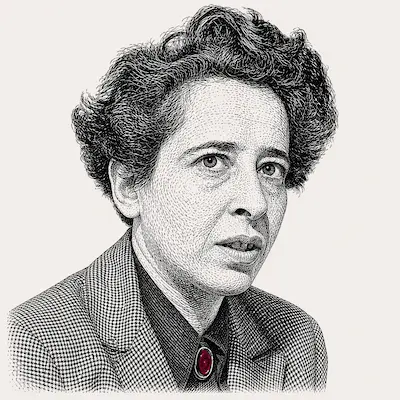 Hannah Arendt
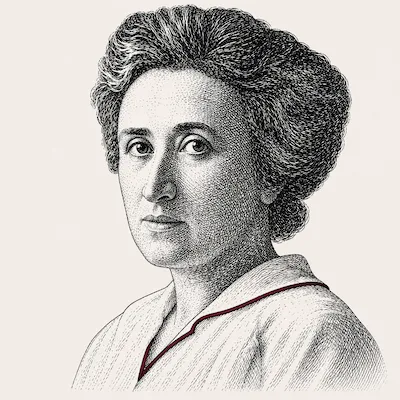 Rosa Luxemburg
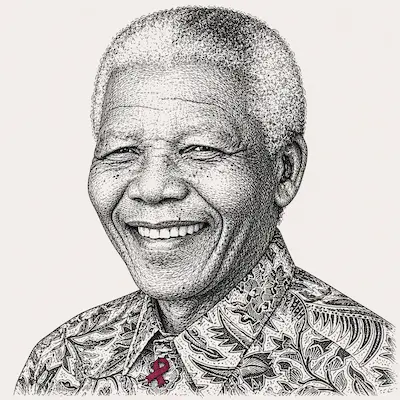 Nelson Mandela
Primacy of democratic process
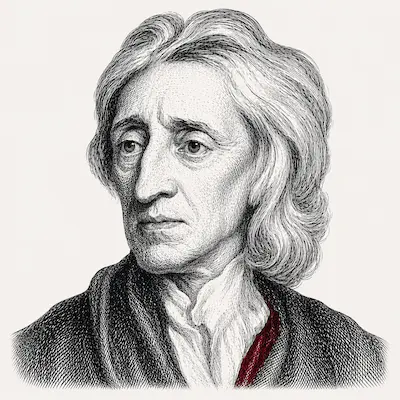 John Locke
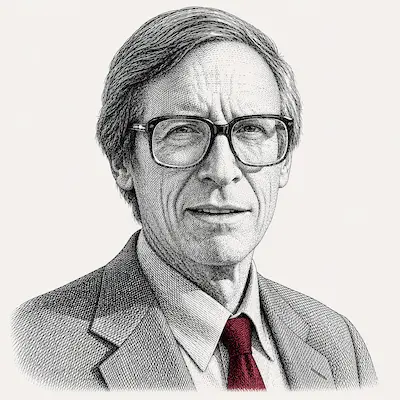 John Rawls
Selected members
Hannah Arendt
Will argue: Civil disobedience is legitimate when it is public, nonviolent, collective, and aimed at the conscience of the majority, it is a form of power, not its negation.
She produced the most rigorous documented theory of civil disobedience as a legitimate form of political power in a democratic society.
John Rawls
Will argue: Civil disobedience is justified only against substantial and clear injustices in a nearly just society, and must be restricted to last resort after normal political channels have failed.
He produced the most systematic liberal-democratic theory of when civil disobedience is and is not justified within a "nearly just" society.
Rosa Luxemburg
Will argue: When democratic institutions reproduce structural inequality rather than correcting it, collective law-breaking is not a failure of democracy but its deeper expression.
She theorised the mass strike and mass political action as legitimate responses when parliamentary politics is captured by interests that systematically exclude the working class.
John Locke
Will argue: The right to resist belongs to the people collectively and is triggered only by systematic, not occasional, violation of natural rights, individual grievance does not justify law-breaking.
He is the contractarian architect of the argument that democratic legitimacy depends on consent, and that systematic violation of natural rights dissolves that legitimacy, but set the threshold of resistance deliberately high.
Nelson Mandela
Will argue: The form and scale of justified disobedience is determined by the severity of the injustice and the exhaustion of peaceful alternatives, and must always be calibrated to build rather than destroy legitimacy.
He moved from nonviolent protest to armed resistance and then back to negotiation, providing the council's only documented practitioner case of a leader navigating the full spectrum of responses to an unjust democratically-adjacent government.
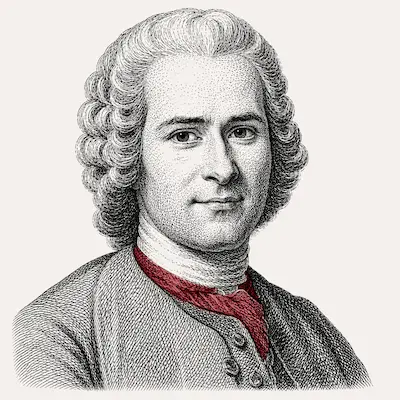
Jean-Jacques Rousseau
Will argue: A government that serves factional or class interests rather than the common good has lost its claim to obedience, but the "general will" argument is double-edged and can justify both genuine resistance and majoritarian tyranny.
His general will framework raises the most uncomfortable question at this table: what if the democratically elected government is itself the betrayer of the general will, not its expression?
Considered but not selected
Arendt already covers Thoreau's territory:: The selection of Arendt makes a separate Thoreau-style conscience-based voice redundant; her essay "Civil Disobedience" directly engages and extends the Thoreauvian tradition, so no additional member was needed on that flank.
Frantz Fanon: considered for the argument that democratic legitimacy in post-colonial states is structurally compromised from the outset, making the question of "justified disobedience" against such governments categorically different. Excluded because the question as posed ("a democratically elected government") most naturally concerns established or maturing democracies where the basic institutional framework is not in dispute; Fanon's framework is most powerful where colonial inheritance is the primary structural variable, which is a distinct sub-question. He would be essential if the issue were specifically about post-colonial democratic contexts.
Martin Luther King Jr.: not on the roster. The absence of his documented voice (specifically his Letter from Birmingham Jail, which is the most precise practitioner articulation of the justification conditions for civil disobedience) is a genuine gap this council cannot fill. Arendt and Mandela partially cover the terrain he occupies, but the "Letter from Birmingham Jail" framework, with its specific conditions of self-purification, negotiation attempts, direct action, and acceptance of legal consequences, is not fully represented. This is noted as an explicit limitation.