The Long Council
Who was selected, and why
Should the US government refuse green cards to people who have criticized Israel and support the Palestinian cause?
The central tension
Whether immigration policy can legitimately be used to exclude people based on political beliefs and speech versus the principle that democratic societies must protect political expression and avoid ideological litmus tests for citizenship.
Selected members
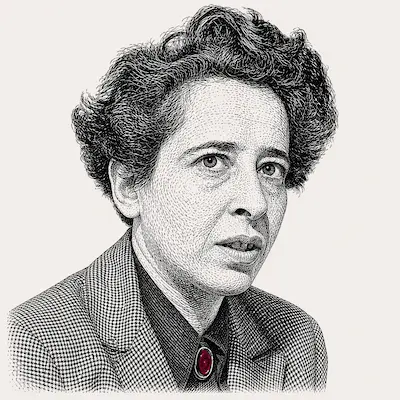
Hannah Arendt
Will argue: That using political beliefs as grounds for excluding people from citizenship rights destroys the pluralist foundation that makes democratic societies possible.
As a stateless person for 18 years, she developed the most rigorous framework on the "right to have rights" and the relationship between political membership and human dignity.
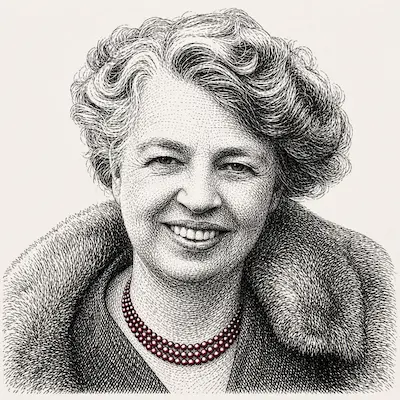
Eleanor Roosevelt
Will argue: That freedom of political opinion is a fundamental human right that cannot be surrendered as a condition of seeking citizenship or residency.
As architect of the Universal Declaration of Human Rights and advocate for refugee protection, she provides the foundational framework for human rights in immigration contexts.
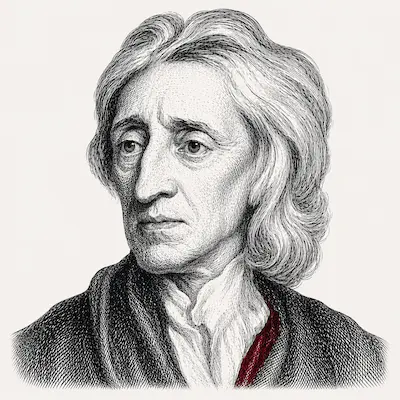
John Locke
Will argue: That a government that punishes political opinions it disagrees with exceeds its legitimate authority and violates the consent-based foundation of political obligation.
His framework on religious toleration and the limits of government authority over conscience provides the intellectual foundation for protecting political dissent.
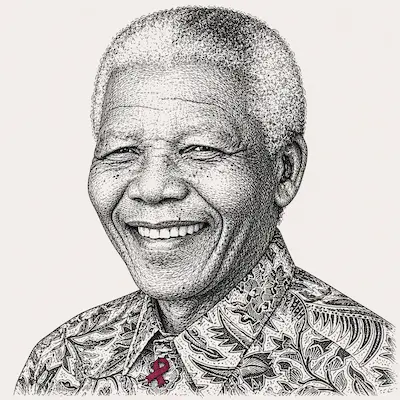
Nelson Mandela
Will argue: That excluding people based on political solidarity with oppressed populations reproduces the same logic of political exclusion that undermines democratic legitimacy.
His experience of being excluded from citizenship rights based on political positions, and his framework for building inclusive post-conflict governance.
Considered but not selected
Franklin D. Roosevelt: His documented exclusion of Japanese Americans based on ethnicity during WWII is a cautionary parallel, but his framework doesn't specifically address immigration policy or political speech - Margaret Thatcher, While she dealt with immigration issues, her framework focuses on economic policy and sovereignty rather than civil liberties and political expression - Deng Xiaoping, His framework explicitly rejects political pluralism and would support exclusion based on political positions, making him less useful for examining the tensions in a democratic context