The Long Council
Who was selected, and why
How should the German government deal with regular terrorist attacks by muslim immigrants?
The central tension
Should Germany treat immigrant terrorism primarily as a security threat requiring tighter control, or as a governance failure requiring better integration and rights protection? --- Before selecting, I note a framing concern that members will surface: "Muslim immigrants" is not a precise threat category.
Selected members
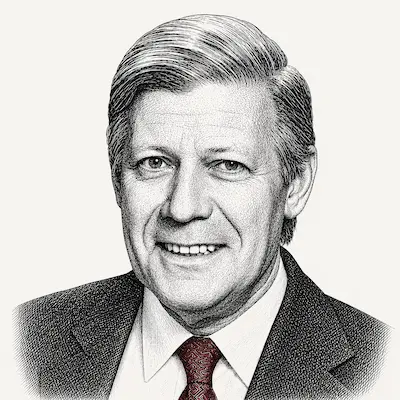
Helmut Schmidt
Will argue: Robust security responses are legitimate and necessary but must preserve the rule-of-law framework that gives Germany its political credibility.
Governed Germany through sustained domestic terrorism and documented that security responses must be decisive but institutionally bounded.
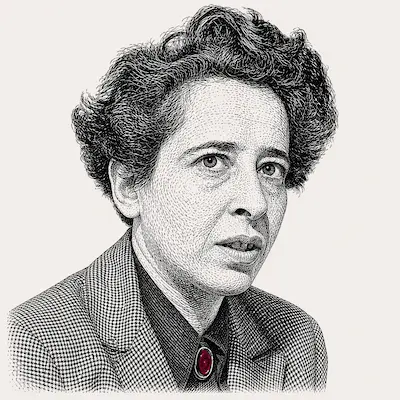
Hannah Arendt
Will argue: Policies that treat an entire religious-ethnic category as a security threat enact the logic of statelessness, destroying the legal personhood that democratic legitimacy requires.
Theorised how bureaucratic mass categorisation of populations by identity strips individuals of political membership and enables systemic harm.
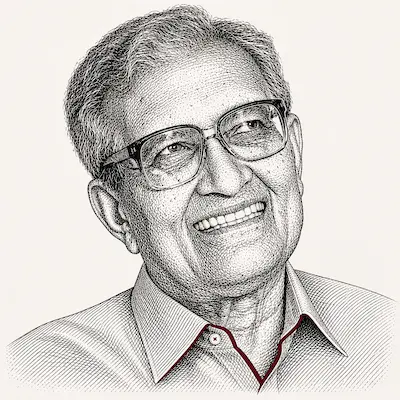
Amartya Sen
Will argue: Treating "Muslim immigrants" as a unitary security category is the precise move his framework identifies as producing more violence, not less, by suppressing plural identities.
His Identity and Violence framework directly addresses the political manipulation of singular identity as the mechanism producing communal violence.
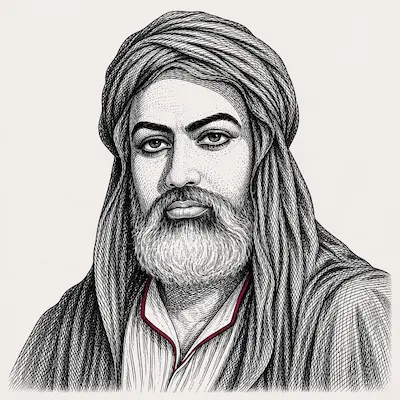
Ibn Khaldun
Will argue: Policies that consolidate Muslim immigrant communities against the host state strengthen their internal cohesion and weaken Germany's, accelerating the cycle they are meant to stop.
His asabiyya framework directly analyses what happens when a group within a state is excluded from the social solidarity of the majority, and why exclusion weakens, not strengthens, state cohesion.

Hannah Arendt's counterpart on the security pole — Machiavelli
Will argue: A state that signals it will not act decisively invites further attacks; targeted effective deterrence applied proportionately is preferable to either mass restriction or visible passivity.
Provides the sharpest documented case that a state facing genuine political violence must be willing to use effective deterrent measures without flinching, regardless of appearances.
Considered but not selected
Lee Kuan Yew: His framework for managing multi-ethnic societies under security pressure is documented and directly relevant, but it was built for a city-state with a specific demographic geometry. Its application to a large European democracy with constitutional rights architecture requires extrapolation extensive enough to reduce its analytical value here compared to members already selected.
Frantz Fanon: His analysis of how security responses targeting racialised populations reproduce colonial logic is genuinely relevant and would add a structural-violence perspective. Excluded because Sen's Identity and Violence and Arendt's statelessness framework together cover the civil-political and psychological dimensions of this argument without the additional extrapolation required to move Fanon from colonial to post-migration European context.
Friedrich Hayek: His rule-of-law framework (government action must conform to general rules known in advance, not target specific groups) bears on the constitutional question here. Excluded because Arendt covers the foundational political-rights dimension more directly, and Hayek's specific contribution on economic freedom adds less to this particular question.