The Long Council
Who was selected, and why
Do Trump's policies and approach to government pose a threat to American democratic institutions?
The central tension
Everyone agrees Trump breaks norms, but does that permanently damage democracy or will the system bounce back?
The two poles
Democracy is breaking
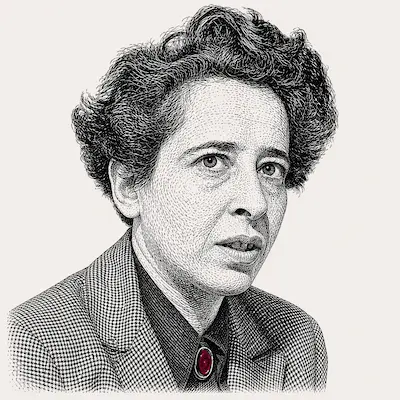 Hannah Arendt
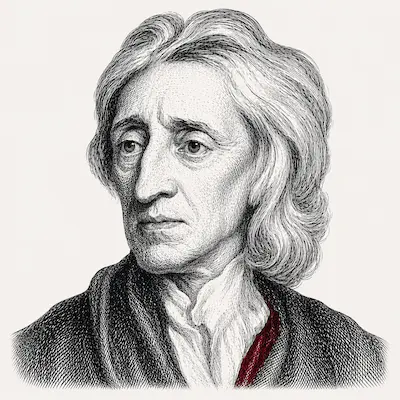 John Locke
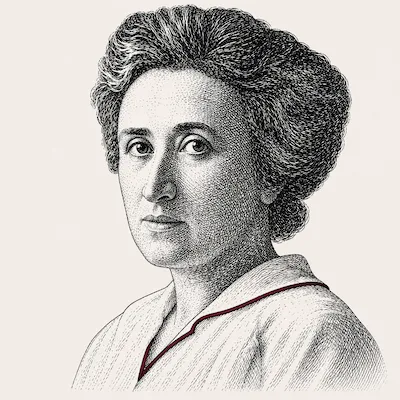 Rosa Luxemburg
System will hold
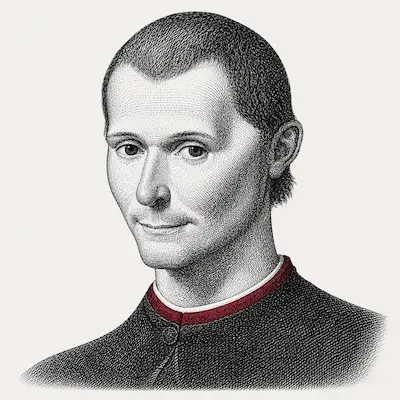 Niccolò Machiavelli
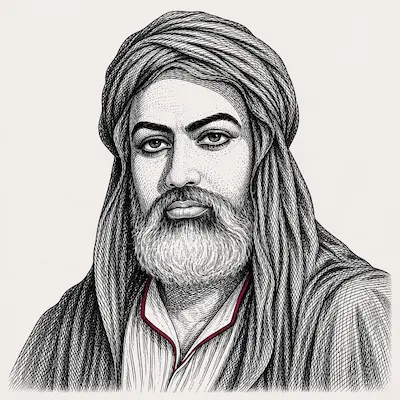 Ibn Khaldun
Selected members
Hannah Arendt
Will argue: Trump's attacks on truth, loyalty, and dissent follow the exact steps she documented in how democracies fall.
She wrote the book on how free societies collapse from the inside without anyone quite noticing until it is too late.
John Locke
Will argue: Pressuring courts, claiming immunity, and rejecting election results collectively cross the line where a government loses its right to be obeyed.
The US Constitution was built on his ideas, so he is the original authority on when a government breaks its own contract.
Rosa Luxemburg
Will argue: Extreme inequality created the conditions for Trump, and the same wealthy interests who allowed that inequality now benefit from weakened institutions.
She explains what neither Arendt nor Locke do: how economic inequality hollows out democracy long before any single leader arrives.
Niccolò Machiavelli
Will argue: American institutions have powerful defenders with strong reasons to resist, and dismantling them is far harder than it looks.
He studied political power as it actually works, including why entrenched institutions are much tougher to destroy than challengers expect.
Ibn Khaldun
Will argue: The real question is whether courts, the military, and the press still have the shared loyalty needed to hold together under pressure.
His framework measures whether institutions are genuinely declining or just stressed, based on the real cohesion of the people inside them.
Considered but not selected
John Rawls: Rawls's veil-of-ignorance framework and his documented analysis of civil disobedience in a "nearly just" society are relevant, but his framework is explicitly ideal-theory, requiring signals throughout. More importantly, his analytical register, what principles would rational actors choose, is less useful here than the structural and historical frameworks the selected members provide. The question is diagnostic (is this erosion or stress?), not normative (what principles should govern a just democracy?). Rawls adds a normative benchmark the issue does not primarily need; he is displaced by Locke, who provides the constitutional framework that is actually under stress.
Franklin D. Roosevelt: FDR is directly relevant as the practitioner who used emergency powers most extensively in a democratic context, and his Japanese internment and court-packing decisions are the most documented prior cases of democratic norm violation by a sitting president. He was considered as a resilience-pole voice, "American democracy survived my excesses." However, including him would add a fourth member to a council already at five and his practitioner register is largely covered by the historical awareness that Machiavelli and Ibn Khaldun will bring analytically. He remains a critical reference the council will invoke but does not need a seat to do so.
Amartya Sen: Sen's documented argument that democracy is an epistemological instrument (it generates the information governments need to correct failures) and that no democracy has experienced a famine is relevant to the question of what is actually lost when democratic institutions erode. However, his documented framework is strongest on development contexts and the relationship between democracy and famine prevention, the capability approach does not add distinctive analytical traction to the specific question of institutional erosion in a mature constitutional democracy. His position on this issue is largely derivable from Locke and Arendt.