The Long Council
Who was selected, and why
Is NAR movement a serious threat to democracy
The central tension
Does religious dominist organizing threaten democracy from within its own rules, or does democracy's self-correcting machinery keep it contained?
The two poles
Genuine structural threat
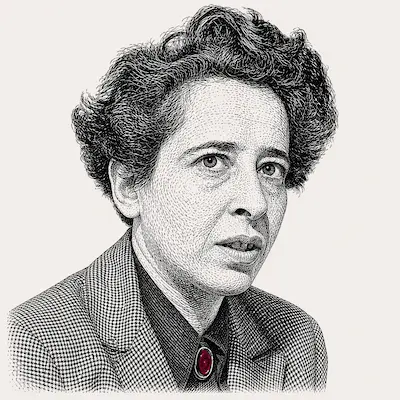 Hannah Arendt
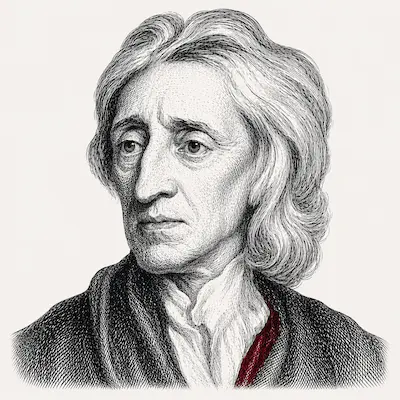 John Locke
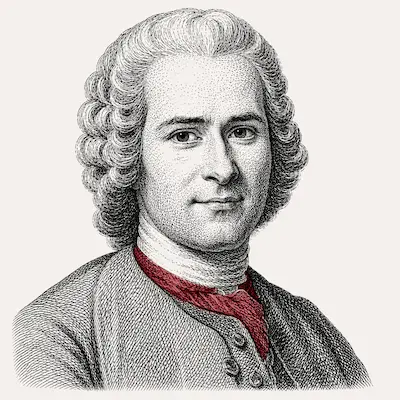 Jean-Jacques Rousseau
System resilience / overstated threat
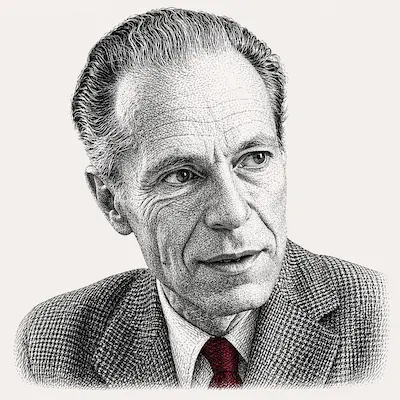 Albert O. Hirschman
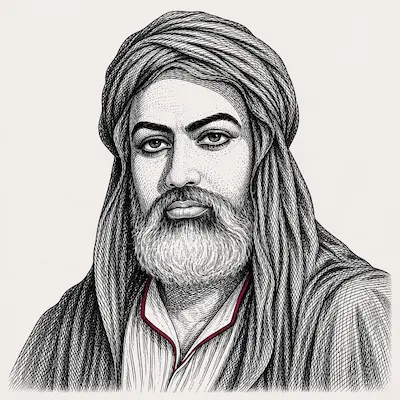 Ibn Khaldun
Selected members
Hannah Arendt
Will argue: NAR represents a documented pattern of pre-totalitarian mobilisation, singular identity, claims to represent the true people, targeting of institutions, that democratic systems have historically underestimated until too late.
Her documented framework identifies exactly the preconditions NAR exploits: atomised citizens, eroded public realm, ideology claiming to speak for the people against corrupt elites.
John Locke
Will argue: A movement that explicitly targets government, media, and education for confessional control is not exercising religious freedom but pursuing civil disloyalty in Locke's documented sense, the very category he excluded from toleration's protections.
His documented framework on the limits of toleration, the right of the people to dissolve governments that systematically violate natural rights, and, critically, his own documented exclusion of those whose religion requires civil disloyalty, speaks directly to whether a movement targeting state control for theocratic ends falls within democratic legitimacy.
Jean-Jacques Rousseau
Will argue: NAR's Seven Mountains theology is a documented case of a factional interest disguising itself as the general will, the political fraud Rousseau diagnosed, which destroys the civic equality that genuine popular sovereignty requires.
His documented framework on the general will, civil religion, and the corruption of political community by private faction is the sharpest available lens on what happens when a particular interest claims to speak for the whole people.
Albert O. Hirschman
Will argue: Alarm about NAR may itself deploy the jeopardy move, claiming any religious political mobilisation threatens prior democratic achievements, while underestimating democracy's documented capacity to absorb and domesticate organised minority pressure through voice rather than capitulation; NAR's 2022 electoral failures are evidence the exit/voice dynamic is functioning.
His Rhetoric of Reaction framework directly equips the council to evaluate whether alarm about NAR is analytically sound or itself a rhetorical move; his exit/voice/loyalty model applies to how democratic institutions respond to internal pressure from organised minorities.
Ibn Khaldun
Will argue: NAR exhibits classic religious asabiyya, strong internal cohesion enabling political mobilisation, but Ibn Khaldun's documented pattern predicts it will erode faster than its organizers expect once it confronts institutional friction; the 2022 general election losses are consistent with the phase in which religious group solidarity peaks and begins to fragment against the established order's resistance.
His framework on religious asabiyya, group cohesion generated by faith, its documented capacity to produce political power in the short run, and its documented tendency to fade faster than kinship-based solidarity once it confronts institutional resistance, provides the structural lens Arendt's framework lacks.
Considered but not selected
Amartya Sen: Identity and Violence (2006) is directly relevant to NAR's singular-identity politics, and his democracy-as-universal-value argument bears on the question. Excluded because Arendt covers the atomisation and totalitarian-precondition argument more rigorously for this specific political form, and Sen's primary strength is development economics and capability, not the institutional mechanics of democratic erosion in an advanced democracy. Adding him would create a third voice on the threat pole without adding a distinct line of reasoning unavailable from Arendt.
Alexis de Tocqueville: Not on the roster. His documented framework on democratic despotism, voluntary associations, and the tyranny of the majority would be the natural fit for this question. His absence is a genuine roster limitation for questions about American democratic pathology specifically.
John Rawls: His political liberalism and public reason doctrine bear directly on whether a movement explicitly grounded in comprehensive religious doctrine can claim democratic legitimacy. Excluded because his framework is ideal-theory and deliberative, it diagnoses the problem (NAR's theology fails the public reason test) but adds less than Locke and Rousseau to the structural analysis of threat and resilience. Including him would produce a fourth voice on the threat pole and crowd out the Ibn Khaldun and Hirschman structural-dynamics arguments.