The Long Council
Who was selected, and why
How would Confucius judge Trump's leadership?
The central tension
Whether Confucian moral-political framework can meaningfully evaluate contemporary democratic leadership that operates under fundamentally different institutional and cultural assumptions.
Selected members
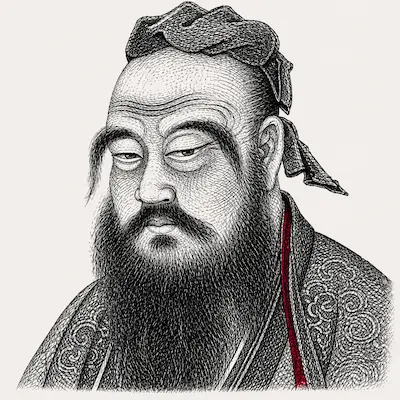
Confucius
Will argue: That leadership legitimacy derives from moral cultivation and truthful communication; would likely find Trump's approach fundamentally incompatible with virtuous governance
His governance philosophy provides the primary analytical framework for evaluating leadership through moral virtue, rectification of names, and the relationship between ruler character and political legitimacy.
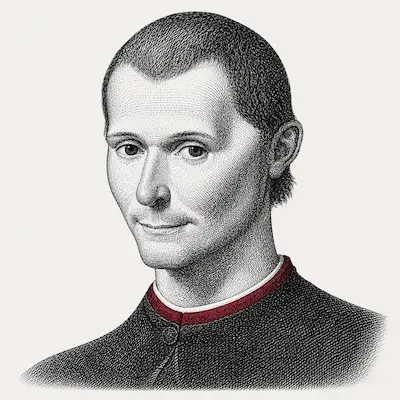
Machiavelli
Will argue: That Trump's methods should be judged by their effectiveness at achieving political objectives, not by their conformity to moral ideals
Provides the essential counterpoint to Confucian moralism by evaluating leadership effectiveness through results rather than virtue, and the strategic use of deception and force.
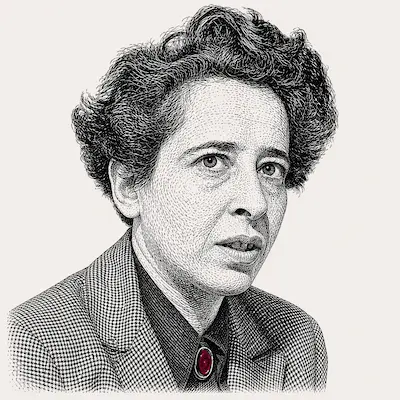
Hannah Arendt
Will argue: That leadership that systematically undermines democratic norms and truth-telling creates conditions for institutional collapse
Her analysis of democratic erosion, the "banality of evil," and the conditions under which ordinary people enable systematic harm directly addresses concerns about authoritarian tendencies in democratic leadership.
Considered but not selected
Franklin D. Roosevelt: While he provides democratic crisis leadership experience, his era and context are too different to offer meaningful comparison to contemporary polarized democracy - Lee Kuan Yew: His authoritarian development model, while successful, operates in a completely different cultural and institutional context than US democracy - Ibn Khaldun: His cyclical theory of dynasties doesn't translate well to evaluating individual democratic leaders within established constitutional systems