The Long Council
Who was selected, and why
Who should decide how much risk society accepts from new AI firms?
The central tension
Should elected governments force safety rules on AI companies, or can markets and company self-interest manage the risk well enough on their own?
The two poles
State mandates
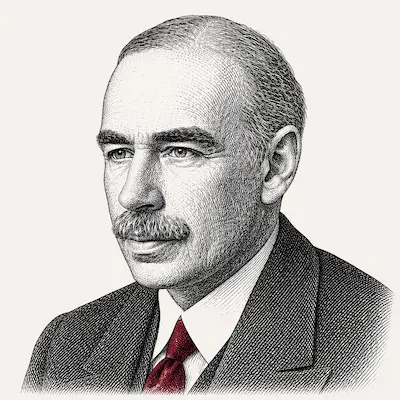 John Maynard Keynes
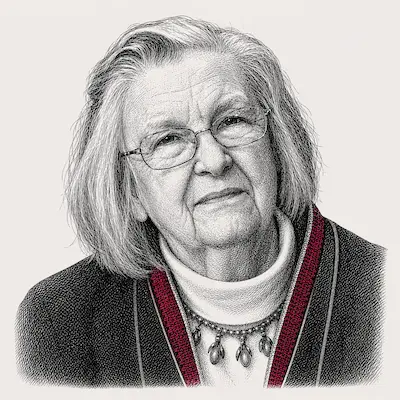 Elinor Ostrom
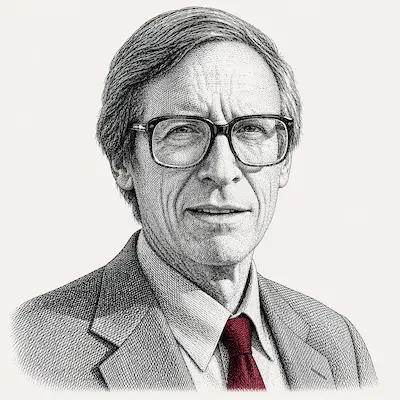 John Rawls
Market self-regulation
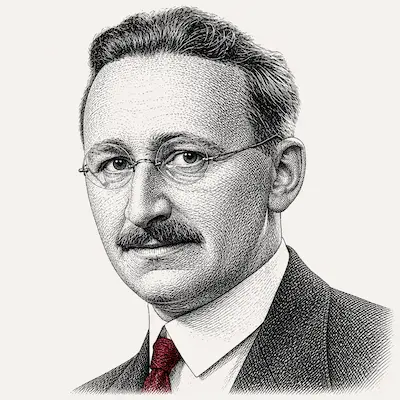 Friedrich Hayek
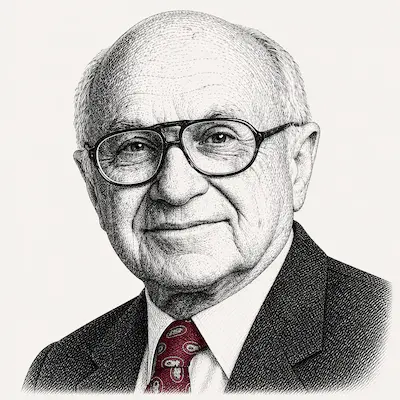 Milton Friedman
Selected members
John Maynard Keynes
Will argue: Under genuine uncertainty about existential risk, insuring against the worst case justifies mandatory regulation over market optimization.
His uncertainty framework directly addresses why catastrophic but unquantifiable AI risk cannot be left to market pricing alone.
Elinor Ostrom
Will argue: Neither a single government mandate nor unregulated markets will work, durable AI safety institutions need polycentric, multi-stakeholder monitoring with real enforcement teeth.
AI safety is arguably a public good or commons problem where neither pure markets nor pure top-down state control historically works well.
John Rawls
Will argue: A rational person behind a veil of ignorance, not knowing if they'd be harmed by an undisclosed AI failure, would choose mandatory safety rules over trusting firms' self-interest.
The article's core claim is a justice argument, that safety is a public good requiring collective rules rather than private risk-bearing by those unable to consent.
Friedrich Hayek
Will argue: Government safety mandates designed by regulators who do not understand frontier AI risk better than the firms building it will produce false confidence, not real safety.
His knowledge problem argument questions whether any regulator can possess the technical knowledge to mandate AI testing standards that actually work.
Milton Friedman
Will argue: Anthropic's own 94 pages of risk disclosure show markets already pricing catastrophic risk, liability through courts and insurance markets can discipline AI firms without a regulatory mandate.
He provides the sharpest documented challenge to the article's premise that only government mandates can discipline a risky new industry.
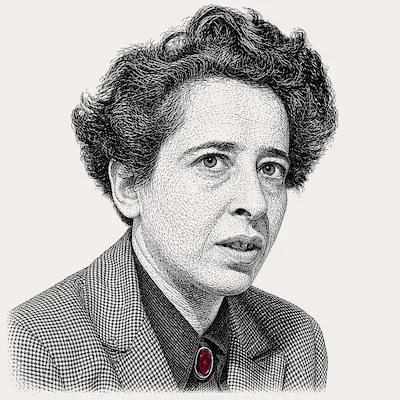
Hannah Arendt
Will argue: Whichever regime is chosen, the real danger is diffusing accountability so completely across firms, investors and regulators that no one is answerable when harm occurs.
Her analysis of bureaucratic "rule by nobody" and diffused responsibility speaks directly to who is actually accountable when an AI firm's board, investors, and engineers each disclaim ultimate responsibility for catastrophic risk.
Considered but not selected
Ibn Khaldun: his institutional decay framework is a stretch applied to a three-year-old industry; excluded as too extrapolated for this specific question. Franklin D. Roosevelt, his crisis-management and institution-building record is relevant in spirit but adds little beyond what Keynes and Rawls already cover on the state-mandate pole. Helmut Schmidt, energy security and infrastructure irreversibility are adjacent but his profile explicitly flags no documented AI positions; risk of thin extrapolation.