The Long Council
Who was selected, and why
Should cities cap mass tourism to preserve local quality of life?
The central tension
**Resident welfare and democratic self-determination vs. economic freedom and growth** — the live disagreement is not whether tourism has costs (that is settled) but whether binding caps are a legitimate and effective instrument for managing those costs, or whether they represent a protectionist interference with markets and individual freedom that will produce worse unintended consequences than the problem they address.
Selected members
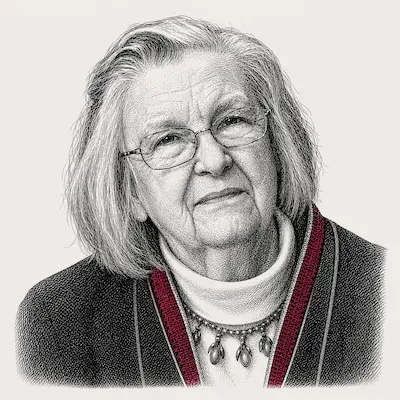
Elinor Ostrom
Will argue: Tourism caps are a legitimate governance instrument only if designed with user participation, matched to local conditions, and enforced through graduated sanctions — her eight design principles apply directly; she will resist one-size-fits-all national caps and advocate for city-scale, neighbourhood-scale, and street-level polycentric regulation.
Mass tourism in cities is a collective-action and common-pool resource problem — shared public space, streetscapes, residential neighbourhoods, and civic life are commons that are depleted by overuse, precisely the class of problem her entire body of work addresses. · *Governing the Commons* (1990); Nobel Lecture on polycentric governance (2009); design principles for common-pool resource institutions.
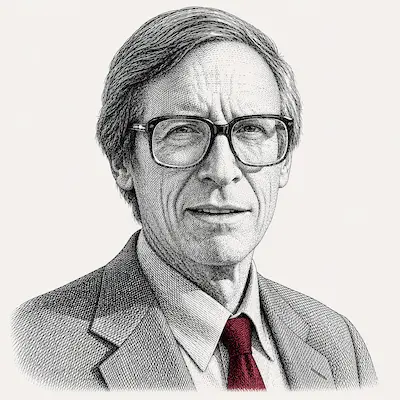
John Rawls
Will argue: The basic structure of a city's tourism economy must be evaluated by its effects on the least advantaged residents — if uncapped tourism drives up rents and displaces working-class communities, it fails the difference principle regardless of aggregate GDP gains; some form of binding regulation is not merely permissible but required by justice.
The question of who bears the costs of mass tourism and who captures the benefits is a distributive justice question: residents (often lower-income) absorb noise, displacement, and public space loss; capital-owners and tourism industry capture rents. His difference principle asks whether this arrangement benefits the least advantaged. · *A Theory of Justice* §12–17 (difference principle); institutional design as the subject of justice (*Theory of Justice* §2).
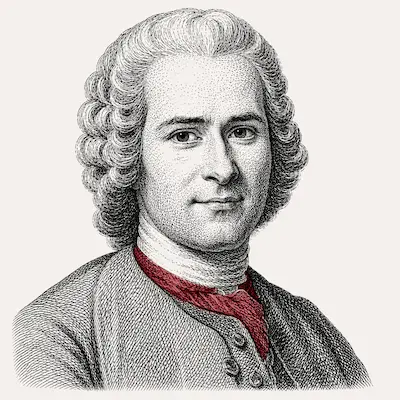
Jean-Jacques Rousseau
Will argue: The residents of a city collectively constitute the sovereign; the decision to cap tourism is an exercise of the general will over the use of common space that no private commercial interest can legitimately override — to subordinate residents' civic life to tourist throughput is precisely the fraud of existing social contracts that protect accumulated interests at the expense of the community.
The question of whether residents of a city may democratically determine who uses their shared public space invokes his theory of popular sovereignty and the general will — the community's right to govern the conditions of its own civic life against private economic interests. · *The Social Contract* Book II (general will); *Second Discourse* (property and the corruption of community); special flag: **Rousseau's general will is live here** — the democratic claim that residents constitute a community with the right to regulate their shared space is his strongest register.
Friedrich Hayek
Will argue: Quantitative caps are a textbook example of the pretence of knowledge — no authority can know the correct number of tourists for a city or neighbourhood; price mechanisms (tourism taxes, congestion pricing, market rents) aggregate dispersed information far more accurately than administrative quotas, and caps will produce black markets, regulatory arbitrage, and the displacement of impacts to uncapped areas rather than genuine relief.
Tourism caps restrict the freedom of individual travellers, property owners, and service businesses; they constitute a form of central planning that requires an authority to possess knowledge (about optimal visitor volumes, seasonal variation, neighbourhood-level impacts) that is dispersed across millions of actors and cannot be centralised without destroying the information that makes good decisions possible. · "The Use of Knowledge in Society" (1945); *The Constitution of Liberty* (1960); "The Pretence of Knowledge" Nobel Lecture (1974).
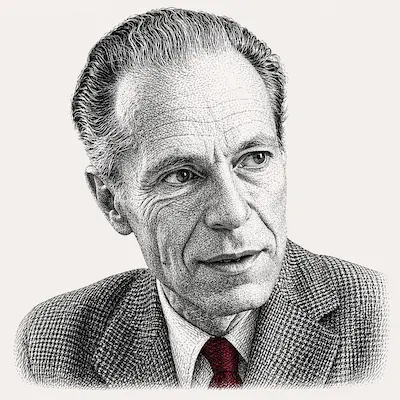
Albert O. Hirschman
Will argue: When exit is available (residents can leave), voice is suppressed — but making exit too easy (through displacement) destroys the community that would otherwise reform the tourism economy; he will scrutinise anti-cap arguments through his rhetoric-of-reaction lens, identifying which objections are perversity claims (caps will make it worse), futility claims (caps won't change anything), or jeopardy claims (caps threaten prior economic achievements) — and will demand that each be treated as an empirical proposition rather than a rhetorical weapon. ---
He provides the essential pragmatist caution that sits between Hayek's ideological anti-regulation and Ostrom's design-optimism: his exit/voice/loyalty framework asks what residents actually do when their city becomes unlivable, and his rhetoric-of-reaction framework evaluates whether the anti-cap arguments (perversity, futility, jeopardy) are genuine analytical claims or rhetorical defences of entrenched economic interests. · *Exit, Voice, and Loyalty* (1970); *The Rhetoric of Reaction* (1991); irreversibility threshold principle across multiple works.
Considered but not selected
Amartya Sen: — Relevant on the capability approach (do residents retain the real freedom to live in their city?), but his framework largely duplicates Rawls's distributive concern here without adding a distinct analytical tradition. Rawls is more precisely calibrated to the institutional design question; Sen adds most value where democratic institutions themselves are absent.
Milton Friedman: — Would argue for price mechanisms over caps, but this position is covered more completely by Hayek, who also addresses the knowledge problem that makes tourism quantification difficult. Friedman would largely echo Hayek on the anti-cap pole without the knowledge-problem precision.
Ibn Khaldun: — His taxation theory (high rates destroy the productive base) and asabiyya concept (civic cohesion as the foundation of urban vitality) are suggestive, but the extrapolation to modern municipal tourism policy would require ◇ flagging throughout; the documented analytical gap is too large for a question this specific.
--