The Long Council
Who was selected, and why
How to solve the housing crisis in the US?
The central tension
Can private builders fix the housing shortage on their own, or does the government need to step in and build too?
The two poles
Let the market build
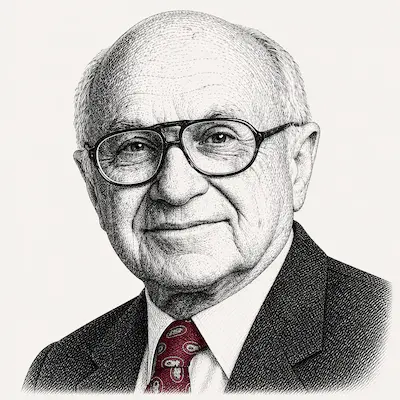 Milton Friedman
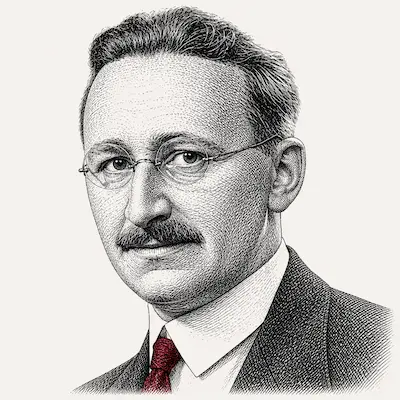 Friedrich Hayek
Government must lead
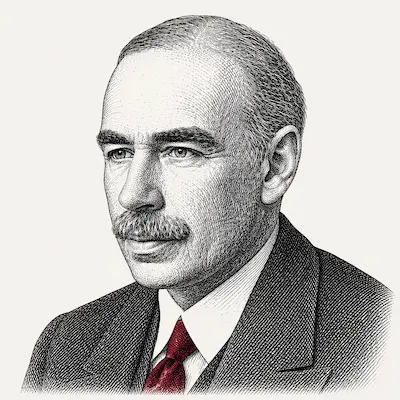 John Maynard Keynes
 Amartya Sen
 Ostrom
Selected members
Milton Friedman
Will argue: Zoning laws created the housing shortage, so scrapping them is the fix and subsidies without that just raise prices.
Friedman best explains how government rules cause the very problems they claim to solve.
Friedrich Hayek
Will argue: Local builders and buyers know what housing is needed far better than any planning authority ever could.
Hayek's knowledge problem argument directly explains why top-down zoning produces the wrong housing in the wrong places.
John Maynard Keynes
Will argue: With mortgage rates above seven percent, private developers cannot build affordable homes so public investment must fill the gap.
Keynes explains when broken financing means government spending is the only way to kick-start a frozen market.
Amartya Sen
Will argue: Adding millions of market-rate units means nothing if the families who need housing most still cannot afford any of them.
Sen forces the question of whether the people hit hardest by the crisis actually gain anything from proposed solutions.
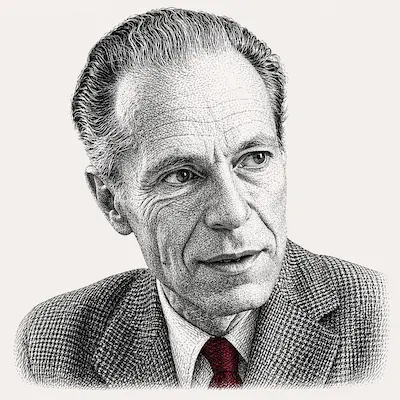
Albert O. Hirschman
Will argue: Both sides use scare tactics to block reform and the council must separate honest evidence from arguments that just protect insiders.
Hirschman spots when policy arguments are genuine analysis versus rhetorical tricks used to defend the status quo.
Considered but not selected
Elinor Ostrom: Housing is not a common-pool resource in the technical sense; it is a private good whose undersupply is driven by regulatory and financing failures, not by the tragedy-of-the-commons collective action problem her framework addresses. Urban commons (parks, shared infrastructure) are adjacent but not the central question here. Her framework would be highly relevant if the question were neighborhood land trusts, community land ownership, or shared water/green infrastructure as complements to housing, but for the core question of closing a 4, 7 million unit deficit, her specialist framework adds less than the five selected members.
Margaret Thatcher: Her Right to Buy program (Housing Act 1980) is directly relevant precedent, the most consequential housing policy decision by any council member, and her framework on supply, property ownership, and the welfare state is applicable. She was not selected because Friedman and Hayek provide the supply-liberalization and anti-regulatory arguments with more theoretical depth, and adding Thatcher would create a three-voice pile-up on the market pole without adding a distinct analytical register.
Franklin D. Roosevelt: His New Deal housing programs (HOLC, FHA, public housing) are historically foundational to the American housing system (and to its racial segregation, the redlining connection is a documented T5 failure). He was not selected because Keynes provides the counter-cyclical investment argument more rigorously, and the FDR profile's most relevant housing contribution is the discriminatory infrastructure of the FHA, which is a complication rather than a solution framework for this question.