What skills do our children need to be prepared for the future and how can current education provide them?
Built from documented writings, speeches, decisions and historical records. Council members argue from documented positions, applied to today's question.
Children need both technical skills and character formation, but education systems cannot optimize for economic survival, democratic participation, human development, and moral cultivation simultaneously.
Lee demands immediate economic results through tracked technical education. Dewey requires democratic experience through collaborative problem-solving. Sen insists on expanding all human capabilities regardless of economic utility. Confucius prioritizes moral character over technical competence. Ostrom focuses on collective governance skills.
The council agrees children face an uncertain future requiring both individual capability and collective action. But no education system can simultaneously maximize economic efficiency, democratic participation, capability development, character formation, and collaborative governance without fundamental trade-offs.
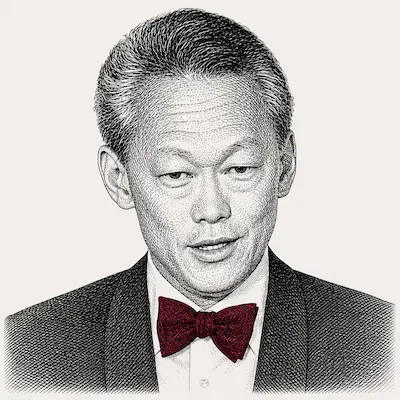
Survival is the precondition of everything else — including education.
Singapore separated from Malaysia in 1965 with no natural resources, no hinterland, and hostile neighbors. I had to build a nation from scratch with 1.8 million people who spoke different languages and practiced different religions. Education was not a luxury we could afford to get wrong — it was our only path to economic survival. I chose bilingual education with English as the working language and Mandarin for Chinese Singaporeans, despite fierce opposition from dialect communities. The decision was brutal but necessary: a small state cannot afford the inefficiency of multiple working languages.
The skills our children needed were clear: technical competence to attract foreign investment, discipline to build a corruption-free civil service, and pragmatism over ideology. We created the Education Ministry's Gifted Education Programme to identify the top 1% early. We tracked students by ability, not by democratic sentiment. We prioritized mathematics, science, and technical skills because those were what multinational corporations required. The outcome validates the method: Singapore went from third world to first world in one generation.

Education must prepare children for uncertainty, not for predetermined outcomes.
Lee Kuan Yew built an efficient system for producing compliant workers, but that is training, not education. True education develops the capacity to think, adapt, and participate in democratic life. His tracked system may have served Singapore's immediate economic needs, but it created citizens who excel at following directions rather than questioning them. This works until conditions change — and conditions always change.
My experience establishing laboratory schools at the University of Chicago in 1896 taught me that children learn best through active engagement with real problems. Education should be experiential, not authoritarian. Students need to practice democracy in school to become democratic citizens. They need to work on genuine community problems to develop the collaborative skills that modern economies actually require. Singapore's model produces excellent test-takers; my model produces citizens who can create new solutions when the old ones fail.
The future belongs to societies that can adapt, innovate, and self-correct. You cannot prepare children for an uncertain future by teaching them to conform to current requirements. You prepare them by developing their capacity to learn, question, and work together.
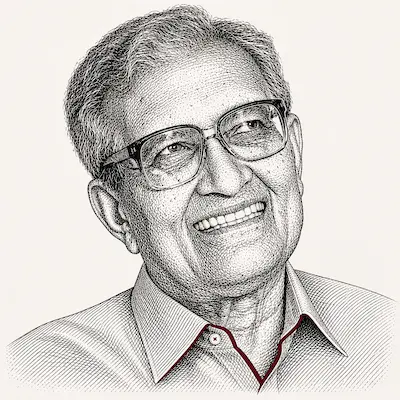
Education should expand human capabilities, not narrow them to economic functions.
Dewey is right that education must develop adaptability, but his framework lacks a systematic account of what we are adapting toward. The capability approach provides this: education should expand what people are actually able to do and be — their real freedoms to live lives they have reason to value. This is both more demanding than Lee's efficiency model and more concrete than Dewey's democratic idealism.
My work on famines taught me that people die not from lack of food but from lack of entitlements — the inability to access what they need. The same logic applies to education: children fail not from lack of intelligence but from lack of opportunity to develop their capabilities. This means education systems must be evaluated not by standardized test scores or even by economic growth, but by whether they enable all children — regardless of gender, class, or background — to develop their diverse talents.
The capabilities approach requires both technical skills and critical thinking, both individual development and social cooperation. Unlike Singapore's model, it does not sacrifice human development for economic efficiency. Unlike progressive education, it provides measurable outcomes: literacy, numeracy, scientific reasoning, artistic expression, and civic participation. These are not vague aspirations but concrete capabilities that can be assessed and improved.
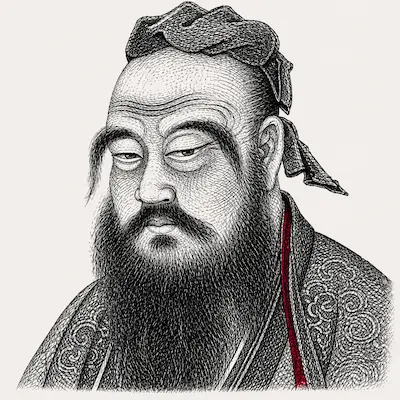
Education's primary purpose is character formation — technical skills without ethical grounding produce capable but dangerous citizens.
Sen's capabilities approach addresses what people can do, but not who they should become. This is precisely backward. Character must come first because it determines how capabilities are used. A person with great technical skill but poor character becomes a sophisticated criminal. A person with strong character but limited technical skill can learn what they need and use it well.
My experience teaching for forty years in Lu convinced me that education is fundamentally about moral development. "In education, there is no class distinction" — I accepted students regardless of their social origin because virtue can be cultivated in anyone. But cultivation requires the proper relationship between teacher and student, built on respect, discipline, and the student's genuine desire to improve.
The rectification of names applies to education: we must call things what they actually are. What Sen calls "capabilities" and Dewey calls "democratic participation" are valuable, but they are means, not ends. The end is the cultivation of exemplary persons who put the common good before personal advantage. Without this foundation, education produces clever people who use their cleverness for selfish purposes. Technical competence, critical thinking, and even democratic participation are dangerous in the hands of those who lack moral cultivation.
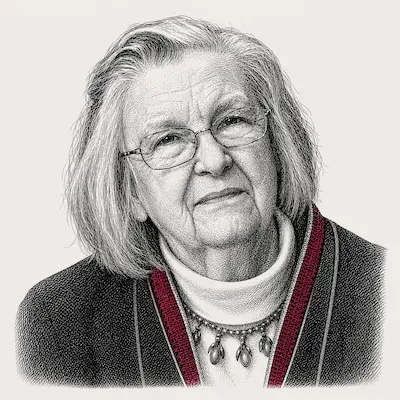
Children need skills in collective problem-solving — the challenges they will face require cooperation, not just individual excellence.
Confucius is right that character matters, but character is not cultivated through moral instruction alone — it develops through practice in collective action. My four decades of studying how communities solve shared problems taught me that cooperation is a skill that must be learned through experience. Educational institutions should model the collaborative governance structures that children will need as adults.
My research on common-pool resources shows that the most durable institutions share eight design principles: clearly defined boundaries, rules matched to local conditions, collective choice arrangements, effective monitoring, graduated sanctions, conflict resolution mechanisms, recognition by external authorities, and nested governance. Schools that embody these principles — where students participate in rule-making, monitor their own behavior, and resolve conflicts through established procedures — teach democratic governance more effectively than civics classes.
The problems children will face — climate change, technological disruption, global health crises — cannot be solved by individual excellence or even national education systems. They require polycentric governance: multiple overlapping institutions at different scales working together. Education should prepare children for this reality by giving them experience in collective decision-making, institutional design, and collaborative problem-solving across different contexts and communities.
The convergence note
Where the council converges:
All members agree that education must prepare children for an uncertain future that will require both individual capability and collective action.
Where it divides:
Lee prioritizes immediate economic survival and social order; Dewey emphasizes democratic participation and adaptability; Sen focuses on expanding human capabilities; Confucius insists on character formation; Ostrom stresses collaborative problem-solving skills. These are not merely different emphases but different theories of what education is for.
For a policymaker to decide on:
Whether to design education systems that prioritize economic competitiveness, democratic citizenship, human development, moral character, or collaborative governance — and how much a society can afford to sacrifice immediate efficiency for long-term adaptability.