How can Europe develop a long-term strategy for climate and conflict migration that combines humane reception with social stability?
Built from documented writings, speeches, decisions and historical records. Council members argue from documented positions, applied to today's question.
Europe must prepare institutions for predictable climate migration rather than manage it as permanent crisis.
Schmidt warns that reception without integration capacity destroys democratic legitimacy. Sirleaf counters that early investment in managed flows costs less than permanent crisis response. Roosevelt insists existing legal obligations require systematic implementation, not emergency measures. Maathai argues the root cause is governance failures in origin countries that concentrate climate harm in the Global South.
The council divides on whether solutions should prioritize European capacity, universal obligations, or structural change in origin countries.
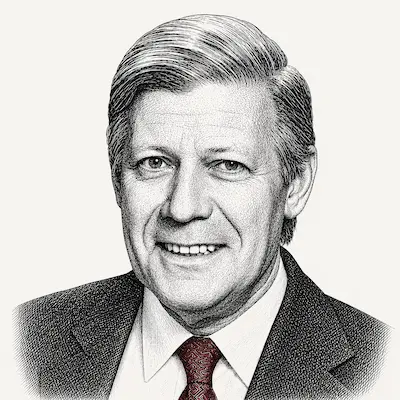
European migration strategy requires the same realism as energy security: sustainable capacity over moral declaration.
In November 1973 I told the Bundestag that energy dependence was not an energy question but a sovereignty question. The same logic applies to migration. A statesman who cannot imagine a scenario worse than the present one should not be making irreversible decisions. The scenario worse than current migration flows is European institutional breakdown — not because migration is inherently destabilising, but because reception without integration capacity destroys the political credibility required to maintain both.
Germany's 1973 Anwerbestopp taught me that stopping flows is easier than managing consequences. The question is not whether Europe will receive climate migrants — it will. The question is whether reception occurs within institutional frameworks that preserve democratic legitimacy and burden-sharing, or through ad hoc crisis management that strengthens nationalist parties and weakens European cohesion.
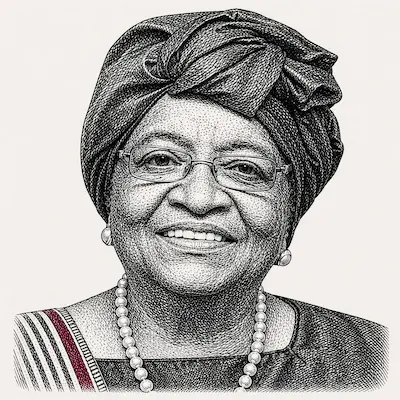
Schmidt raises the sovereignty question, but sovereignty means managing pressures, not avoiding them.
When I took office in 2006, Liberia had 4.9 billion dollars in external debt and no functioning institutions. We could not avoid IMF conditionality — we had to sequence compliance with sovereignty-building. The same applies to Europe's migration challenge. You cannot preserve democratic legitimacy by pretending external pressures do not exist. You preserve it by managing those pressures transparently and building the institutional capacity to handle them sustainably.
Climate migration to Europe will accelerate whether Europe prepares or not. The choice is between managed transition and crisis response. During the 2014 Ebola outbreak, I learned that denial costs weeks you cannot recover. Early investment in reception infrastructure, legal pathways, and integration capacity is cheaper than permanent crisis management. But this requires honest public conversation about what sustainable reception means — not unlimited flows, but predictable, managed flows with clear integration requirements.

Sirleaf correctly identifies the management challenge, but Europe's obligations are not optional.
When we drafted the Universal Declaration in 1948, Article 14 established that everyone has the right to seek asylum from persecution. This was not sentiment — it was institutional architecture created by states that had witnessed what happens when people become stateless. I spent eighteen months negotiating this with fifty-six countries, including those that had created refugees and those that had received them.
Europe's current approach treats migration as a crisis requiring emergency measures. But climate displacement is not a crisis — it is a predictable consequence of documented environmental change. The framework exists: the 1951 Refugee Convention, complementary protection mechanisms, and burden-sharing arrangements through the UN system. The failure is not legal but political — European governments have chosen crisis management over systematic implementation of existing obligations.
The alternative to managed reception is not no reception. It is unmanaged reception that destroys both humanitarian protection and democratic stability. Europe needs binding burden-sharing arrangements, legal pathways for climate migrants, and massive development investment in origin countries.
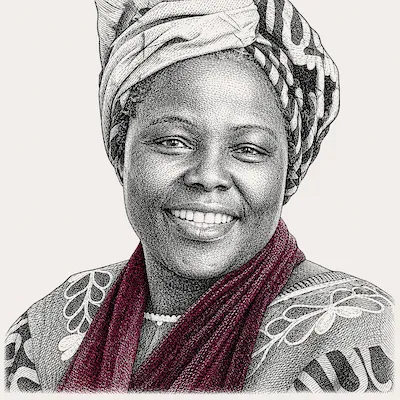
Roosevelt's framework addresses symptoms, but climate migration is produced by governance failures that require structural solutions.
The Universal Declaration assumes that displacement is exceptional — people flee persecution and return when conditions improve. Climate displacement is different. When I founded the Green Belt Movement in 1977, rural women told me about water scarcity, firewood shortages, and soil degradation. These were not environmental problems — they were governance failures that concentrated land and resources in elite hands while making rural livelihoods impossible.
Climate migration to Europe is the endpoint of a chain that begins with governance failures in origin countries. Drought becomes famine when land tenure systems prevent communities from adapting. Floods become displacement when governments allocate fertile land to export crops instead of food security. The solution is not just managing arrivals in Europe — it is addressing the political economy that produces departure.
This requires massive investment in democratic governance, land reform, and ecological restoration in the Global South. Europe's development aid currently reinforces the extractive arrangements that produce displacement. Climate-proofing African agriculture and building democratic institutions that communities can trust are more effective than border management. But this means confronting the global economic arrangements that concentrate climate harm in the South while concentrating climate resources in the North.
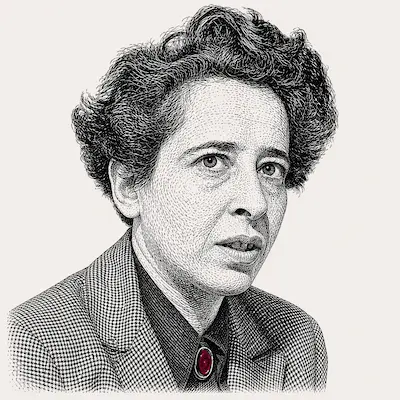
Maathai identifies the structural causes, but mass displacement threatens the very political communities required for democratic solutions.
My eighteen years of statelessness taught me that rights without political membership are meaningless. But mass displacement creates a more dangerous problem: it can destroy the political communities capable of recognising rights at all. When populations are atomised and institutions are overwhelmed, the conditions emerge that make democratic politics impossible and authoritarian solutions attractive.
Europe faces what I called the founding problem: how to establish legitimate authority under new conditions. Climate migration requires new forms of political membership that transcend the nation-state system — but this cannot be imposed administratively. It requires genuine political deliberation about what obligations European political communities have to climate refugees and what forms of membership they can offer.
The danger is that crisis management becomes permanent emergency rule — governance by administrative decree rather than political decision. This destroys the public space where citizens can act together and make collective choices. European governments must create forums for genuine political deliberation about migration, not just technical management. The alternative is that democratic politics is replaced by bureaucratic administration on one side and populist reaction on the other — neither of which can sustain the political community that rights enforcement requires.
The convergence note
Where the council converges:
Climate migration to Europe is predictable and requires systematic institutional preparation rather than crisis management.
Where it divides:
Whether solutions should prioritise European institutional capacity (Schmidt/Sirleaf), universal human rights obligations (Roosevelt), structural change in origin countries (Maathai), or preserving democratic deliberation (Arendt).
For a policymaker to decide on:
The specific balance between managed reception capacity, legal pathway creation, development investment in origin countries, and democratic consultation processes.