The Long Council
Who was selected, and why
Was Trump's approach to governance sound?
The central tension
Does effective leadership require breaking established norms and institutions, or does it depend on upholding them?
The two poles
Norm disruption as legitimate tool
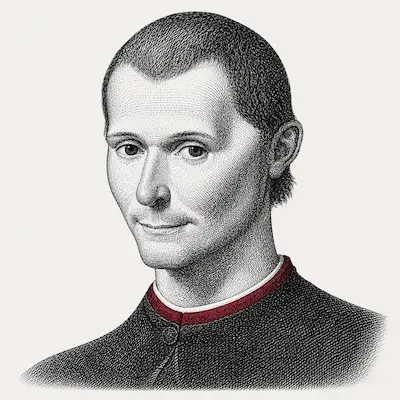 Niccolò Machiavelli
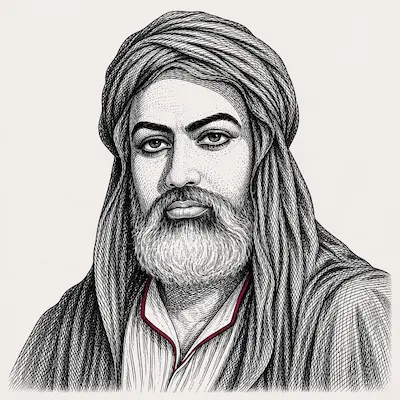 Ibn Khaldun
Institutional integrity as precondition
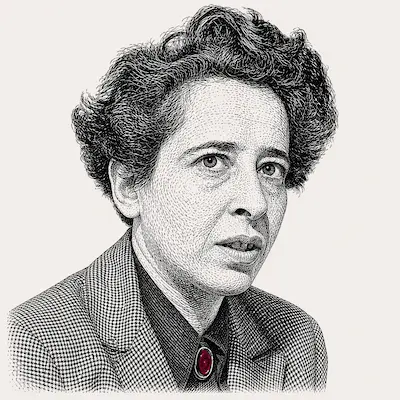 Hannah Arendt
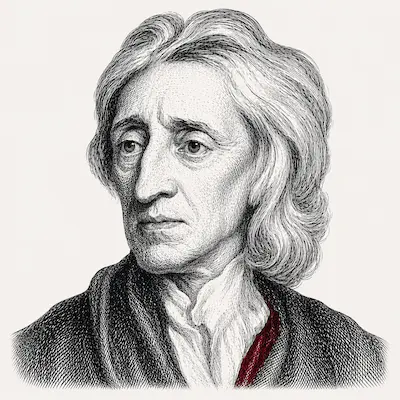 John Locke
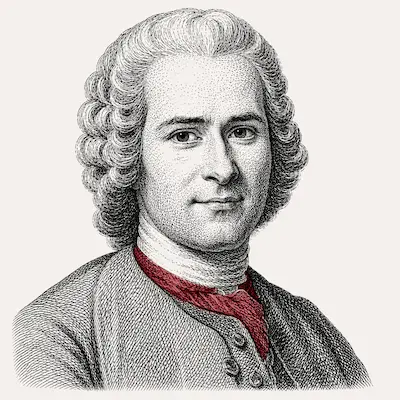 Jean-Jacques Rousseau
Selected members
Hannah Arendt
Will argue: Governance that systematically attacks institutional legitimacy, truth, and accountability dissolves the shared public realm democracy requires.
Her framework on how democracies erode through the normalisation of lawlessness and the destruction of shared political reality is directly applicable.
Niccolò Machiavelli
Will argue: A ruler willing to use fear, confrontation, and unconventional methods can achieve real objectives that conventional politicians cannot, but only if it serves durable order rather than personal survival.
His analysis of how new political orders challenge entrenched arrangements, and what force and disruption legitimately achieve, provides the strongest documented defence of norm-breaking as strategy.
Ibn Khaldun
Will argue: A ruler who fractures the group solidarity binding state institutions will exhaust political capital faster than he accumulates it, accelerating decay rather than arresting it.
His asabiyya framework for diagnosing why political orders decay or consolidate gives a structural lens on whether Trump's approach built or eroded the social cohesion on which state power rests.
John Locke
Will argue: A government that acts outside general rules, concentrates power in the executive, and treats institutional constraints as obstacles to be circumvented has moved from rule of law toward tyranny as Locke defined it.
His theory of legitimate government resting on consent, rule of law, and the right of the people to dissolve governments that systematically violate trust is the foundational framework for evaluating constitutional executive conduct.
Jean-Jacques Rousseau
Will argue: Claiming to speak for "the people" against institutions is not the same as expressing the general will, the general will requires shared common good, not the aggregation of private resentments.
His framework on popular sovereignty, the general will, and what happens when a leader claims to embody popular will against established institutions speaks directly to Trump's governing style and its democratic legitimacy.
Considered but not selected
Lee Kuan Yew: Excluded because his framework justifies authoritarian efficiency in a small, non-democratic developmental state; applying it to an established constitutional democracy produces a category error rather than genuine analytical traction.
Franklin D. Roosevelt: Considered because his court-packing plan and Japanese internment show a democratic leader overreaching executive authority; excluded because his framework centres crisis management and welfare-state legitimacy rather than the specific question of norm-erosion as a governing philosophy.
Machiavelli's Discourses pole: The Discourses Machiavelli (republican institutionalist) and The Prince Machiavelli (power realist) pull in opposite directions; the profile is selected once, with the reasoning card required to specify which framework is invoked and when.