Built from documented writings, speeches, decisions and historical records. Council members argue from those positions, applied to today's question.
- 1Republicans in 1966 linked wartime spending to the rising price of pork chops as a midterm campaign strategy.
The council treats these as reported facts, not settled truth. The members supply the reasoning; the asker supplied the sources.
No. Prices trigger the reaction, but campaigns and leaders decide who gets blamed for them.
Friedman and Hayek root the verdict in real injury: inflation moves wealth from saver to spender without a vote, so voters punish it correctly. Keynes counters that voters feel a mood, not a statistic. He points to 1919, when a technically accurate reparations figure became a political disaster depending on how it was told. Schmidt's 1973 oil shock shows the same price shock can be absorbed as either an energy-sovereignty failure or an unavoidable import, depending on what the government says first. Machiavelli and the 1966 Republicans go further: the link between wartime spending and pork chop prices was built, not discovered, and it worked anyway.
The split is whether blame tracks real cause or just the fastest story. Friedman and Hayek say the verdict is sound regardless of who tells it; Keynes, Schmidt and Machiavelli say whoever narrates first decides who pays the political price.
- 1Publish the government's own explanation of a price shock's true cause before opposition campaigns can assign blame, as Schmidt attempted in 1973.
- 2Treat voter anger at prices as a verdict on lived experience, not a statistic, when designing any political response.
- 3Expect challengers to construct a causal story linking spending or policy to prices even where no simple causal line exists, as in 1966.
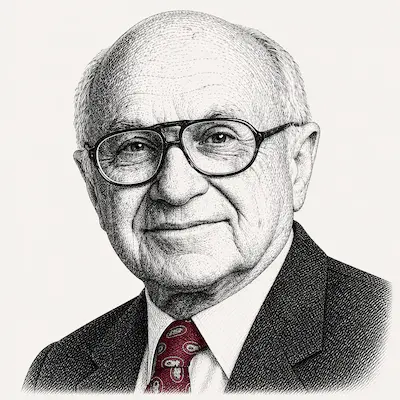
Inflation is a verdict. Voters read it correctly.
Rising prices are not noise generated by campaign strategists. They are the direct, measurable result of a central bank expanding the money supply faster than output grows. In 1966 Republicans linked pork chop prices to wartime spending because the connection was real: Vietnam spending plus loose monetary policy produced exactly the inflation voters felt at the register. Voters do not need a theory of monetary economics to punish this. They need a grocery bill. That is accountability working as intended.
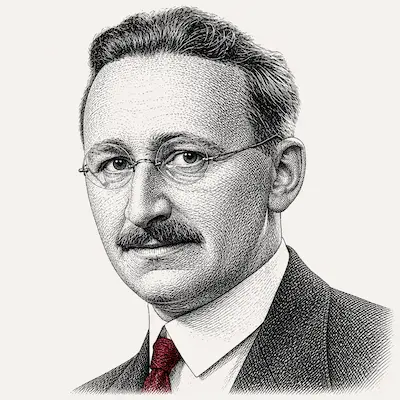
Inflation punishes voters before any ballot is cast.
I agree with the verdict, not the mechanism Friedman emphasises. Inflation redistributes wealth silently, between creditor and debtor, saver and spender, without a single vote in parliament. That is arbitrary government conducted through the currency itself. When a voter blames the party in office for the price of pork chops, he is responding to a real transfer of his wealth that occurred without his consent. The 1966 campaign did not invent this grievance. It gave a name to an injury already inflicted.
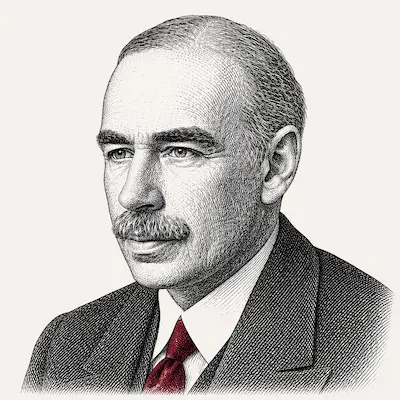
Prices alone never explain a vote. Expectation does.
Hayek is right that the injury is real, but voters do not experience inflation as a number. They experience it as a mood, confidence collapsing, wages feeling inadequate against rents and food. I resigned from the Versailles delegation in 1919 because I saw how a number, German reparations, could be technically accurate and politically catastrophic depending entirely on how it was narrated. The 1966 Republicans did not discover an inflation problem. They built a story fast enough to outrun the Treasury's own explanation of it.
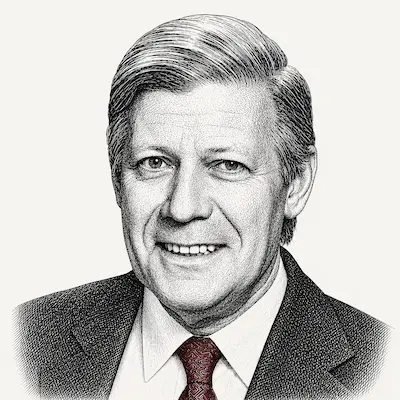
Voters blame the chancellor for prices set in Riyadh.
I lived this in October 1973. OPEC quadrupled the oil price and every German felt it at the pump within weeks. No Bundestag vote caused that shock, yet my government absorbed the blame as though we had printed the price tag ourselves. I told the Bundestag that energy dependence was a sovereignty question, not merely an economic one, precisely because voters cannot distinguish a domestic failure from an imported shock. They punish the face in front of them. That is not injustice. It is simply how accountability is distributed when no other target exists.
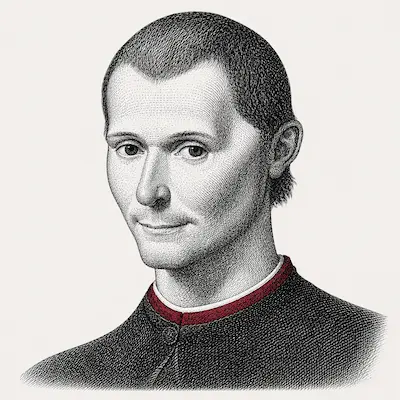
A skilled ruler turns the blame, never corrects it.
Schmidt describes a gift, not a burden. Men judge by their eyes, not by the ledgers of OPEC or the Bundesbank, and a prince who explains the oil market to a hungry population has already lost the argument. The 1966 campaign understood this: wartime spending and pork chop prices had no simple causal line between them, yet the connection was made to look obvious. Whether the cause is real or invented matters less than whether it can be made to appear true to someone holding a grocery bill.
The convergence note
Where the council converges: Rising prices always get blamed on whoever governs, whether or not they caused them. All five agree voters respond to lived experience, not monetary theory.
Where it divides: Friedman and Hayek treat the blame as a correct verdict on real policy failure. Keynes, Schmidt and Machiavelli see blame as something leaders and campaigns actively shape, win or deserve regardless of true cause.
For a policymaker to decide on: Whether to invest in explaining the true cause of a price shock, as Schmidt attempted in 1973, or to accept that voters will assign blame by instinct regardless of explanation.