The Long Council
Who was selected, and why
Can rising prices alone decide how people vote in elections?
The central tension
Do voters punish rulers for inflation because it genuinely signals bad governance, or because leaders exploit price pain for reasons that have little to do with real causes?
The two poles
Inflation as genuine verdict on governance
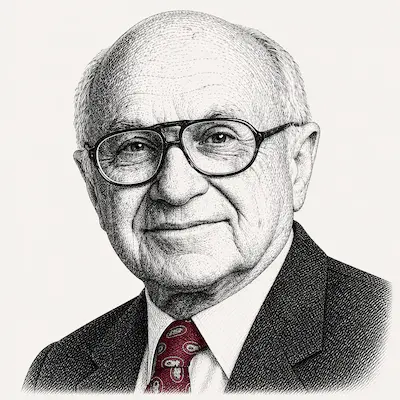 Milton Friedman
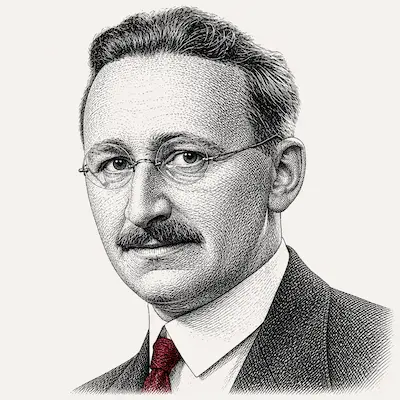 Friedrich Hayek
Inflation as politically manufactured or manipulable narrative
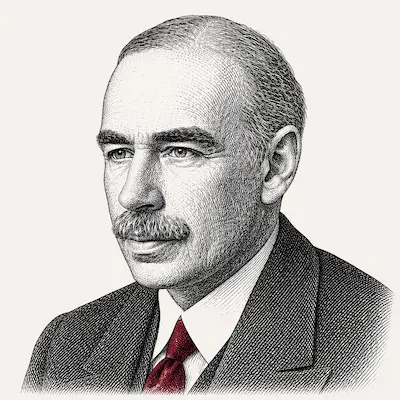 John Maynard Keynes
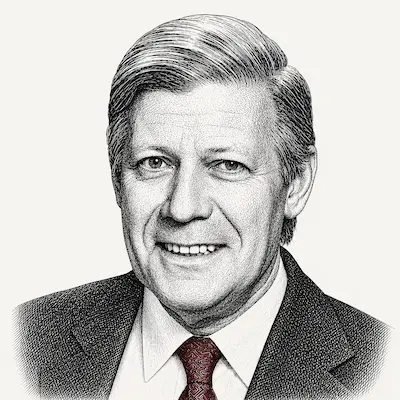 Helmut Schmidt
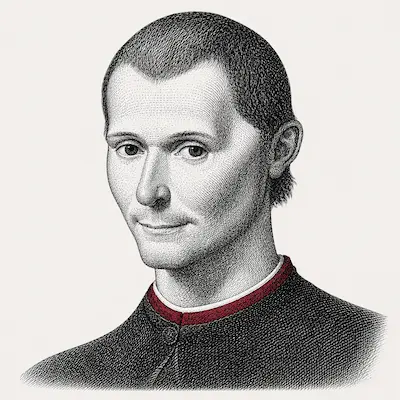 Niccolò Machiavelli
Selected members
Milton Friedman
Will argue: Voters are right to punish inflation because it reflects real policy failure, not manufactured grievance.
He argues inflation is always a monetary phenomenon and therefore a direct, measurable verdict on central bank and government conduct.
Friedrich Hayek
Will argue: Rising prices are a real governance failure that voters are entitled to punish regardless of the political framing used.
His argument that inflation is a form of arbitrary government that redistributes wealth without legislative consent makes price rises a legitimate political signal, not noise.
John Maynard Keynes
Will argue: Prices alone rarely explain votes because perception, expectation and narrative shape how economic pain is politically interpreted.
His distinction between calculable risk and genuine uncertainty, and his documented warnings on how political narratives about money move faster than economic reality, challenge a simple inflation-equals-verdict reading.
Helmut Schmidt
Will argue: Voters often blame leaders for prices driven by global shocks outside any government's control, so the link is politically constructed, not purely causal.
He governed through the 1973 oil shock and documented how energy-driven price shocks get mapped onto domestic political blame even when causes are external and structural.
Niccolò Machiavelli
Will argue: Skilled political actors can and do convert rising prices into decisive electoral weapons regardless of who actually caused them.
His framework on the appearance versus substance of governance directly addresses whether campaigns can successfully convert economic pain into political blame through framing alone.
Considered but not selected
Franklin D. Roosevelt: excluded because his economic crisis leadership is about demand collapse and depression response, not the inflation-and-voting link specifically, and the table already has strong crisis-practitioner representation in Schmidt. Margaret Thatcher, excluded despite deep inflation-as-moral-evil framework because her UK-specific European and union battles would crowd the table without adding a distinct pole; Friedman and Hayek already cover the "inflation as real verdict" position with sharper theoretical grounding. Indira Gandhi, considered for her documented Garibi Hatao campaign and price-control politics, but excluded to avoid overloading the "narrative manipulation" pole, which Schmidt and Machiavelli already cover from different registers.