The Long Council
Who was selected, and why
Should governments actively promote a shared national identity?
The central tension
Does government promotion of national identity bring people together, or does it force everyone to fit one approved mould?
The two poles
States must build shared identity
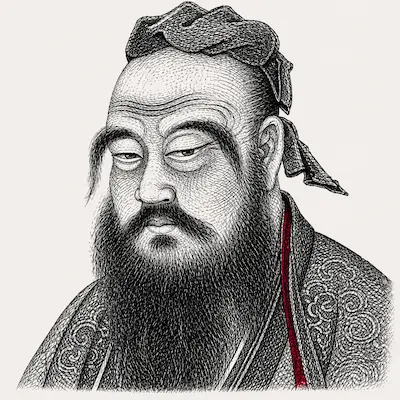 Confucius
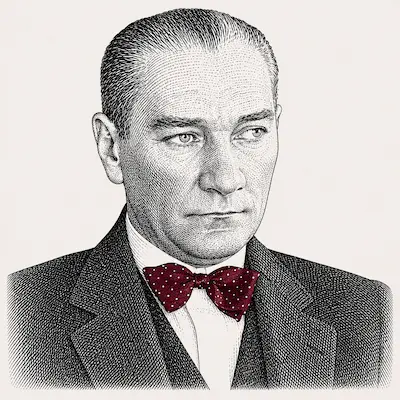 Mustafa Kemal Atatürk
LKY
State promotion does more harm than good
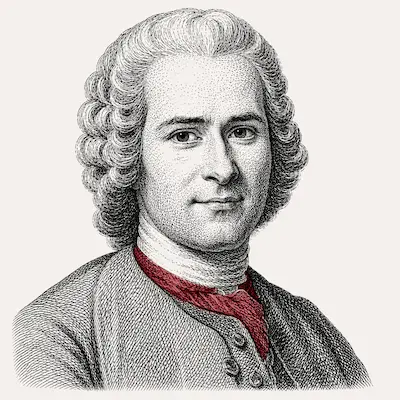 Jean-Jacques Rousseau
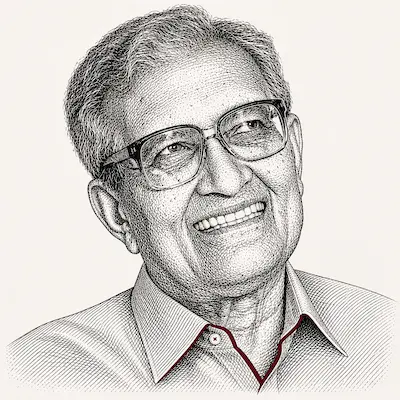 Amartya Sen
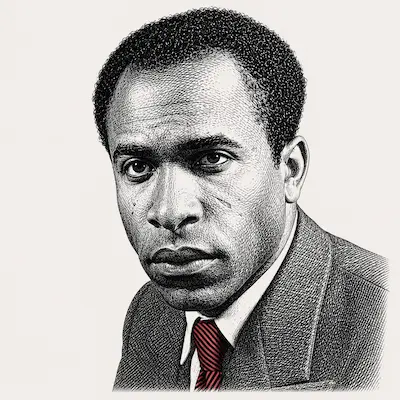 Frantz Fanon
Selected members
Confucius
Will argue: The state must actively teach shared values or governance collapses, but only genuine virtue works, not enforced conformity.
His entire theory of good government rests on citizens sharing a common moral language shaped by the state.
Mustafa Kemal Atatürk
Will argue: Sometimes only bold, top-down identity reform can break the old order, though his own record shows the real costs to minorities.
He replaced an entire empire's identity with a new secular Turkish one through sweeping state decrees in a single generation.
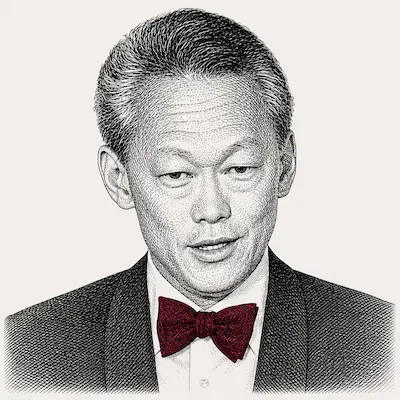
Lee Kuan Yew
Will argue: A fragile, divided new nation sometimes needs the state to engineer a shared identity just to survive, even at a cultural price.
He built a Singaporean national identity from scratch using language policy, housing, and military service as deliberate tools.
Jean-Jacques Rousseau
Will argue: Real national identity grows from citizens participating together freely and cannot be handed down by a state claiming to know best.
His theory of the general will asks exactly who gets to define the common good and what that power costs.
Amartya Sen
Will argue: Governments can fairly promote civic belonging, but pushing one cultural identity erases the many identities people actually hold and breeds violence.
His book Identity and Violence shows how states that flatten plural identities into one create the conditions for real-world conflict.
Frantz Fanon
Will argue: In post-colonial countries, state-promoted identity usually serves the new ruling class and repeats the colonial logic it claims to have replaced.
He documented how national movements betray their people when elites define the nation in their own image and exclude everyone else.
Considered but not selected
Nehru: Highly relevant: his documented secularism as a governance instrument and his construction of Indian national identity as a political (not ethnic or religious) project are directly on point. Not selected because Sen's framework from Identity and Violence covers the philosophical ground more precisely for this question, and Atatürk occupies the practitioner slot for constructed secular nationalism more completely. Including Nehru would create a near-echo with Atatürk (both practitioners of secular national identity construction) without adding a distinct analytical tradition.
Ibn Khaldun: His asabiyya framework offers the question a structural perspective: group solidarity is the engine of political power, and states that fail to cultivate it collapse. Genuinely relevant. Not selected because his framework analyses the consequences of cohesion or its absence rather than the normative question of whether states should actively promote it, he is descriptive where the question is normative. His contribution would be more valuable in a deliberation specifically about state fragility than in this one about the ethics and strategy of identity promotion.
Wangari Maathai: Her documented framework links environmental stewardship to community identity and democratic accountability, and her critique of post-colonial African states instrumentalising ethnic identity is directly relevant to Fanon's pole. Not selected because Fanon covers the post-colonial identity-capture critique more systematically, and adding Maathai would load one pole (skepticism of state promotion) without adding a distinct analytical tradition beyond what Fanon and Sen already provide. She is the stronger selection if the question specifically concerns African environmental-civic identity.