Can the Netherlands solve the housing crisis, and if so, how and on what timeline?
Built from documented writings, speeches, decisions and historical records. Council members argue from documented positions, applied to today's question.
The Netherlands can solve its housing crisis, but must choose between fast state direction, slow market freedom, or mixed systems that require sustained political will.
Keynes advocates counter-cyclical public investment to build assets while stimulating the economy. Thatcher demands deregulation and Right to Buy policies that create property-owning citizens. Schmidt proposes mixed public-private systems where government provides land and standards while private companies build efficiently. Lee calls for mandatory savings funds and comprehensive state development that delivers homeownership to 90% of citizens within fifteen years.
Ostrom warns that top-down solutions ignore local knowledge and create brittleness at scale. She advocates polycentric governance where communities participate in planning decisions within national frameworks.
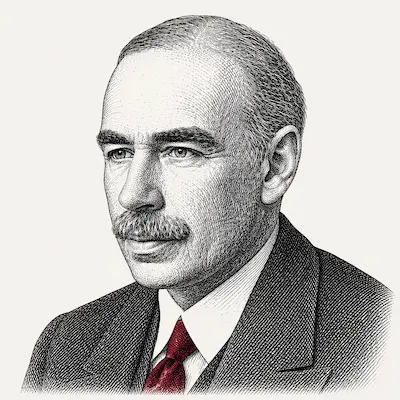
Housing shortages require counter-cyclical public investment when private markets fail to clear.
The Netherlands faces a classic market failure. In November 1940, I published "How to Pay for the War," demonstrating how governments can mobilise resources for national priorities without creating inflation. Housing operates by identical logic. When private builders cannot profitably supply affordable housing, the state must step in — not as a permanent provider, but as the market-maker of last resort. During Britain's inter-war housing shortage, I advocated municipal housing programmes precisely because private markets had failed to clear.
The financing objection dissolves under examination. Government borrowing for housing investment creates assets, not consumption. Each house built increases national wealth while providing economic stimulus. The Dutch government can borrow at historically low rates to build housing that will generate rental income for decades. This is not fiscal profligacy — it is portfolio management at the national level.

Property ownership creates responsible citizens; state housing creates permanent dependents.
Keynes misunderstands the mechanism. The housing shortage exists because the Dutch state has restricted supply through planning controls, rent regulations, and bureaucratic approval processes. In 1980, I introduced Right to Buy precisely because state provision had failed — council housing trapped families in dependency while creating no wealth. We sold 1.5 million council homes and created a property-owning democracy. The Netherlands needs the same approach: deregulation, not more state investment.
The real solution requires three simultaneous moves. Remove planning restrictions that prevent building. Eliminate rent controls that discourage private investment. Sell existing social housing to tenants at discounts, creating immediate homeowners who have stake in their communities. Private developers will build when they can profit; they cannot profit when regulations make building impossible and rent controls make investment unprofitable.

Mixed public-private systems deliver both quantity and quality while maintaining fiscal discipline.
Thatcher's model works only if you accept massive inequality as the price of efficiency. Germany's social housing system — which I defended throughout my chancellorship — proves there is a third way. We combined public land development with private construction, rent regulation with investment incentives, and tenant rights with fiscal responsibility. By 1982, West Germany had solved its post-war housing shortage without creating British-style council estates or American-style urban decay.
The key is sequencing and institutional design. Government assembles land, provides infrastructure, and sets quality standards. Private companies build to those standards under competitive tender. Non-profit housing associations manage the properties with regulated but sustainable rents. The state provides the framework; the market provides the efficiency. This requires initial public investment but becomes self-financing as rents cover maintenance and debt service.
The Netherlands can implement this model within a decade. The alternative — pure market solutions — will produce housing for the wealthy while workers commute from ever-greater distances.

Comprehensive state intervention through forced savings and public development solves housing crises completely.
Schmidt's approach is too slow and too complicated. Singapore faced a worse housing crisis than the Netherlands — 70% of our population lived in slums and shophouses when I took office in 1959. We solved it completely within 15 years through the Housing Development Board and Central Provident Fund. By 1990, 90% of Singaporeans owned their homes. The Dutch can do the same if they abandon ideological objections to state direction.
The mechanism is straightforward: mandatory savings, public development, and long-term planning. Every Dutch worker contributes 20% of wages to a housing fund. The state uses these funds to acquire land, build high-quality public housing, and sell units to citizens at cost. No speculation, no private profit, no market failure. Citizens build wealth through homeownership; the state recovers costs through sales; the next generation inherits assets, not rent receipts.
This requires political courage to override property developers and financial markets. But housing is too important for national stability to be left to private profit. The Netherlands has the fiscal capacity and institutional quality to implement Singapore's model. The question is whether Dutch politicians have the will to act decisively.

Housing involves commons problems that require polycentric governance with community participation in planning decisions.
Lee's model works for small city-states but creates brittleness at larger scales. The Netherlands is not Singapore — it has multiple cities, provinces, and governance levels that must coordinate. My research on irrigation systems and fisheries shows that top-down solutions reliably fail when they ignore local knowledge and community preferences. Dutch housing policy needs polycentric governance: national frameworks, provincial coordination, and municipal implementation with genuine community participation.
The commons dimension is crucial. Housing shares infrastructure — transport, schools, utilities, green space. These are common-pool resources that neither pure markets nor central planning govern well. My documented finding: communities can manage shared resources sustainably when they control rule-making, monitor compliance, and adapt to changing conditions. Dutch municipalities should have authority to zone, tax, and build according to local needs within national guidelines.
The design principles apply directly. Clear boundaries between municipal authorities. Rules matched to local housing markets and demographics. Collective choice processes that include residents in planning decisions. Effective monitoring of housing quality and affordability targets. This approach takes longer than Lee's directive model but produces more durable and legitimate outcomes because communities help design the solutions they will live under.
The convergence note
Where the council converges:
All members agree that housing markets left entirely alone will not produce affordable housing at the scale and speed the Netherlands requires.
Where it divides:
The fundamental disagreement is institutional: whether housing crises require state direction (Lee), market liberation (Thatcher), mixed public-private systems (Schmidt), counter-cyclical investment (Keynes), or polycentric community governance (Ostrom). Each approach implies different timeframes, different definitions of success, and different assumptions about what Dutch citizens will accept.
For a policymaker to decide on:
The Dutch government must choose between five-year state-directed solutions that override local preferences, twenty-year market-based solutions that accept interim inequality, or fifteen-year mixed systems that require sustained political coalitions across multiple election cycles.