Should Western media shift coverage of the Ukraine war from military strategy to the erosion of democratic values and human rights?
Built from documented writings, speeches, decisions and historical records. Council members argue from documented positions, applied to today's question.
Cover the rights violations now. Waiting for a better moment means the moment never comes.
Roosevelt and Arendt agree on the mechanism: when media measures the war only in kilometers gained, audiences stop asking who ordered the detention, who signed the deportation form. Palme adds the consistency test from December 1972: coverage that exempts allies is not journalism.
Machiavelli and Ibn Khaldun push back, but on timing and framing, not on the underlying obligation. Ibn Khaldun argues that making accountability the primary frame, before enforcement capacity exists, may dissolve Western solidarity faster than it produces protection. Machiavelli warns that foregrounding allied violations hands adversaries a narrative they could not build themselves. The split is real: report everything, but lead with what fractures the coalition least while still naming every violation.
- 1Publish rights-violation reporting alongside military coverage; name every detention order, deportation, and strike decision by all parties.
- 2Reject coverage framing that exempts Ukrainian or allied command decisions from the same scrutiny applied to Russian actions.
- 3Anchor accountability reporting to named individuals and specific orders, not abstract patterns, to prevent audience disengagement.
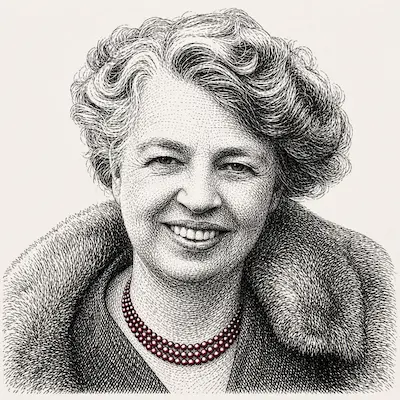
Rights violations unreported become rights violations normalised.
The UDHR was not written for peacetime convenience. I drafted those thirty articles in 1946 precisely because armed conflict is when states most readily suspend the protections that define them. Western media covering Ukraine as a purely military contest trains its audience to measure the war's conduct by territory gained, not by who is being detained without trial, who is being tortured, who is being disappeared. I watched that silence operate during the 1939 voyage of the MS St. Louis. Silence is not neutrality. It is complicity with a different label.
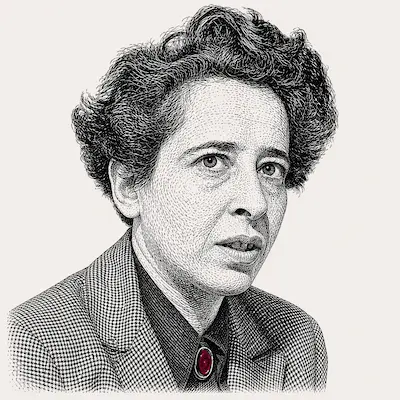
Military metrics train audiences to stop asking who decides.
Roosevelt is right to name the silence. But the deeper mechanism runs further than omission. When battlefield maps fill the screen every night, audiences learn to ask one question: who is winning? They stop asking who ordered the strike on the hospital, who signed the detention order, who processed the deportation form. I watched this logic operate in Jerusalem in 1961, reporting on a man who had processed hundreds of thousands of deaths and called it paperwork. Eichmann's crime was not hatred. It was the suspension of judgment that a role-based, metrics-based culture makes easy.
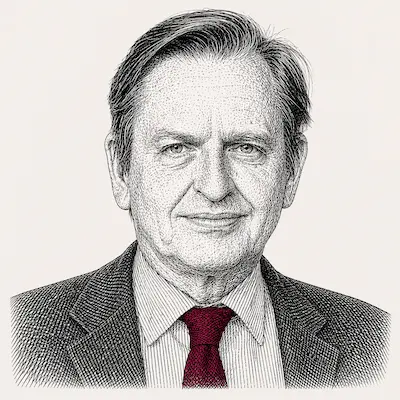
Coverage that exempts allies is not journalism. It is propaganda.
Arendt identifies the mechanism precisely. I governed it from the other side. In December 1972, I compared the US bombing of Hanoi to Nazi atrocities. Washington withdrew its ambassador. The diplomatic cost was real and I accepted it, because Sweden's credibility as a voice for international law rested entirely on consistency. A small state that goes silent when its allies act badly has nothing left to offer. Western media faces the same test now. Cover Ukrainian command decisions, cover allied weapons use, cover civilian harm by all parties. The audience can handle it. Silence cannot be hidden indefinitely.
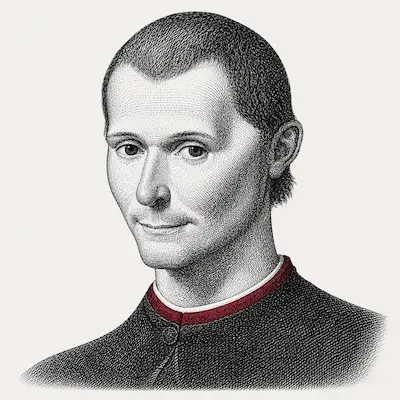
Wartime moral display without strategic clarity destroys the cause it claims to serve.
Palme asks whose interests strategic silence serves. I will answer: the same question applies to strategic noise. When I watched Cesare Borgia manage the conquest of the Romagna in 1502, I noted that he understood one thing his enemies did not. Perception shapes the battlefield before the first soldier moves. A Western media campaign that foregrounds allied violations, however real, hands adversaries a narrative they could not construct themselves. The question is not whether rights matter. The question is whether this reframing, at this moment, in this conflict, serves the survival of the order that makes rights enforcement possible at all.
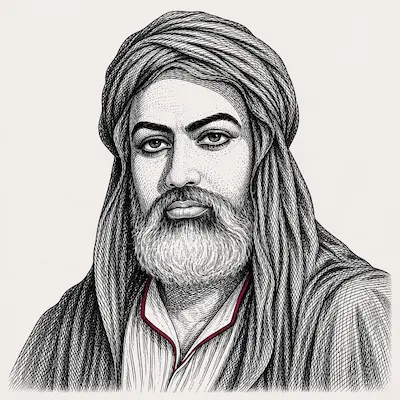
Coalitions built on shared interest fracture when that interest is questioned.
Machiavelli asks the correct structural question. I spent 35 days in conversation with Timur outside Damascus in 1401 and observed something relevant: a coalition holds when its members believe the centre serves their survival. When they doubt it, no amount of moral argument keeps them. Applying this to Western media coverage requires a flag: I am extending my framework on external pressure and asabiyya beyond the cases I studied directly. But the structure is the same. A shift to accountability framing, if it convinces Western publics that supporting Ukraine costs democratic values, weakens the solidarity the coalition depends on without producing the enforcement that accountability requires. The rights documentation is necessary. Making it the primary frame, before enforcement capacity exists, may dissolve the coalition before the rights are protected.