The Long Council
Who was selected, and why
Should Western media shift coverage of the Ukraine war from military strategy to the erosion of democratic values and human rights?
The central tension
Should Western media lead with battlefield updates or with who is suffering and whether the rules are being broken?
The two poles
Military coverage comes first
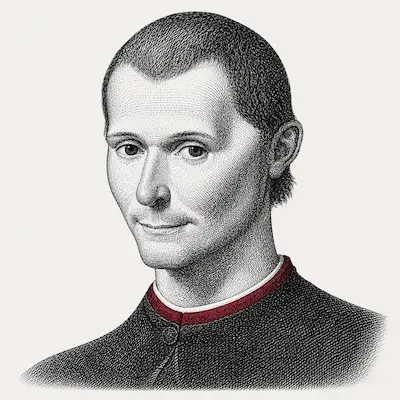 Niccolò Machiavelli
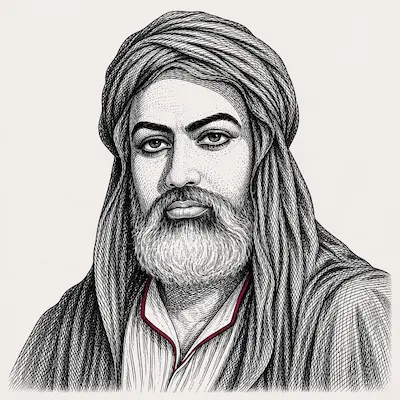 Ibn Khaldun
Rights and accountability come first
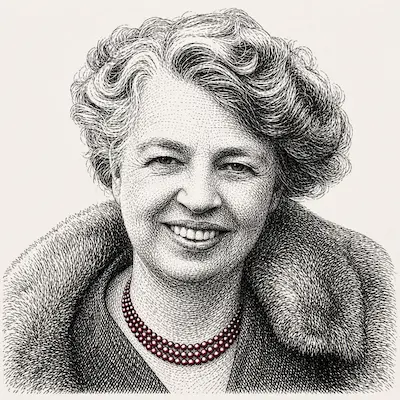 Eleanor Roosevelt
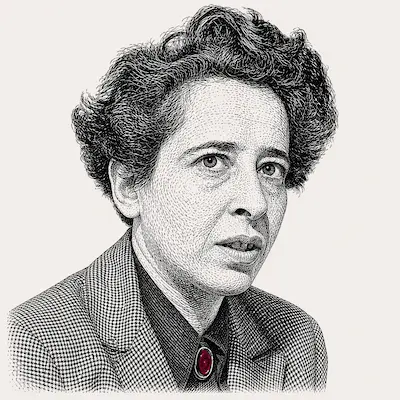 Hannah Arendt
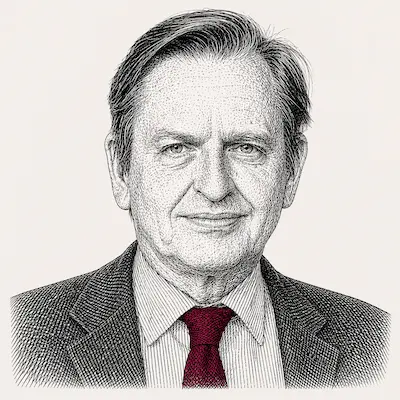 Olof Palme
Selected members
Eleanor Roosevelt
Will argue: Wartime is exactly when human rights standards must be applied, and ignoring violations by Western-backed forces betrays the rules the world agreed on.
She wrote the rulebook on international human rights and argued it must apply even during war.
Hannah Arendt
Will argue: Constant military framing trains audiences to judge the war only by battlefield results, which is how atrocities quietly become normal.
Her work showed that ordinary people enable horrors by simply following routines without asking who gets hurt.
Olof Palme
Will argue: Western media that shields allies from scrutiny loses credibility and becomes indistinguishable from the propaganda it claims to oppose.
He led a small neutral country while publicly criticising a major war, proving principled coverage can survive diplomatic pressure.
Niccolò Machiavelli
Will argue: Shifting to an accountability frame hands enemies a propaganda gift, demoralises the public, and replaces clear thinking with moral posturing at the worst possible moment.
He documented why wartime leaders must protect public morale and strategic clarity above appearances of virtue.
Ibn Khaldun
Will argue: If accountability framing splits Western public support for Ukraine without actually enforcing any rights, it weakens the alliance and achieves nothing it promises.
His theory explains how shared solidarity holds a fighting coalition together and why fracturing it is fatal.
Considered but not selected
Amartya Sen: Relevant because of his documented position that a free press is an epistemological instrument and that no democracy has experienced famine under press freedom conditions; his capability approach could address what rights violations do to Ukrainian civilian capabilities. Excluded because Roosevelt and Arendt cover the rights-documentation obligation more directly and with greater institutional specificity; adding Sen would echo Roosevelt on the press without distinct analytical addition. If the question were specifically about media freedom as a development instrument, he would be essential.
Frantz Fanon: His framework on why Western institutional concern for rights in non-Western conflicts is structurally selective is genuinely relevant as a challenge to the framing of "Western media" as a neutral reforming agent. Excluded because the session's central tension is about editorial framing within the Western media tradition, not about the structural bias of that tradition toward particular conflicts; Fanon's strongest contribution is the meta-critique of the question itself, which is worth noting but does not advance deliberation on the specific decision. His absence is a limitation, the council should acknowledge that a Fanonian challenge to the premise ("why is Western media's Ukraine coverage the relevant unit?") is analytically legitimate but requires a different question.
Arendt vs. Rawls: Rawls was considered for his documented framework on public justification and the obligations of liberal democratic institutions. Excluded because Arendt's framework is more precisely targeted at the specific mechanism, bureaucratic normalisation and the distribution of responsibility, while Rawls's ideal-theory framework would require significant flagging to reach the editorial question and would add a fourth voice to the already-dominant accountability pole without distinct analytical purchase.