The Long Council
Who was selected, and why
How can democracies govern for the long term instead of the next election?
The central tension
Should democracies fix the short-termism problem by insulating decision-makers from voters, or by making voters themselves more capable of demanding long-term thinking?
The two poles
Insulate from voters
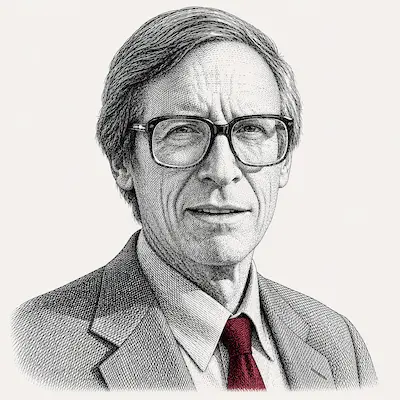 John Rawls
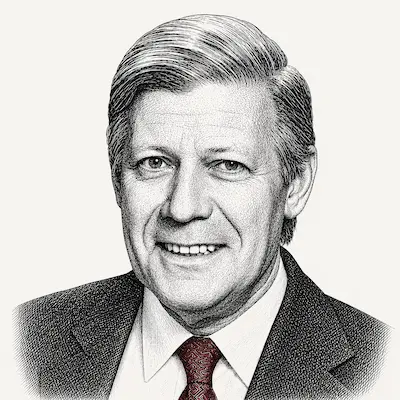 Helmut Schmidt
Empower voters
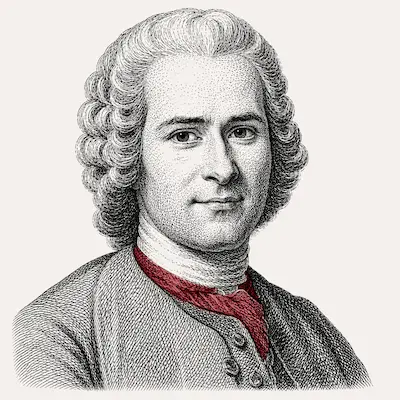 Jean-Jacques Rousseau
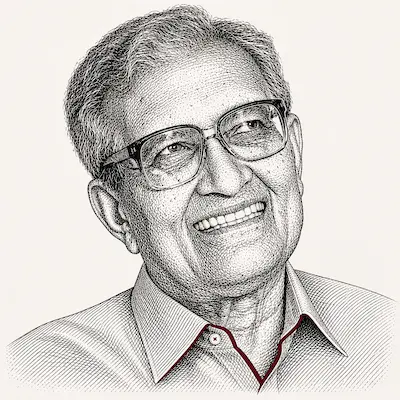 Amartya Sen
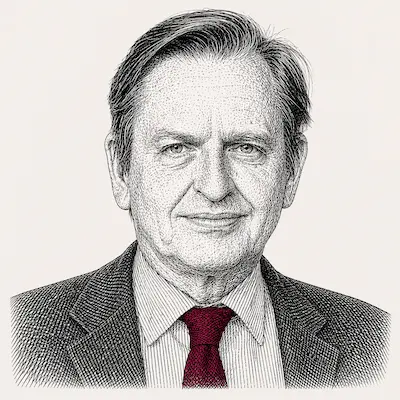 Olof Palme
Selected members
John Rawls
Will argue: Democratic institutions must be designed so that the basic structure protects the least advantaged across generations, not just at the next election.
His original position framework asks what institutions rational people would design if they did not know when they would live, directly addressing intergenerational justice.
Helmut Schmidt
Will argue: Long-term governance requires leaders willing to absorb electoral punishment for correct decisions, backed by independent institutions that constrain both voters and governments.
He governed by documented conviction that a statesman's duty is to be right when it matters, not popular, and built durable European institutions against short-term domestic opposition.
Jean-Jacques Rousseau
Will argue: Short-termism is not a design flaw but a symptom of corrupted civic culture; the real fix is forming citizens capable of willing the general will, not insulating elites from democratic pressure.
His concept of the general will directly frames the problem: democratic majorities can express private interest rather than the common good, and institutions must be designed to distinguish between the two.
Amartya Sen
Will argue: The solution to short-termist democracy is expanding citizens' capability for public reasoning through press freedom, education, and deliberative institutions, not reducing accountability.
His documented argument that democracy is an epistemological instrument, not just a value, reframes the question: the problem is not too much democracy but democracy without adequate public reasoning capacity.
Olof Palme
Will argue: Long-term democratic governance is achievable when organised civil society institutions, not just individual voters, are incorporated into the policy process, making short-termism structurally costly for any government.
He governed a democracy that demonstrably achieved long-term economic and social outcomes through institutional structures embedding organised labour, universal social insurance, and corporatist bargaining.
Considered but not selected
Albert O. Hirschman: His exit/voice/loyalty framework is relevant to democratic decay, and his irreversibility principle is directly applicable to long-term commitments. Excluded because his micro-institutional lens would largely reinforce the mechanisms Sen and Rawls already cover, and his development economics focus would pull the deliberation away from the core institutional design question.
Hannah Arendt: Her analysis of political participation as constitutive of freedom and her critique of bureaucratic "rule by nobody" are relevant to how insulated institutions can erode democratic accountability. Excluded because her sharp distinction between the social and the political would actually resist the framing of most long-term policy questions (climate, pensions, infrastructure) as genuinely political rather than social, limiting her purchase on the core issue.
Elinor Ostrom: Her polycentric governance framework and design principles for durable institutions are directly applicable. Excluded per selection rules: the question is not primarily about common-pool resources or collective-action problems in the Ostrom sense, but about the incentive structures of representative democracy as a whole. Including her would misapply her specialist framework.