Built from documented writings, speeches, decisions and historical records. Council members argue from documented positions, applied to today's question.
Turkey can become secular again, but only through gradual institutional reform, not revolutionary transformation.
Atatürk built from Ottoman collapse; Erdogan built from democratic legitimacy spanning two decades. Revolutionary secularisation worked in 1923 because the caliphate had already fallen. Today's AKP controls courts, religious bureaucracy, and popular support through elections.
Gandhi's Emergency proves that suspending democracy to save it destroys the legitimacy needed for lasting change. Tocqueville and Arendt converge: constitutional protections and citizen participation must be rebuilt simultaneously, not imposed from above.
The council splits on timing. Atatürk's camp argues that gradualism allows religious consolidation to deepen. Tocqueville's camp argues that forced secularisation without popular support creates the backlash that brought Erdogan to power.
- 1Rebuild constitutional courts and judicial independence through legislative reform, not emergency decree.
- 2Restore press freedom and civil society space to enable citizen participation in secular governance.
- 3Protect minority secular rights through federalism and separation of powers, not top-down imposition.
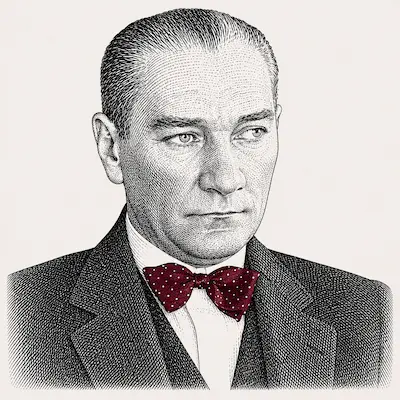
Forced secularisation can work when gradualism would preserve what must be destroyed.
I abolished the caliphate in 1924 and replaced Islamic law with European civil codes within two years. The speed was deliberate, gradual reform allows entrenched religious interests to mobilise resistance. Turkey needed to define itself by its future, not its past. When I changed the alphabet from Arabic to Latin script in 1928, I gave the nation three months and toured the country personally teaching the new letters. Revolutionary transformation requires decisive action when incremental change is captured by those who benefit from the old order.
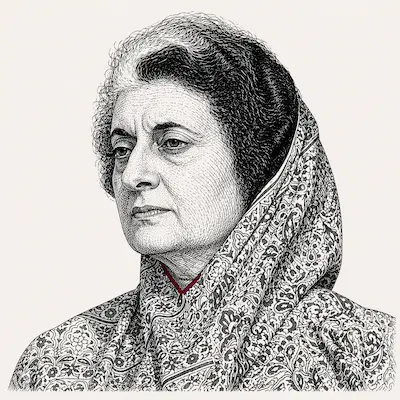
Continental democracy requires centralising authority at moments of crisis.
Atatürk had the luxury of building from collapse. I governed the world's largest democracy with 600 languages, multiple religions, and separatist pressures in Punjab, Kashmir, and the Northeast. In 1975 I declared Emergency, suspended constitutional rights, imprisoned opposition leaders, censored the press. I lifted it in 1977 and called elections, which I lost. The choice was not between democracy and authoritarianism but between temporary authoritarianism and permanent fragmentation. India's diversity makes gradual secularisation possible; Turkey's Ottoman inheritance made it impossible.
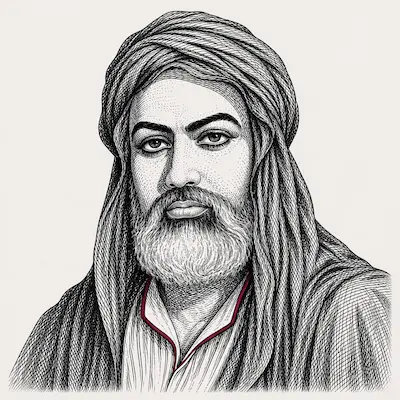
Justice cannot be sacrificed for stability, but neither can stability be sacrificed for immediate justice.
Gandhi's Emergency preserved India's unity at the cost of its legitimacy. When I assumed the caliphate after Uthman's assassination in 656, I faced the same choice: prosecute the killers immediately or establish stable governance first. I chose governance first, justice second. This decision split my own supporters and led to civil war. The lesson is not that justice must wait for stability, but that the ruler who cannot balance both will lose both. A state that rules through fear destroys the trust that makes governance possible.

The tyranny of the majority is democracy's central danger.
Ali's civil war proves the point. In Turkey, Atatürk's secular majority imposed its will on the religious majority through state power. In India, Gandhi's Congress majority suspended democracy to preserve it. Both cases show that democratic majorities can destroy the institutions that created them. Constitutional protections for minority rights require insulation from pure majority rule. Courts, federalism, and separation of powers are not obstacles to democracy, they are its preconditions. When the majority can override all constraints, democracy becomes tyranny with better public relations.
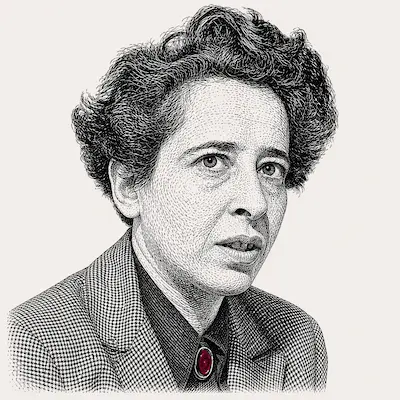
Bureaucratic rule eliminates accountability faster than any authoritarian decree.
Tocqueville's institutional protections assume citizens who value political participation. Atatürk's revolution, Gandhi's Emergency, and Ali's administrative state all demonstrate how quickly democratic forms can be maintained while democratic substance disappears. The real danger is not dramatic tyranny but the gradual conversion of political questions into administrative ones. When governance becomes the domain of experts rather than citizens, accountability vanishes without anyone noticing. Turkey's secular bureaucracy, India's administrative state, and the Islamic caliphate's religious officials all represent rule by nobody, the most dangerous form of modern domination.
The convergence note
Where the council converges: All members agree that existing institutions can be captured by forces that destroy their original purpose.
Where it divides: Whether top-down transformation (Atatürk) or gradual institutional reform (Tocqueville) better preserves democratic legitimacy while achieving necessary change.
For a policymaker to decide on: Whether Turkey's current religious-secular tensions require Atatürk's revolutionary speed or institutional patience that may allow further Islamic consolidation.