The Long Council
Who was selected, and why
Should the EU impose sanctions on Israel for its attacks on Lebanon?
The central tension
The conflict between principled enforcement of international law versus strategic alliance relationships and regional stability considerations.
Selected members

Helmut Schmidt
Will argue: That EU sanctions must consider both their effectiveness and their impact on European strategic interests, including energy security and regional stability.
Schmidt's framework on European sovereignty, alliance management, and the balance between values and strategic interests is directly relevant to EU decisions that affect transatlantic relations.

Eleanor Roosevelt
Will argue: That consistent application of human rights standards requires sanctions when states systematically violate civilian protection, regardless of alliance relationships.
As architect of international human rights law, her framework addresses when states have obligations to enforce international humanitarian law against allies and partners.
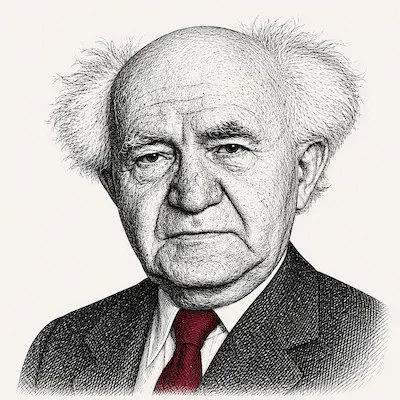
David Ben-Gurion
Will argue: That Israel's security actions, while costly, may be necessary responses to genuine threats, and that external sanctions could undermine regional deterrence.
His documented experience with existential security threats, alliance management, and the tension between international pressure and sovereign security decisions provides the Israeli strategic perspective.

Wangari Maathai
Will argue: That sanctions alone cannot address the structural conditions that produce recurring Middle East conflicts without addressing underlying resource and governance issues.
Her framework on the structural relationship between resource competition, governance failure, and conflict provides analysis of the underlying drivers beyond immediate military considerations.

Sun Tzu
Will argue: That effective strategy requires understanding Israeli decision calculus and whether EU sanctions would achieve their stated objectives or produce opposite effects.
His strategic framework on the conditions under which pressure and deterrence work versus when they escalate conflicts is essential for evaluating sanctions effectiveness.
Considered but not selected
Mandela: While relevant to reconciliation and international pressure, his framework assumes conditions for negotiated settlement that may not apply to active military conflict. - Thatcher, Her documented positions on sovereignty and alliance relationships are relevant, but Schmidt already provides the European alliance management perspective with greater documented experience of Middle East crises. - Kautilya, His framework on statecraft and alliance management is applicable, but the specific modern context of EU institutional decision-making and international law requires members with documented experience of these systems.