The Long Council
Who was selected, and why
Will the current dominant global order persist over the next 50 years, and if not, what conditions would enable a different power to become globally dominant?
The central tension
Whether US hegemonic decline is inevitable due to structural forces versus whether institutional advantages and strategic choices can preserve dominance despite relative power shifts.
Selected members
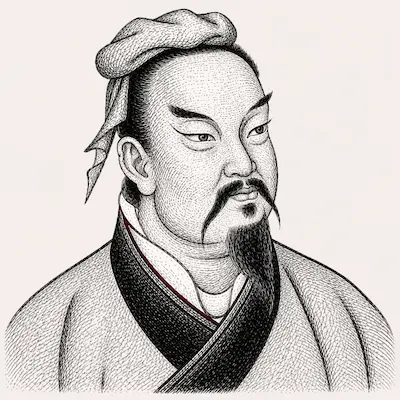
Sun Tzu
Will argue: That US dominance depends on strategic adaptability and intelligence superiority, not just material power; China's rise requires exploiting US strategic errors rather than matching US capabilities directly.
Strategic competition between great powers is his core framework, with documented analysis of how weaker powers can defeat stronger ones through positioning and exploiting adversary errors.
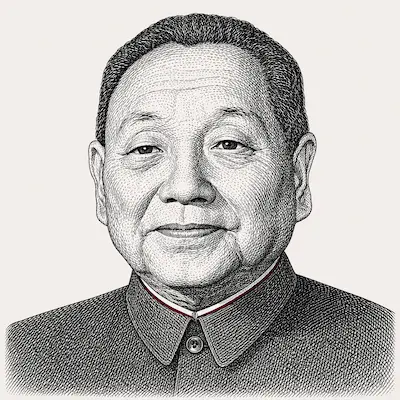
Deng Xiaoping
Will argue: That patient, incremental power accumulation while avoiding direct confrontation is the path to displacing an established hegemon; premature assertion of dominance triggers containment.
Architect of China's rise strategy and the "hide your strength, bide your time" doctrine that has guided Chinese grand strategy for four decades.
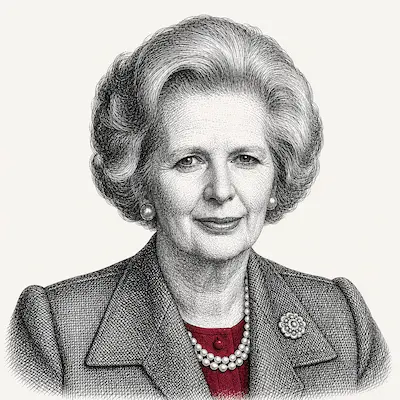
Margaret Thatcher
Will argue: That institutional advantages (NATO, financial systems, democratic legitimacy) can preserve Western dominance if combined with economic renewal and strategic resolve.
Governed during the final phase of the Cold War and understood the relationship between economic strength, military capability, and alliance management in sustaining Western dominance.
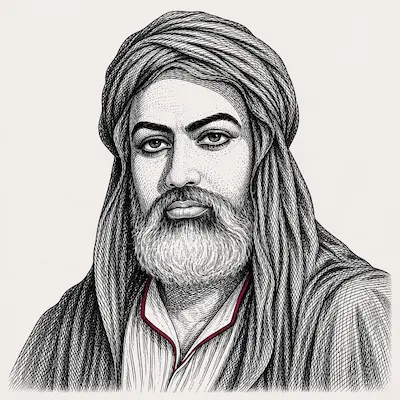
Ibn Khaldun
Will argue: That US dominance is vulnerable because prosperity erodes the cohesion and martial virtues that created it; ascending powers (China) have stronger asabiyya and are hungrier for global position.
His cyclical theory of state rise and decline provides the most systematic framework for understanding how established powers lose dominance and new ones emerge.
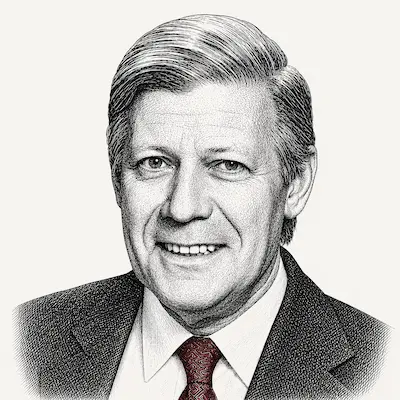
Helmut Schmidt
Will argue: That dominance in the 21st century will depend on control of critical resources (energy, rare earths, semiconductors) and technological superiority, not traditional military metrics.
Navigated great power competition as a medium power leader and understood energy, technology, and economic interdependence as instruments of geopolitical positioning.
Considered but not selected
Lee Kuan Yew: His small-state survival strategy is relevant but lacks framework for great power dominance transitions - Franklin D. Roosevelt: Excellent on building institutional architecture but died before the full Cold War framework emerged; Thatcher better represents the later institutional consolidation phase - Machiavelli: His analysis of power transitions is valuable but lacks the modern geopolitical and economic dimensions that other selected members provide