Built from documented writings, speeches, decisions and historical records. Council members argue from documented positions, applied to today's question.
No single country will dominate the next era — power will flow to whoever solves critical problems others cannot.
Deng demands internal development before external ambition. Lee argues for making yourself essential to all sides. Schmidt insists resource sovereignty determines everything. Ibn Khaldun sees internal cohesion as the foundation. Sun Tzu focuses on exploiting rival contradictions rather than direct competition.
All agree that global leadership flows from internal strength, not external ambition. But they split on whether strength comes from patience, positioning, resources, solidarity, or strategy.
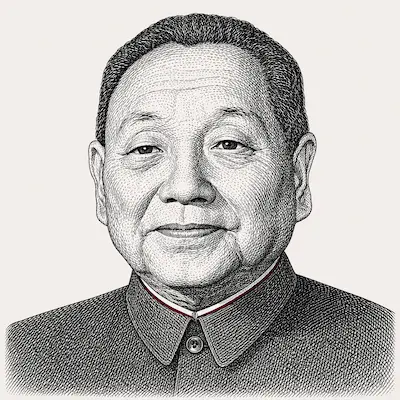
Economic development must precede international ambition.
In 1978 I launched the Four Modernizations with a clear doctrine: hide your strength, bide your time. China needed decades of internal development before asserting global influence. I watched the Soviet Union exhaust itself trying to match American military spending while its economy stagnated. This taught me that premature global leadership destroys the domestic foundation required to sustain it.
The next world leader will be the country that solves its internal development problems first. America's infrastructure is crumbling. Europe cannot agree on basic fiscal policy. China still has 400 million people to lift from poverty. Any nation that pursues global dominance before achieving domestic prosperity repeats the Soviet mistake.
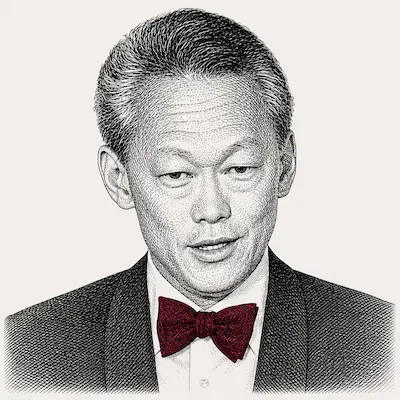
The next leader must make itself indispensable to multiple powers simultaneously.
Deng's patience strategy worked for China in the 1980s, but today's world moves faster. When Singapore separated from Malaysia in 1965, we had two years of foreign reserves and no natural resources. We survived by becoming essential to everyone — American military bases, Chinese trade routes, Japanese investment, European shipping. We never chose sides.
The next world leader will not be determined by military strength or economic size alone. It will be the power that other nations cannot afford to lose. America remains indispensable for global financial systems. China is becoming indispensable for manufacturing and trade. The winner will be whoever solves the resource and technology problems that constrain everyone else.
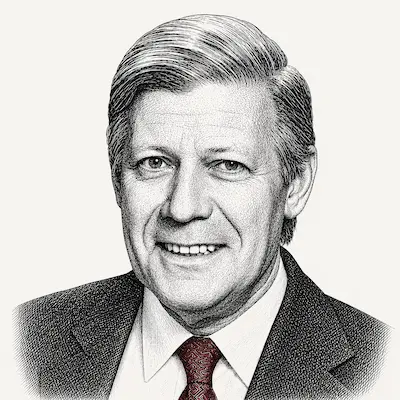
Energy and resource security determine sovereign capacity.
Lee understands positioning, but he underestimates the foundation that makes positioning possible. During the 1973 oil embargo, I learned that energy dependence is not an energy question — it is a sovereignty question. A state that cannot secure its basic resource needs cannot act independently in any domain.
The next world leader will be the power that controls the critical resources of the next economy: rare earth minerals for batteries, semiconductor fabrication capacity, clean energy infrastructure. America has abundant land and resources but has allowed its manufacturing base to atrophy. China controls manufacturing but lacks energy security. Europe has engineering capability but depends on others for both energy and raw materials.
The winner will be whoever builds complete resource sovereignty first. Everything else is secondary.
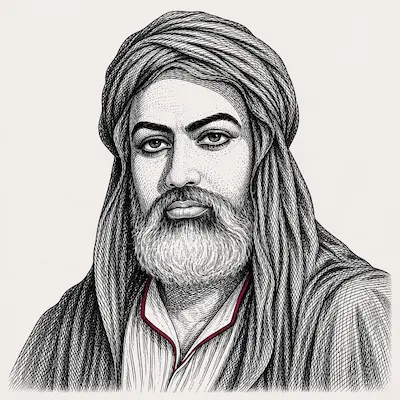
Global leadership follows from internal cohesion, not external ambition.
Schmidt focuses on resources, but resources without asabiyya — group solidarity — produce weakness, not strength. I observed this across North African dynasties: wealth and luxury erode the very cohesion that enabled a group's rise to power. The Almoravids conquered through desert discipline, then grew soft in Marrakech palaces.
Today's established powers show classic signs of internal decay. America's political system cannot agree on basic infrastructure spending. Europe cannot unify fiscal policy after decades of integration. These are symptoms of eroding asabiyya — the internal bonds that enable collective action. China maintains stronger cohesion, but its own prosperity threatens the discipline that built its strength.
The next world leader will emerge from whichever society maintains internal solidarity while others fracture. External pressure consolidates groups with strong asabiyya and destroys groups with weak bonds. Watch for the power that becomes more unified under stress, not less.
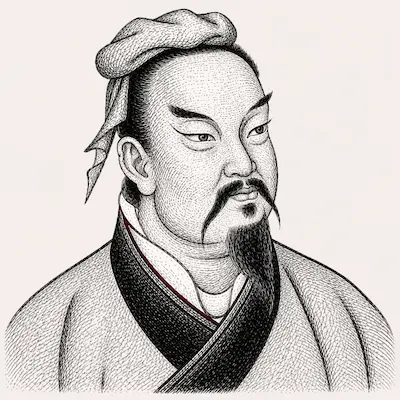
The next world leader will exploit established powers' contradictions rather than compete directly.
Ibn Khaldun correctly identifies internal cohesion as decisive, but he misses the strategic dimension. The established power always has structural advantages — resources, alliances, institutional control. Direct competition with these advantages is the path of the weak strategist.
Supreme excellence is achieving objectives without fighting. America's strength lies in its alliance system and financial architecture. Its weakness lies in domestic polarization and imperial overstretch. China's strength lies in manufacturing integration and state coordination. Its weakness lies in demographic decline and technology dependence. The next world leader will be the power that positions itself to benefit from these contradictions rather than challenging these strengths.
The winner will not be the strongest power. It will be the power with the best strategic positioning when the current order reveals its internal contradictions. All warfare is based on deception — including the deception that the current global order is permanent.
The convergence note
Where the council converges All members agree that global leadership transitions occur when internal development enables external projection of power, not the reverse.
Where it divides They disagree fundamentally on whether the transition happens through patient development (Deng), strategic positioning (Lee), resource control (Schmidt), social cohesion (Ibn Khaldun), or exploiting adversary weaknesses (Sun Tzu).
For a policymaker to decide on Whether to prioritize internal strengthening or external positioning when both require scarce resources and attention, and the window for action may be limited.